Blogpregnancy · traditional eating · recipes · Weston A. Price
Postpartum Nutrition: What to Eat After Birth, According to Traditional Wisdom
Postpartum nutrition was once sacred: weeks of rest, broths and warm food. Here is what to eat during the postpartum "resguardo" (confinement), according to tradition and the Weston A. Price Foundation.
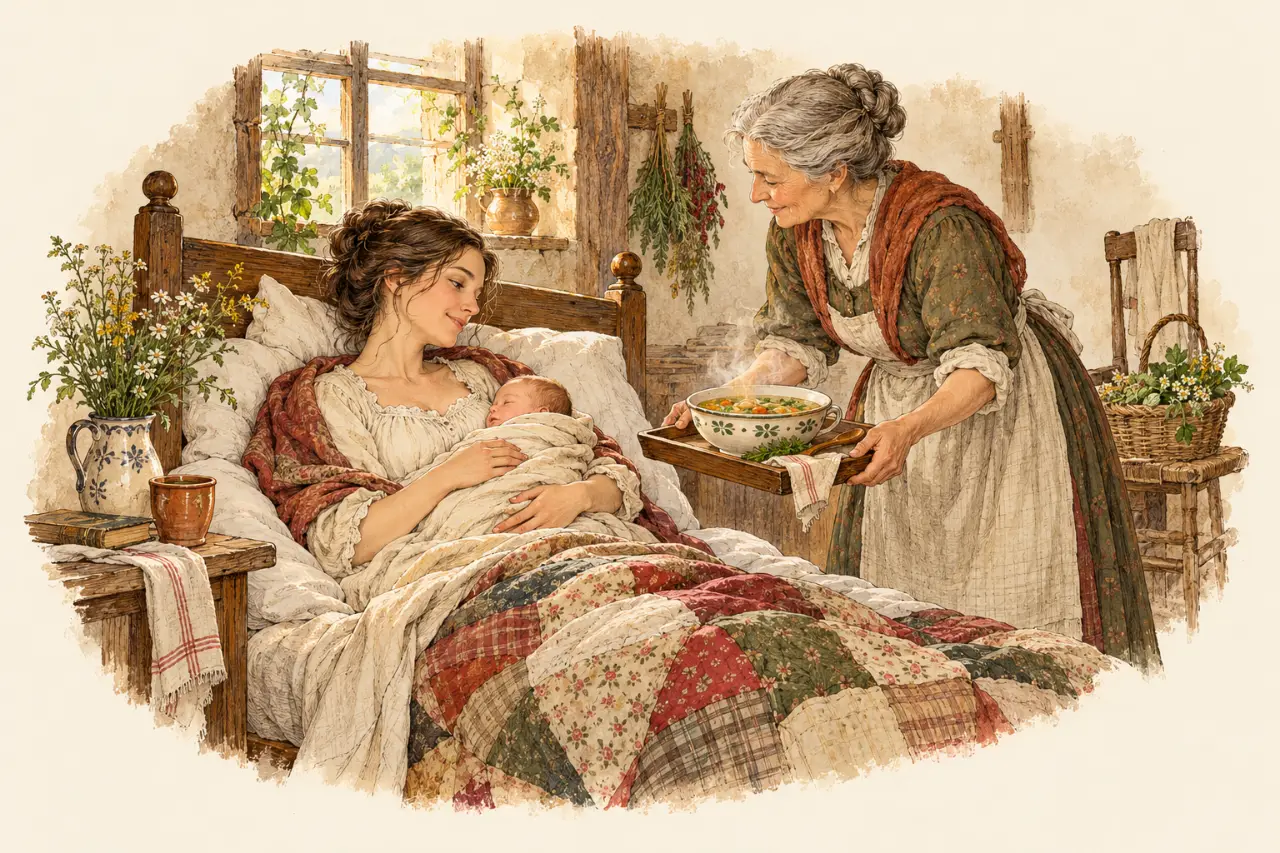
Imagine that, in the postpartum period, all that is expected of you is to rest and cuddle your newborn for a month or more. Loved ones cook, clean the house and help you bathe and care for the baby. Hot teas come with steaming baths, both made with herbs that soothe and restore. Kind, experienced women share their wisdom and are close by to help with breastfeeding and with any hiccup that comes up with the baby.
You, the new mother, are treated with tenderness and respect, in a calm and quiet environment. After a few weeks, you are ready to introduce your little one to the world and step out of the shelter of home with confidence and strength.
It sounds like a dream, but this is how many cultures treat women after birth, and postpartum nutrition plays a central role in that care. This article is an adaptation of a text by Jennifer Grafiada published in the magazine of the Weston A. Price Foundation.
Forty Days of Care: An Ancient Tradition
Believe it: setting aside thirty, forty or more days to recover after birth is a common practice all over the world, with thousands of years of history. A text from Ayurveda, India's traditional medicine, dated to 400 BCE, states that "the newly delivered mother should be treated with massages, warm baths, a specific diet and herbal drinks that prevent infections, promote vitality and calm vata", one of the body's energetic forces, the doshas.
In the book The First Forty Days: The Essential Art of Nourishing the New Mother, Heng Ou describes her experience with zuo yuezi, the Chinese tradition of honoring and caring for the mother in the month after birth. The practice has been followed in Chinese homes for more than four thousand years and is still alive today. Similar traditions and rituals exist all over the world, from Malaysia to India and Latin America.
In Brazil, this tradition has a well-known name: the resguardo (the postpartum confinement, or "quarantine"), during which, in the homes of the past, the mother was spared from work and was given canja de galinha (a comforting chicken and rice soup).
Who Does the Caring, and How
During this period, relatives, friends, doulas and midwives take charge of bathing the mother and the baby (often with herbs instead of harsh soaps), of massaging them with special oils and infusions, and of preparing and serving special foods.
These foods vary by region and culture, but they have a lot in common: they are warm, restorative, full of vitamins and minerals, and easy to digest. Many are chosen precisely for the nutrients they provide and for their ability to restore the organs and to increase milk production.
The Forgotten Mother of "Modern" Times
By contrast, in what we might call "modern" times, many women in the Westernized world are led to believe that they should recover from childbirth immediately, in body and in everything else. Sometimes the employer resists granting paid maternity leave, or the mother simply cannot step away from work for long. Family may live far away or be unable to help. Even loving husbands and partners sometimes fail to understand the enormous physical and emotional changes the woman has just gone through in bringing a new life into the world.
The result is that many mothers feel overwhelmed and distressed. While the baby, quite rightly, receives a shower of attention, the mother is left alone with all the changes in routine, and with the lack of sleep, that motherhood inevitably brings. Exhaustion in the first weeks is common and even expected. When no one takes care of the new mother, rest and good nutrition are pushed aside, right in what could be a magical period of bonding between mother and baby.
Postpartum Depression and Nutrient Deficiencies
What happens when a mother is left on her own during this delicate period? Some cultures believe that neglect right after birth can leave marks that last through menopause and beyond. Either way, postpartum health is an aspect of women's health that is often overlooked, in the United States and in other countries.
It's worth remembering that, with the hormonal swings and the reshuffling of the family that come with a new baby, some emotional changes are to be expected. Mood swings and moments of sadness can be quite normal, especially after a traumatic birth. Some women, however, face longer-lasting problems, such as severe depression and anxiety, extreme fatigue and trouble with memory.
The National Institute of Mental Health (NIMH) estimates that postpartum depression affects 15% of women after childbirth. Many scientists, and many attentive members of the Foundation, believe that severe nutritional deficiencies, so common among women today, are among the causes of postpartum depression.
The Mother's Body Pays the Price
It's no secret that growing and raising a child takes an enormous amount of "building material." That is why traditional cultures spaced their children at least three years apart, giving the woman time to rebuild her nutritional reserves (preparation is covered in more depth in Eating to Get Pregnant: The Ancestral Lesson).
The average American woman, on the other hand, is often already undernourished before she even becomes pregnant, and her diet during pregnancy may be full of sugar and processed foods. In those cases, the body draws nutrients from the mother to nourish the developing baby: it takes calcium from her bones and teeth and depletes her reserves of omega-3 fatty acids, which are essential for the mother's emotional balance.
According to the Foundation's article Vitamins for Fetal Development, the nutrients that can become depleted include:
- iron, folate and calcium;
- potassium, magnesium, phosphorus, zinc and selenium;
- vitamin D, vitamin A and carotenoids;
- iodine;
- omega-3, DHA and other essential fatty acids;
- vitamin B12.
The scariest part, according to the author, is that this can cause permanent changes in the mother's brain and body. She may have trouble remembering or learning new things, or suffer from anxiety and depression. Lower vitamin A reserves can bring noticeable changes in vision. Before-and-after photos sometimes show changes such as thinner lips and a curved spine.
Why Isn't a Vitamin Pill Enough?
Many women mistakenly believe that taking a prenatal multivitamin before, during and after pregnancy is enough to cover any deficiency. So why not simply take a pill? According to the author, some high-quality supplements can help, but they are far from a cure-all. Synthetic tablets don't contain the hundreds of isomers and related molecules found in nature, so the body doesn't recognize or absorb them as easily. On top of that, making these molecules in a laboratory creates artificial by-products that can even be harmful.
A study of 563 American pregnant women showed that, even while taking prenatal vitamins, they developed deficiencies in niacin, thiamine and vitamins A, B6 and B12 that lasted into the third trimester (and, presumably, beyond). Prenatal vitamins also fall short of pregnant women's needs for vitamin D, long-chain essential fatty acids and choline. Choline is not part of any of the common prenatal vitamins in the United States.
In short: certain high-quality prenatal formulas may help, but the answer, first and foremost, has to be on the plate.
What to Eat Postpartum: Warm, Nourishing Food
The Weston A. Price Foundation was a pioneer on this point. It has helped many mothers and mothers-to-be with food recommendations based on traditional wisdom and, according to the author, confirmed by modern science. She says she keeps the foundation's magnet with the diet for pregnant and nursing mothers (Diet for Pregnant and Nursing Mothers) on her fridge, and she thinks it should be a required gift at every baby shower, along with the books Nourishing Traditions and The Nourishing Traditions Book of Baby & Child Care, by Sally Fallon Morell. The diet lists the recommended foods and the ones to avoid in bullet points.
The list will sound familiar to anyone who already follows a traditional lifestyle:
- organ meats and meat from grass-fed animals, from local producers, full of iron, selenium and B vitamins (see the producers map and the article on liver);
- eggs, rich in choline, fatty acids and vitamin D;
- wild-caught fish and seafood, with iodine and zinc;
- butter from grass-fed cows, with the famous "Activator X", vitamin K2 (the subject of Is Butter Bad for You?);
- natural cod liver oil, for vitamin A, in the doses given in the article Cod Liver Oil Basics and Recommendations;
- fermented dairy and raw milk, with many molecules that strengthen immunity and friendly gut bacteria, as in milk kefir;
- bone broths, soups and stews, warm and fragrant, easy to sip throughout the day (see Bone Broth: Benefits and How to Make It).
Prepare before the birth
The books Nourishing Traditions and Nourishing Broth, by Sally Fallon Morell, contain many delicious recipes, as does the foundation's website. In Portuguese, Nu&Cru's book 181 Receitas Ancestrais follows the same approach.
Meals can be prepared and frozen before the expected due date. Another idea is to ask your family to organize a meal rotation, where each person brings a ready-made dish on a given day, for you or for someone who is expecting a baby. And don't forget to ask for other kinds of help: cleaning, laundry, grocery runs, or a warm massage with essential oils or herbal infusions make a big difference in bringing calm back to the new mother.
Foods That Boost Breast Milk
The seventh chapter of The Nourishing Traditions Book of Baby & Child Care devotes many pages to breastfeeding mothers. Women who breastfeed need more calories than the average woman and should eat plenty of warm, nourishing food, as well as drink lots of fresh, clean water (or herbal teas).
To increase milk production, the book recommends:
- raw milk;
- bone broths;
- soaked oats, as in fermented oatmeal porridge (the technique is explained in Oats: How to Make Porridge More Nutritious);
- lacto-fermented drinks, such as kombucha (more on the process in Lacto-Fermentation: What It Is and How to Do It).
The author says these were exactly the foods her body craved in the first months after the birth, when she felt like she was breastfeeding nonstop. She remembers the day the farmer who delivered her raw milk stopped by. The author could not get enough of the thick cream and was very grateful to have it delivered to her home. The farmer said her mother always used to say: "Milk makes milk!"
It is this kind of traditional wisdom, the author argues, that would do so many women good today, as they suffer needlessly because they were convinced by the "Diet Dictocrats" (the expression that appears in the subtitle of Nourishing Traditions).
Is Eating the Placenta Good for You?
What about placentophagy, the practice of eating the placenta? It has recently become common among some mothers who favor a more natural way of life, and many say it greatly improves their mood and energy. One member of the Weston A. Price Foundation shares:
"I definitely lived through an emotional roller coaster in the months after my first child was born. Both of my children were born at home, and with the second birth I talked at length with the midwife about what to do with the placenta. In the end, I decided to eat it! The midwife chopped it up and divided it into five portions, which we froze. I put one portion in a smoothie for five days (it didn't taste like much, they were just like regular smoothies). I felt very strong and emotionally stable, a night-and-day difference from my first postpartum period. It really seemed to return my whole body to a stable, functioning state. I know it's not an option many women will choose, but I would do it all again without thinking twice."
For those who don't want to go down that path, a diet rich in organ meats such as liver also helps replenish iron and, with it, improve mood and energy. Another member of the foundation reports:
"After my daughter was born, I struggled to keep up with all the responsibilities of being a mother of two. I had been pregnant or breastfeeding for three years, and my body felt the effects of years of giving itself to other human beings. My tolerance for stress was much lower, and I found myself frustrated, or even angry, over things that didn't matter. Afterward I felt guilty and depressed for reacting that way. It took two years after my daughter's birth for my body to return to normal and for my hormones to finally balance out. Taking cod liver oil and desiccated liver tablets definitely helped."
Postpartum Thyroiditis: When the Tiredness Doesn't Go Away
Mothers who feel especially tired for long periods may want to consider having their thyroid checked. Symptoms of hypothyroidism include:
- brain fog;
- dry skin;
- weight gain;
- intolerance to cold;
- constipation;
- hair loss.
The condition may be diagnosed as Hashimoto's thyroiditis or as postpartum thyroiditis. The American physician Kelly Brogan writes:
"In postpartum thyroiditis, this picture is often preceded by a period of hyperthyroidism, in which a woman may feel like she has too much energy and suffer from insomnia, diarrhea, anxiety and sudden weight loss. These are the women who 'bounce back' really quickly after the baby, only to be dragging themselves around nine months later."
According to Brogan, about 10% of women develop this problem, which is often undiagnosed or misdiagnosed.
Today there are at-home test kits for a complete thyroid assessment. There are also home kits that measure important nutrients before conception or after birth, such as omega-3 fatty acids, B-complex vitamins (including folate) and vitamin D. Some companies even offer a breast milk test that shows how much DHA it contains.
Caring for the New Mother
If you or someone you love is expecting a baby, plan a special month or two after the birth. The newborn deserves, of course, a shower of love, attention, and adorable booties and hair bands. But the new mother also needs to be soothed, cherished, cared for, and listened to.
In her book, Heng Ou includes this sentence from a healer of the Chumash people, from Ensenada, Mexico: "When a mother has any problem, the first thing I tell her is: 'You need to be held! Put your feet up. Your body needs to be strengthened by touch and stimulated, if you want to get through this period.'"
In our fast-paced society, this may take planning, advance notice, and a few explanatory conversations with family and friends. But, according to the author, rediscovering the lost art of caring for and nourishing the new mother will do wonders not only for her, but for the whole family, with fruits that are harvested for decades and across generations.
Recipe: Postpartum Recovery Soup
Sarah Ruiz, leader of a local chapter of the foundation in North Carolina and a certified integrative nutrition health coach, shared this postpartum recovery soup recipe on the foundation's website. The soup includes pig's feet, Chinese black vinegar, coconut sugar, and fresh ginger.
If pig's feet are hard to find, a simple chicken noodle soup or a beef bone broth helps with recovery just as well, says the author. It takes the place of the old-fashioned canja (Brazilian chicken and rice soup): our recipes for free-range chicken and chicken broth are good starting points.
Ingredients
- 2 pig's feet from pasture-raised animals
- 2½ cups (600 ml) of Chinese black vinegar, found in Asian grocery stores, or balsamic vinegar if you can't find it
- ¼ cup plus 2 tablespoons coconut sugar, which balances the acidity of the vinegar
- ½ cup coconut aminos or naturally fermented organic soy sauce (shoyu)
- filtered water
- 1 piece (5 cm) of sliced organic ginger
- free-range eggs, at least two per bowl of soup
- optional: organic zucchini noodles, brown rice noodles, or soaked and cooked brown rice
Instructions
- Ask the butcher to cut the pig's feet into 2.5 cm pieces. This is optional, but it helps extract the minerals better.
- Put the feet in a large pot, cover with filtered water, put the lid on, and boil for 10 minutes.
- Discard the water and rinse the feet with cold filtered water.
- Fill the pot halfway with the feet and filtered water. Add the vinegar, coconut sugar, coconut aminos, and ginger. If the feet aren't covered, add more water until they are.
- Cover and bring to a boil. Once it boils, lower the heat and cook for 45 minutes.
- Near the end of cooking, cook the eggs so they are ready.
- Place the cooked eggs in a bowl and cover with the soup. For a more complete meal, add the zucchini noodles, rice noodles, or rice, which is entirely optional. According to Sarah Ruiz, the soup should be eaten every day for the first six weeks after birth.
Further reading
On Nu&Cru
- Eating to Get Pregnant: The Ancestral Lesson
- Bone Broth: Benefits and How to Make It
- Liver: The Most Nutritious Food There Is
- Baby's First Foods: What to Offer
- Weaning: When and How to Start
- Recipes for the postpartum rest period: free-range chicken, bone broth, mocotó broth (beef feet broth), poached eggs in bone broth and roasted pig's feet
- 181 Receitas Ancestrais, the Nu&Cru recipe book
At the Weston A. Price Foundation
- Diet for Pregnant and Nursing Mothers
- Sacred Foods for Exceptionally Healthy Babies… and Parents, Too!
- Postpartum Recovery Soup
- Broth is Beautiful
- Can I Take Vitamin A While Breastfeeding?
References
- Ou, Heng. The First Forty Days: The Essential Art of Nourishing the New Mother. New York: Harry N. Abrams, 2016.
- Pearlstein T, Howard M, Salisbury A, Zlotnick C. Postpartum depression. American Journal of Obstetrics and Gynecology, 2009;200(4):357-364.
- Vitamins for Fetal Development: Conception to Birth. Weston A. Price Foundation.
- Baker H, DeAngelis B, Holland B, Gittens-Williams L, Barrett Jr. T. Vitamin profile of 563 gravidas during trimesters of pregnancy. Journal of the American College of Nutrition, 2002;21(1):33-37.
- Fallon S, Enig MG. Nourishing Traditions: The Cookbook that Challenges Politically Correct Nutrition and the Diet Dictocrats. 2nd revised edition. Brandywine: New Trends Publishing, 2001.
- Fallon Morell S, Cowan TS. The Nourishing Traditions Book of Baby & Child Care. Brandywine: New Trends Publishing, 2013.
- Diet for Pregnant and Nursing Mothers. Weston A. Price Foundation.
- Fallon Morell S, Daniel KT. Nourishing Broth: An Old-Fashioned Remedy for the Modern World. Grand Central Life & Style, 2014.
- Brogan K. Thyroid dysfunction and treatment (archived copy).
This article is an adaptation of "Nourishing the New Mother: The Lost Art of Postpartum Care," by Jennifer Grafiada, published in Wise Traditions in Food, Farming and the Healing Arts, the magazine of the Weston A. Price Foundation, in winter 2018. Read the original in English.
As informações têm caráter educativo e não substituem avaliação individual de profissional de saúde habilitado.