Blogbroths · traditional cooking · recipes · Weston A. Price
How to Make Bone Broth: Recipe, Cooking Time and Storage
Which bones give the most gelatin, how long to simmer, what to do with the fat that rises to the top, and how to cool, store and freeze bone broth safely.
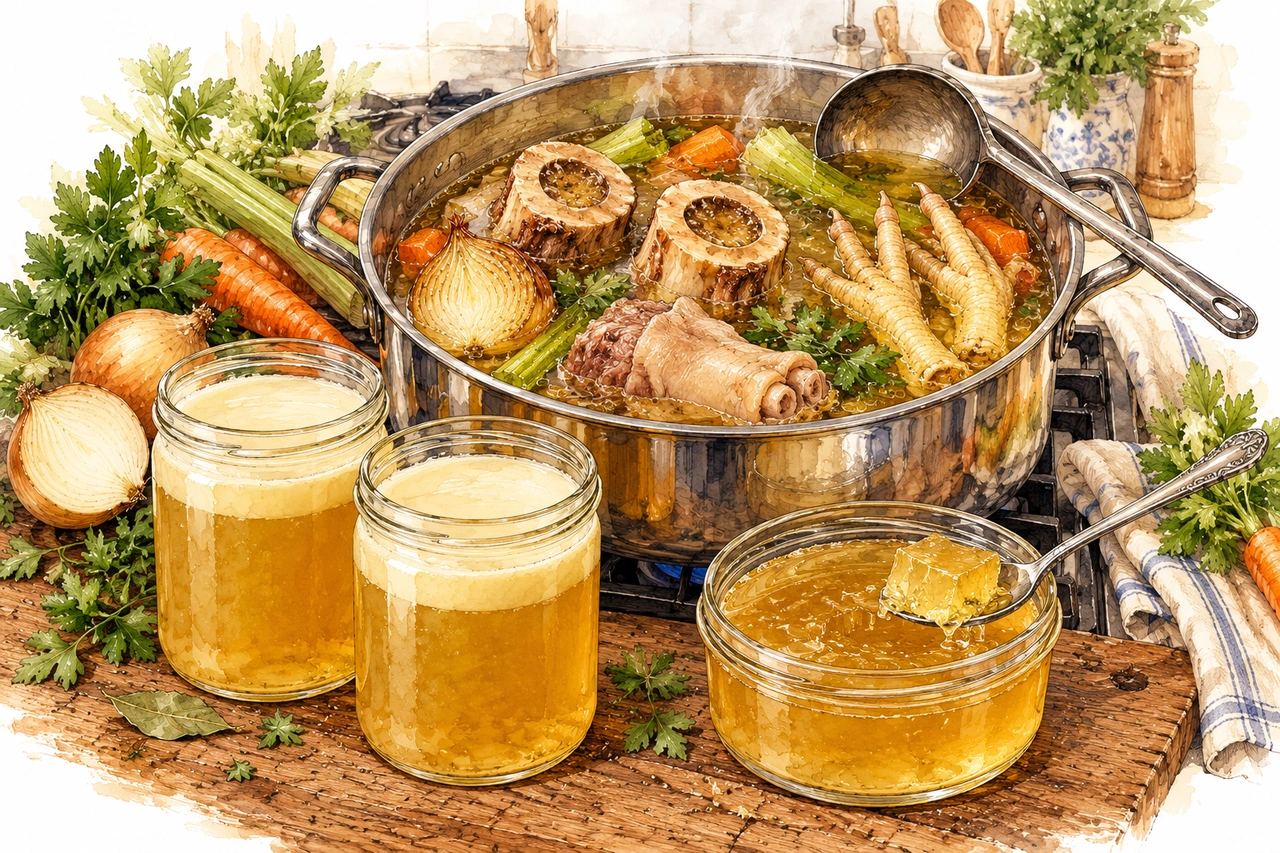
Bone broth is made with bones that have cartilage, cold water and many hours over low heat. The bones go into the pot covered with water, the heat rises slowly, you skim the foam off with a spoon, and the broth barely bubbles for 6 to 8 hours for chicken, or 8 to 12 hours for beef. Then you strain it, cool it quickly, remove the fat and store it. The sign that it worked shows up the next day: in the fridge, the broth turns to gelatin.
A few decisions separate a firm, clear broth from cloudy water: the bones you buy, how strong the heat is and how fast you cool it. The fat that rises to the top, which many people throw away, is one more ingredient.
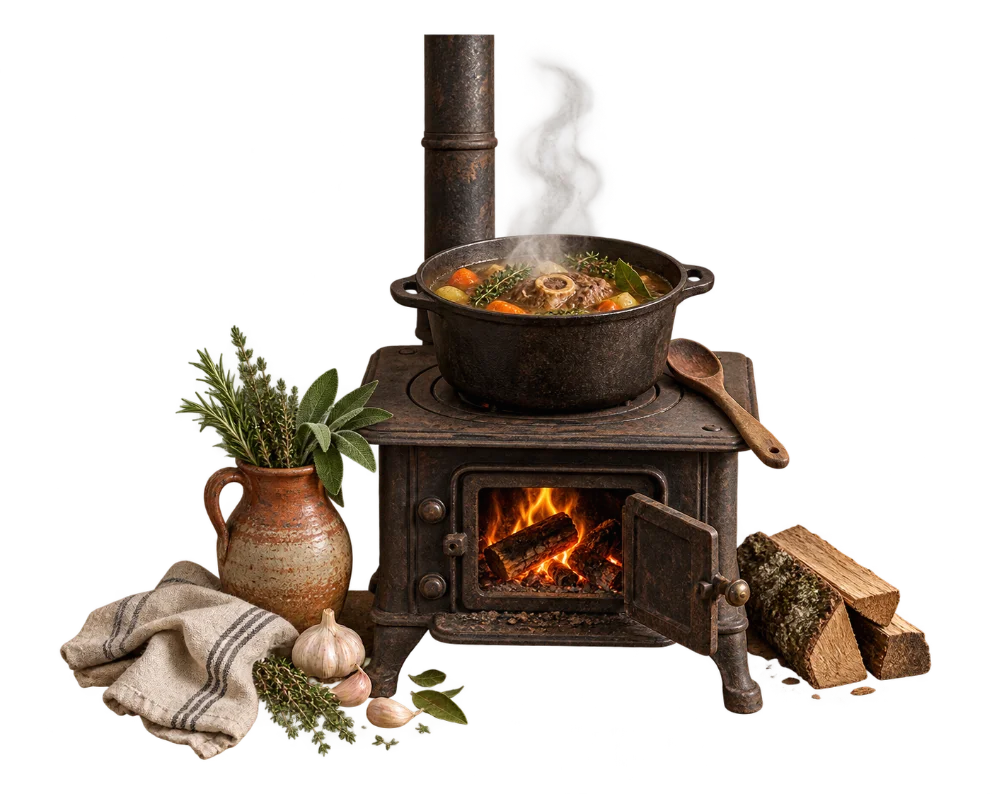
Which bones to choose
The gelatin that makes broth set comes from the collagen in cartilage, tendons and skin. So the bone that gives the most is not the prettiest one at the butcher, but the one with a joint.
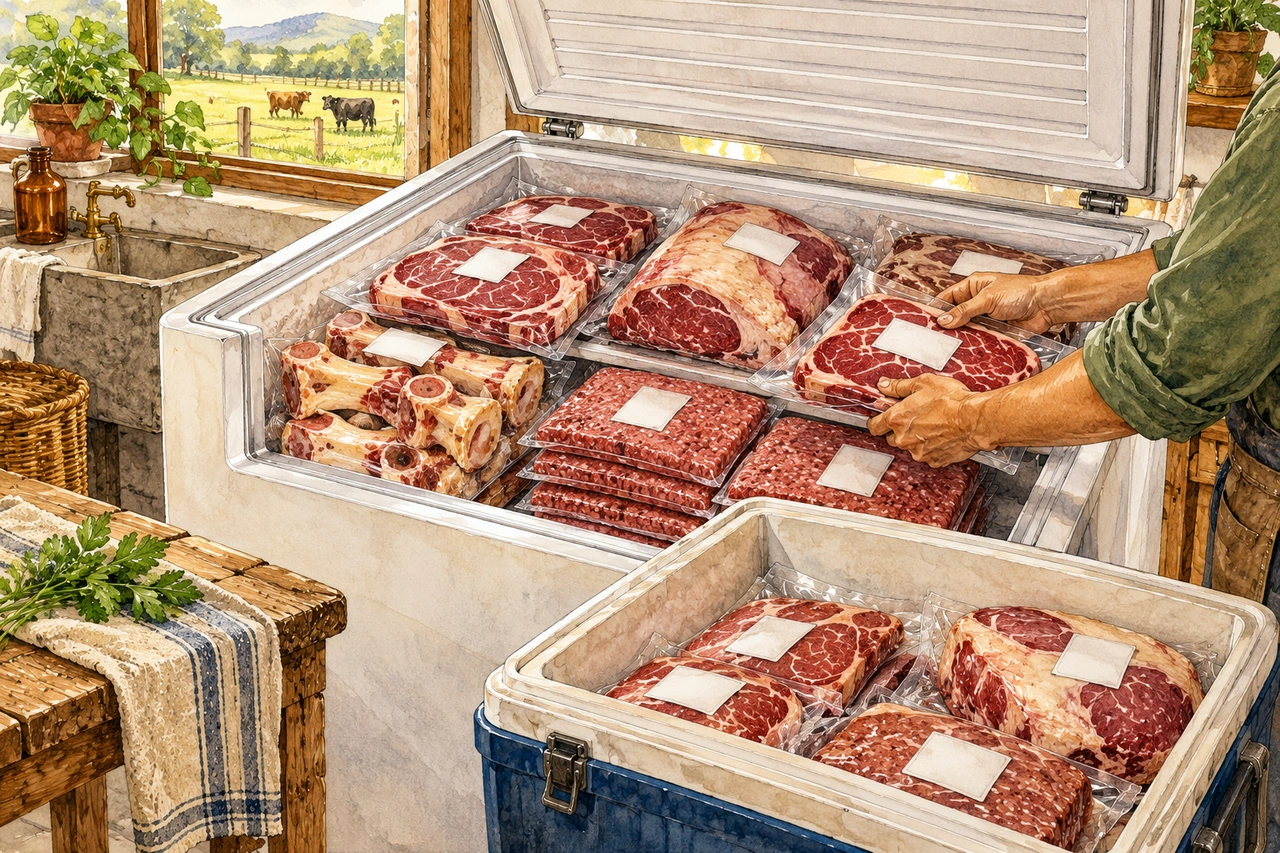
- For gelatin: mocotó (beef cow heel, or trotter), chicken feet, knee joints, oxtail, neck and chicken carcass. These are the cuts that peasant kitchens have always saved for the pot.
- For flavor and color: bones with a little meat on them, such as ribs, beef neck and trimmings.
- For fat and depth: bones with marrow (shank and femur, cut into sections). They add flavor, but not much gelatin on their own.
The best pot mixes all three groups. In Brazil we have an advantage: mocotó and chicken feet are available at any butcher and cost little. Ask for the mocotó cut into small pieces, which fit in the pot and release collagen faster. In chicken broth, 2 to 4 feet already make a difference. If your broth didn't set in the fridge, the fix is in your next shopping trip: more feet, more joints, less water.
If you want to know where the bones come from, you can buy directly from the people who raise the animals. The Nu&Cru producers map lists small-scale producers of meat and organ meats, with direct contact details; ask them about bones, mocotó and feet, which don't always appear on the list of cuts. The article on how to buy meat directly from the producer shows what to ask before placing an order.
Roasting first, vinegar and cold water
Roasting the bones is a choice about flavor. For a dark beef broth, brown the bones that have meat on them in the oven at about 200 °C until they are well colored. The color and aroma come from the Maillard reaction, between amino acids and sugars. Then pour a little hot water into the roasting pan, scrape the bottom and add that liquid to the pot. For a light chicken or fish broth, don't roast.
Start with cold water. Slow heating releases the proteins gradually, and they rise as foam instead of clouding the broth.
Vinegar is optional. The Weston A. Price Foundation (WAPF) recipe puts a few spoonfuls of vinegar in with the bones, with the idea of extracting minerals. But bone broth is a modest source of calcium: the analysis published by Nourished Kitchen cites USDA data of 9 to 14 mg of calcium per cup, and the foundation itself added a note to the original text saying that broth is not, in fact, a rich source of calcium. Use vinegar if you like the slightly tangy taste; it is not what makes the broth work.
Low and slow, or pressure cooker
Over low heat, the broth should only shiver at the surface. A hard boil emulsifies the fat and leaves the broth cloudy and greasy. Reference times:
- Fish: one to two hours is enough to extract flavor and gelatin, according to the WAPF recipe. Use lean white fish; oily fish like sardines and salmon give too strong a flavor in a long cook.
- Chicken: 6 to 8 hours.
- Beef: 8 to 12 hours, and some people leave it for a full day.
A pressure cooker shortens this to a few hours and gives a very gelatinous broth. The idea is old: the French physicist Denis Papin presented his "digester" to the Royal Society in 1679, a steam cooker with a safety valve, considered the ancestor of the pressure cooker. When cooking under pressure, respect the maximum fill line given in the cooker's manual, which is usually lower for foaming liquids like broth. Many cooks find pressure-cooked broth cloudier and less aromatic, because the vegetables overcook. One workaround is to pressure-cook the bones and add the vegetables only for the last 30 minutes, without pressure.
To cook beef broth overnight, prefer an electric slow cooker or a low oven, which keep the heat low without leaving a flame burning all night.
About the pot: large, heavy-bottomed, stainless steel or enamel. The article on cookware for the home kitchen explains why Nu&Cru leaves out aluminum and nonstick, and how to choose by use.
Basic recipe: beef bone broth
This is the WAPF recipe adapted, with mocotó (cow's foot), which is our secret weapon.
Ingredients
- about 1.5 kg of joint bones and marrow bones
- 1 mocotó (cow's foot), sawed into pieces
- 1 kg of meaty bones (ribs, neck or oxtail)
- cold water to cover, about 4 liters
- 2 tablespoons of vinegar (optional)
- 2 onions, 2 carrots and 2 celery stalks, in large pieces
- a few sprigs of thyme and 1 bay leaf
- 1 teaspoon of whole black peppercorns
- 1 bunch of parsley
Method
- Put the joint bones, the marrow bones and the mocotó in the pot, cover with cold water and add the vinegar, if using. Let it rest while the oven does its work.
- Roast the meaty bones until well browned. Transfer them to the pot, loosen the browned bits from the roasting pan with a little hot water and add that liquid too.
- Add water to cover everything, leaving about 3 cm free below the rim.
- Bring to a boil over medium heat. Use a spoon to remove all the foam that rises. "Always skim" is the first rule of the old cooks: the foam makes the broth cloudy and gives it an odd taste.
- Lower the heat to the minimum, add the vegetables, thyme, bay leaf and peppercorns. Cook for 8 to 12 hours, topping up with hot water if the level drops too much.
- In the last 10 minutes, add the parsley.
- Remove the bones with a slotted spoon and strain the broth through a fine sieve.
Do not add salt. Broth is a base: it will reduce in sauces, go into beans, become soup. Salting at the time of use keeps a reduced sauce from becoming too salty and lets you set aside a salt-free portion for anyone who needs it.
Before straining, the pot is not pretty: brown liquid, fat bubbles, gelatinous pieces. Once strained and chilled, it becomes a clear broth that sets like jelly.
Variations
- Chicken: 1 large carcass or 1.5 kg of bone-in parts (neck, back, wings), 2 to 4 feet, and the same vegetables and herbs. Do not roast. Cook for 6 to 8 hours. If you use a whole bird, take the breast meat off after 1 hour of cooking so it doesn't dry out, and return only the bones to the pot. The article on how to use a whole chicken shows how to separate the parts that go into the broth.
- Fish: 3 or 4 carcasses with heads from white fish (sea bass, hake, badejo, a Brazilian grouper-like fish, or grouper). Sauté the onion and carrot in butter, add half a glass of white wine, the carcasses and cold water. Skim, add the herbs and cook for 1 to 2 hours. Ask your fishmonger for the carcasses: they usually throw them away.
- Mocotó (cow heel): mocotó broth, a traditional Brazilian dish, is almost pure gelatin and is seasoned right in the pot, because it is eaten as a dish rather than used as a base.
The book 181 Receitas Ancestrais has six broth recipes with complete step-by-step instructions: bone broth, meat and bone broth, chicken broth, fish broth, mocotó broth and mocotó soup with cudiguim (a beef shank cut).
The Fat That Rises: Keep It
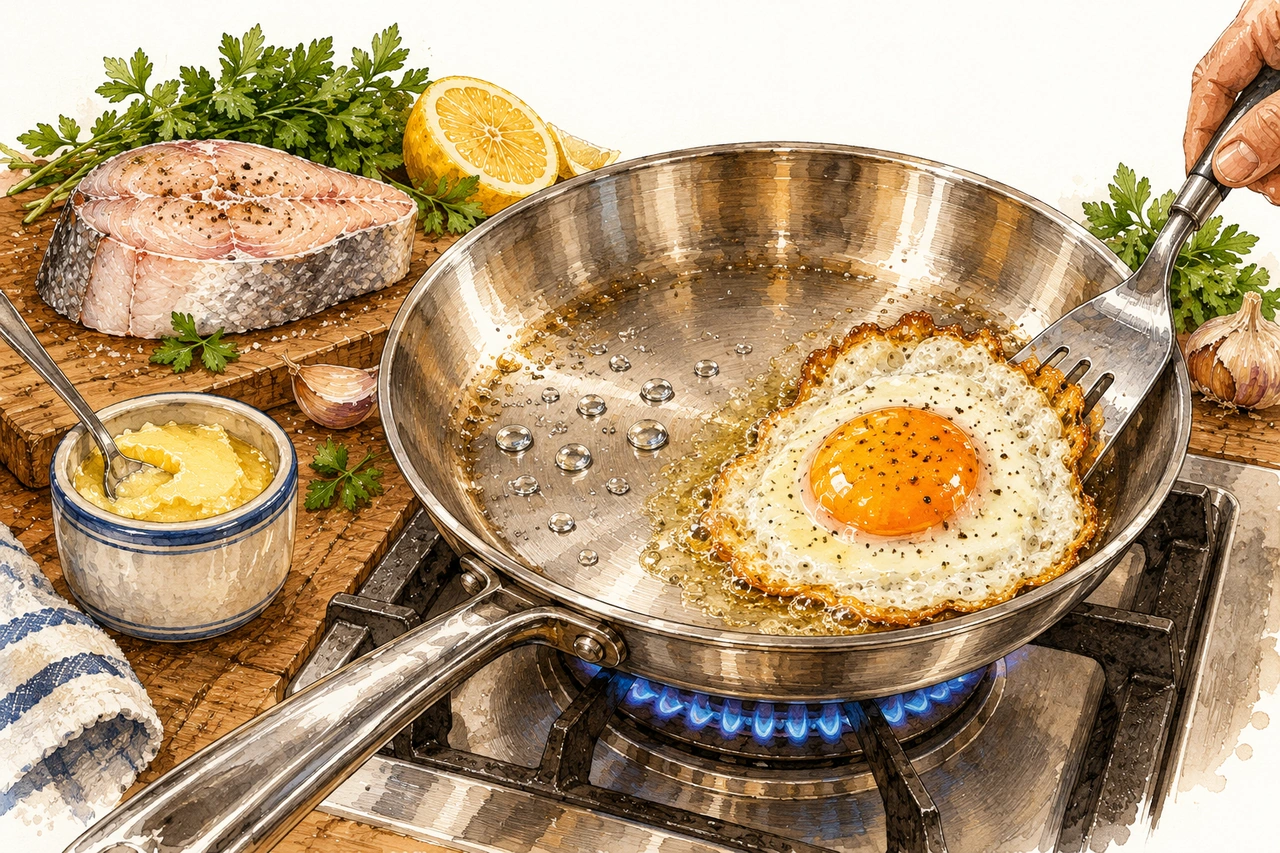
In the fridge, the fat rises and hardens into a disc on top of the gelatin. Lift it off with a spoon. In beef broth, this disc is beef tallow; in chicken broth, it is chicken fat, what Jewish cooking calls schmaltz. Both are good for sautéing onions, roasting potatoes and vegetables, and frying eggs.
This fat still has a little broth and water clinging underneath, so it spoils faster than fat that has been melted and strained. You have two options:
- Quick use: keep it in a jar in the fridge and use it over the following days.
- To last longer: melt the disc over low heat until it stops bubbling (that is the water evaporating), strain through a fine cloth and store in clean glass.
Scrape off and discard the darker layer between the fat and the broth. The step-by-step for straining, storing and knowing when to throw it out is in how to reuse cooking fat. And if your question is which fat to buy when the one in your pot runs out, see how to choose animal fat by origin and label.
An old habit was to leave the fat disc on as a lid, to "protect" the broth for longer. Don't count on it: the fat on top does not change the fridge times below.
How to Cool, Store and Freeze Safely
The delicate point of broth is not the cooking, it is the cooling. A 5-litre pot takes hours to cool on its own, and that lukewarm time is what favors bacteria. Official guidance points in the same direction:
- The World Health Organization, in the Five Keys to Safer Food, says not to leave cooked food at room temperature for more than 2 hours and to refrigerate it quickly, preferably below 5 °C.
- Anvisa's rule for food services (RDC 216/2004, item 4.8.16) requires prepared food to go from 60 °C to 10 °C within two hours.
In practice at home:
- Strain the broth while still hot and divide it into smaller containers or a wide basin.
- Set the basin inside another one with water and ice, stirring from time to time.
- When it stops giving off steam, cover and put it in the fridge.
- Never leave the pot of broth cooling on the stove overnight.
In the fridge: use within 3 days, the time the Ministry of Health gives for ready-made homemade food in the Food Guide for Brazilian Children Under 2 Years (p. 169), which applies to the whole family. The same RDC 216 allows up to 5 days for prepared food kept at 4 °C, but that is a rule for professional kitchens with controlled temperature; a home fridge is opened and closed all day. That is why we stick with the shorter time.
In the freezer: freeze in portions sized for how you'll use them. Ice cube trays work for sauces and baby food; 500 ml containers work for soup and beans. In glass, leave about 3 cm of space below the lid, because broth expands as it freezes and can crack the container. Label with the date and use within 30 days in the freezer, following the same Ministry of Health table. In the freezer compartment of single-door fridges, which doesn't get as cold, the time drops to 10 days.
To thaw: move the container to the fridge the day before or put the frozen block straight into the pot. Don't thaw it in the sink, and don't refreeze what has already thawed: the Ministry's guide and RDC 216 (items 4.8.13 and 4.8.14) cover both rules.
Before using: boil it. The WHO advises bringing soups and broths to a boil to make sure they reach 70 °C, and reheating cooked food thoroughly.
How to Use Bone Broth During the Week
A batch of broth in the fridge changes the whole week, because it goes wherever you would otherwise use water:
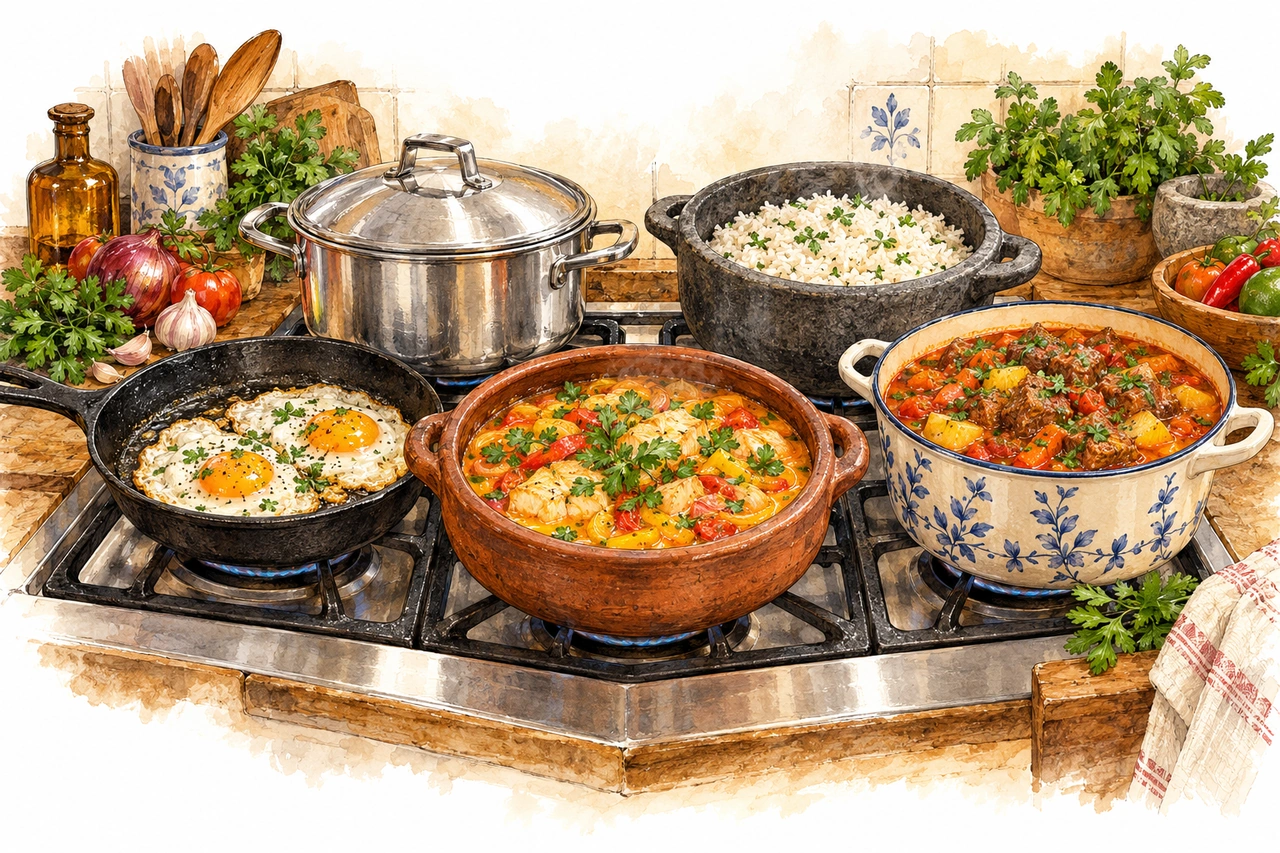
- Rice and beans: replace part of the water with broth.
- 15-minute soup: broth, chopped vegetables and whatever protein is left over.
- Pirão (a thick fish-broth porridge): hot fish broth and farinha de mandioca (toasted cassava flour), stirring until it thickens.
- Breakfast: poached eggs in bone broth, one of the recipes in the book.
- Reduction sauce: after browning meat in a skillet, add half a glass of wine, scrape up the bits from the bottom, add two or three cups of broth and let it boil uncovered until it has reduced by half and turned glossy. Adjust the salt only at the end. This is the technique behind meat in bone broth sauce.
If you are building a routine of preparations that feed other people, broth is the first piece. The article on base cooking for the week shows how to combine broth, sauces and fermented foods with safe storage times.
If there is a baby at home who is starting solid foods, set aside their portion before seasoning the family's food. What goes in at each stage, and in what texture, is covered in baby's first foods.
What Tradition Says and What Research Has Measured
"A good broth will resurrect the dead," says a South American proverb. Grandmothers gave broth to anyone who was sick or in postpartum recovery, and cooks treated it as the foundation of everything. Auguste Escoffier opened the stocks section of his classic cookery guide by saying that stock is everything in cooking, at least in French cooking, and that without it nothing can be done (A Guide to Modern Cookery, the English translation of Le Guide Culinaire).
Gelatin was once even a matter of public policy. In the 19th century, the French government saw gelatin extracted from bones as a cheap protein to feed the poor of Paris, and the chemist Jean-Pierre-Joseph d'Arcet tested, from 1812, extraction with hydrochloric acid and later with steam, which was far more efficient (summary in Gelatin). But gelatin is not a complete protein, because it lacks tryptophan. It enriches a meal; it does not replace meat.
When it comes to health, there is less evidence than you will hear promised out there:
- Colds: a 2000 laboratory study found that canja (Brazilian-style chicken soup) reduced the migration of neutrophils, inflammatory cells, in test plates (Rennard and colleagues, Chest). The authors themselves mention a possible mild anti-inflammatory effect. It was an in vitro experiment, not a trial on people with colds.
- Collagen: a 2019 Australian study analyzed homemade, café and store-bought bone broths and found great variation in amino acids between recipes. It concluded that broth is not a reliable source of the collagen precursors used in supplement research (Alcock and colleagues, 2019).
- Calcium: very little, as the WAPF itself acknowledged.
None of this takes broth out of the kitchen. The reasons to make it are concrete and need no promises: it uses cheap parts that would otherwise go in the trash, gives body and flavor to any dish, and frees the cook from the bouillon cube, which delivers salt and flavor enhancers but not the gelatin that makes broth set. "Broth became a cube," as we say on the book's page. Making your own is undoing that trade.
The First Pot
Buy a mocotó (beef cow heel, a joint-rich cut sold in Brazilian butcher shops) and a bag of chicken feet this week, and make a small pot. If the broth is firm as jelly the next day, you got the proportion right; if it is loose, add more feet next time.
To have bone broth as the base for other recipes, 181 Receitas Ancestrais brings together the six broths from the book and the dishes that come from them, such as beef in bone broth sauce and lamb stew, alongside ferments, natural sourdough breads and charcuterie, each recipe with step-by-step instructions and a link to the bases it uses. Three recipes are open to read at /receitas so you can get to know the format first.
Part of this text was based on an article by Sally Fallon Morell published by the Weston A. Price Foundation ("Broth is Beautiful").
As informações têm caráter educativo e não substituem avaliação individual de profissional de saúde habilitado.