Blogfats · Weston A. Price
Is Butter Bad for You? Why Butter Is the Better Choice
Butter was cast as the villain and margarine took its place. Find out why the Weston A. Price Foundation sees butter as a protective, essential food.
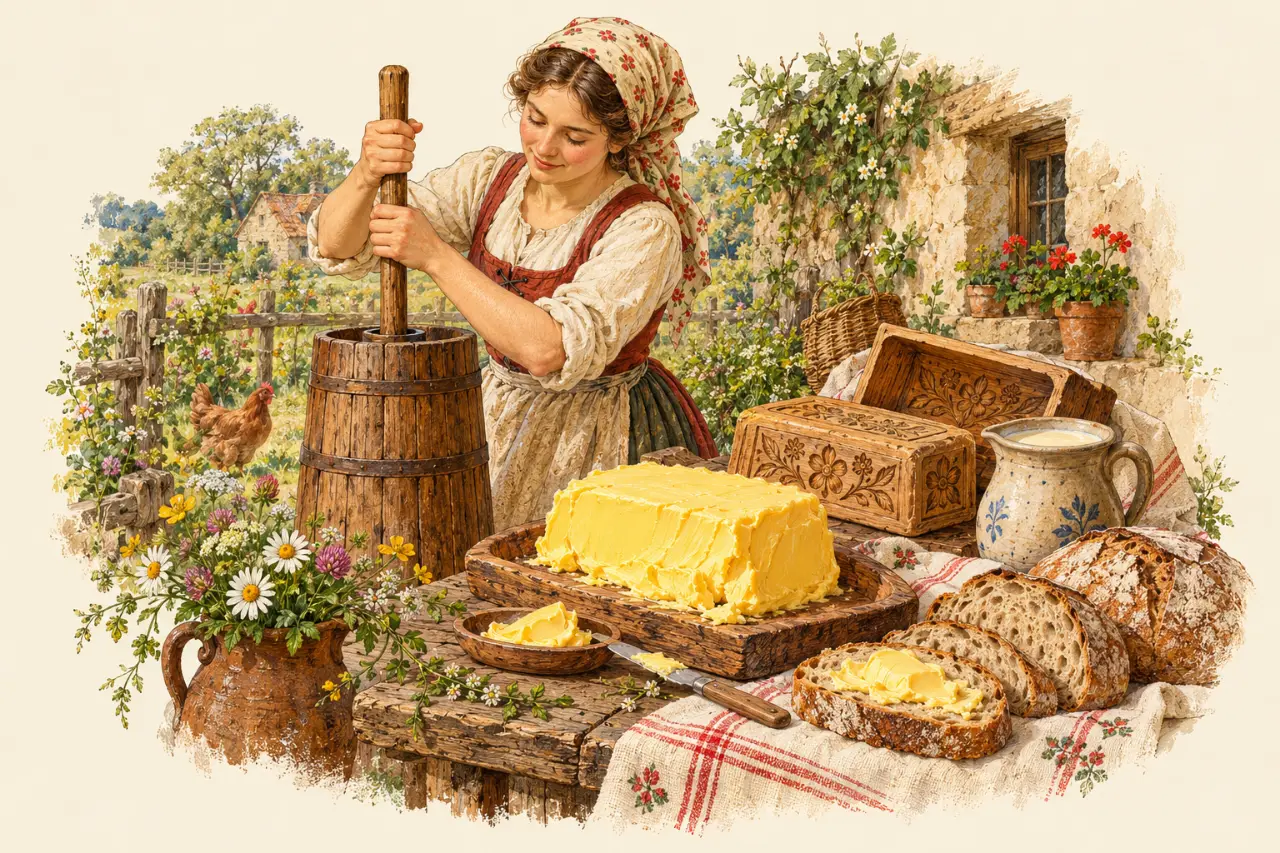
Few questions about food come up as often as this one: is butter bad for you? For decades, the official answer was yes. Butter was accused of clogging arteries and causing cancer, and "polyunsaturated" margarine took its place on the table.
For the Weston A. Price Foundation, that story was told backwards. This article, adapted from a classic text by Sally Fallon and the biochemist Mary G. Enig, a fat specialist, explains why butter is not only not bad for you, it protects the body against many diseases.
How Butter Became the Villain
According to the authors, when the manufactured-food industry and the defenders of big corporate farms realized they could not hold back Americans' growing interest in diet and nutrition, they decided to infiltrate the movement, which threatened some of the country's largest and most monopolistic industries. From then on, the information reaching the public was distorted in a few ways.
The first was the claim that naturally saturated animal fats were the main cause of the epidemic of heart disease and cancer. Butter took the worst of the attack and was accused of terrible crimes. The "diet dictators," as the authors call the nutrition authorities, recommended replacing it with polyunsaturated margarine, and most Americans obeyed. Butter almost disappeared from the table, avoided like a delinquent. It is a swap Brazil knows well, with the tub of margarine sitting next to the bread at breakfast.
A Sacred Food for Traditional Peoples
This bad reputation would surprise many people around the world, who have valued butter for thousands of years for its life-sustaining qualities. When the dentist Weston Price studied native diets in the 1930s, he found butter to be a staple food of many peoples of exceptional health.
- In isolated villages in Switzerland, residents placed a bowl of butter on the church altar, lit a wick in it and let it burn all year long, as a sign of the divine presence in butter.
- Arab groups also prized butter highly, especially the deep yellow-orange kind produced by animals grazing on green grass in spring and autumn.
- American folk wisdom recognized that children raised on butter were robust and strong, while those who drank skim milk while growing up turned out pale, thin and "peaked" in the face.
This image even appears in literature. In the short story Neighbour Rosicky, by the writer Willa Cather, a creamery agent tries to convince the Rosicky family to sell the cream from their milk, telling them how much their neighbors, the Fasslers, had earned from theirs the year before. The lady of the house, Mary, replies: "And look at the Fassler children! Pale, peaked, they look like skim milk. I'd rather put color in my children's faces than money in the bank."
So, does butter cause disease? On the contrary, the authors answer: butter protects us against many of them.
Is Butter Bad for Your Heart?
Heart disease was rare in the United States at the beginning of the 20th century. Between 1920 and 1960, its incidence shot up until it became the leading cause of death in the country. Over the same period, butter consumption plummeted from about 8 kg to 1.8 kg per person per year. You don't need a PhD in statistics, the authors point out, to conclude that butter is not the culprit.
In fact, butter contains several nutrients that protect the heart:
- Vitamin A. This is the first of them. Vitamin A is needed for the health of the thyroid and the adrenal glands, which play a part in the proper functioning of the heart and the cardiovascular system. Babies born to mothers with a vitamin A deficiency are born with abnormalities of the heart and the large blood vessels. According to the authors, butter is the best source of vitamin A in the American diet, and the easiest to absorb.
- Lecithin. The lecithin in butter helps the body properly assimilate and metabolize cholesterol and other components of fats.
- Antioxidants. Butter contains several antioxidants that protect against the kind of free-radical damage that weakens the arteries. Vitamins A and E play a strong antioxidant role, and butter is a very rich source of selenium: gram for gram, it has more than herring or wheat germ.
- Cholesterol. Butter is also a good source of cholesterol. Cholesterol, an antioxidant? Exactly. The authors explain that cholesterol is a powerful antioxidant, which the body releases into the blood when it receives too many free radicals, usually from the damaged, rancid fats in margarine and highly processed vegetable oils. The foundation explores the subject further in Cholesterol: Friend or Foe?.
A survey by the Medical Research Council, the British medical research council, showed that men who ate butter had half the risk of developing heart disease of those who used margarine.
Butter and Cancer
In the 1940s, research suggested that eating more fat increased the risk of cancer. The abandonment of butter accelerated, and margarine, until then food for the poor, came to be accepted by well-off families.
There was, however, a small problem with the way this research was presented to the public. The press failed to highlight that the "saturated" fats used in the experiments were not naturally saturated fats, but partially hydrogenated fats, artificially hardened, the kind found in margarine and not in butter. The researchers claimed (and perhaps believed) that there was no difference between the naturally saturated fats in butter and the hardened fats in margarine and vegetable shortening. So butter was painted with the same brush as manufactured fats, and the villains passed for heroes.
In fact, the authors say, many of the saturated fats in butter have strong anticancer properties. Butter is rich in short- and medium-chain fatty acids, which have strong antitumor effects. It also contains conjugated linoleic acid, or CLA, which according to the foundation offers excellent protection against cancer.
The vitamin A and the antioxidants in butter (vitamin E, selenium and cholesterol) protect against cancer as much as against heart disease.
Butter and Immunity
The vitamin A in butter is essential for a healthy immune system, and its short- and medium-chain fatty acids also strengthen the body's defenses. Hydrogenated fats and an excess of long-chain fatty acids, found in polyunsaturated oils and in many butter substitutes, have a harmful effect on the immune system, according to the authors.
Butter and Arthritis: The Wulzen Factor
The Wulzen factor, also called the "anti-stiffness" factor, is a nutrient found only in butter. The researcher Rosalind Wulzen discovered that it protects against calcification of the joints, degenerative arthritis or osteoarthritis, and also against hardening of the arteries, cataracts and calcification of the pineal gland.
Unfortunately, this vital substance is destroyed by pasteurization. Calves fed pasteurized or skim milk develop stiff joints and do not thrive. The symptoms go away when raw milk fat is added to their diet. The effects of milk processing are the subject of another Nu&Cru article, about UHT milk.
Butter and Osteoporosis
The vitamins A and D in butter are essential for the body to absorb calcium well and, therefore, for strong bones and teeth. In the authors' view, the epidemic of osteoporosis in Western countries that drink milk may be related to a preference for skim milk, chosen by people who believe it is good for them. Butter also has an anticariogenic effect, meaning it protects against tooth decay.
Butter and the Thyroid
Butter is a good source of iodine, in a form that is very well absorbed. Eating it prevents goiter in mountain regions, where there is no seafood. In addition, the vitamin A in butter is essential for the thyroid to work properly.
Butter and Gut Health
Milk fat contains glycosphingolipids, a special category of fats that protects against gastrointestinal infections, especially in the very young and the elderly. That is why, according to the study the authors cite, children who drink skim milk have diarrhea three to five times more often than those who drink whole milk.
The cholesterol in milk fat supports the health of the intestinal wall and protects against colon cancer. Short- and medium-chain fatty acids protect against pathogens and have strong antifungal action. For this reason, the authors argue, butter plays an important role in the treatment of candida overgrowth.
Does Butter Make You Fat?
The idea that butter makes you fat is, in the authors' view, a sad mistake. The short- and medium-chain fatty acids in butter are not stored in fatty tissue: the body uses them as a quick source of energy. Human body fat is made up mainly of longer-chain fatty acids, which come from olive oil and polyunsaturated oils, and also from refined carbohydrates.
Because it is so rich in nutrients, butter brings a feeling of satisfaction. The authors leave us with a question: could margarine and other butter substitutes trigger cravings and compulsive eating precisely because these highly manufactured products do not give the body what it needs? The relationship between real food and weight is the subject of the article Ancestral Eating: The End of Dieting.
Butter and Children's Growth
Many of the factors in butter support ideal growth in children, and the main one is vitamin A. According to the authors:
- those who get too little vitamin A during pregnancy tend to have a narrow face and bone structure, a small palate and crowded teeth;
- extreme vitamin A deprivation causes blindness, skeletal problems and other birth defects;
- those who get the ideal amount of vitamin A from conception have a broad, handsome face, strong, well-aligned teeth and excellent bone structure;
- vitamin A also plays an important role in the development of sexual characteristics.
Calves fed butter substitutes get sick and die before reaching adulthood. The foundation explores the topic of vitamin A in pregnancy in its articles on eating before and during pregnancy.
Weston Price's Factor X
Factor X, discovered by Weston Price and now considered to be vitamin K2, is also essential for ideal growth. According to the authors, it is only present in the milk fat of cows that graze on green grass. The story of this discovery is told in the foundation's article On the Trail of the Elusive X-Factor.
The cholesterol in milk fat plays an important role in the development of the brain and nervous system. Breast milk is rich in cholesterol, and more than 50% of its calories come from fat. Low-fat diets have been linked to poor weight gain and slow growth in children, and yet they are often recommended for little ones. Children need the many factors found in butter and other animal fats to develop well. For feeding little ones, see the Guide to Ancestral Introduction of Solid Foods and the article on baby's first foods.
Margarine, Vegetable Spreads and Who Profits From Them
For the authors, it is no longer a secret that margarine and the hydrogenated fats in industrialized sweet and savory biscuits are the main culprits behind the current epidemic of cancer and heart disease. Even so, leading names in nutrition keep speaking ill of butter and recommending the new tub vegetable spreads in its place.
These spreads may not contain hydrogenated fat, but they are made from highly processed, rancid vegetable oils, soy protein isolate and a long list of additives. A bestselling American cookbook, Butter Busters, promoted a powdered substitute made from maltodextrin, a carbohydrate extracted from corn, alongside dozens of other industrial products labeled "light."
Who benefits from the campaign against butter? The list is long, say the authors, and includes conventional medicine, hospitals, the pharmaceutical industry and food processors. But the big winner is the corporate farm and the cartels that buy its products, mainly cotton, corn and soy, the three main crops in the United States, usually grown as monocultures on large properties, with heavy use of chemical fertilizers and pesticides.
All three serve as raw material for both margarine and the new vegetable spreads. To get these products accepted by the more demanding consumer, industry and agribusiness take care to promote them as healthy foods. "We are fools if we believe them," write the authors. If you also want to avoid these oils when eating out, you can check the map De olho no óleo ("Keep an eye on the oil"), which lists restaurants that cook with real fat.
Butter and Family Farming
A country that consumes dairy fat, on the other hand, is a country that supports family farming. If consumers were willing to pay a fair price for high-quality butter and cream from pasture-raised cows, every small and mid-sized farmer could turn a profit with a few Jersey or Guernsey cows, breeds known for their butterfat-rich milk.
To give the cows green pasture, the farmer would naturally have to rotate crops, setting aside different parts of the land for grazing. This would give the soil a fallow period, not to mention excellent-quality manure. Fields managed this way produce top-quality vegetables and grains in the following seasons, without nitrogen fertilizers and with a minimum of pesticides.
And free-range hens, scratching for the insects that gather under the cow manure, would lay eggs of exceptional nutritional quality, full of vitamin A and beneficial fatty acids. It is the same logic behind backyard chickens.
To restore prosperity to America's farmers, in the best tradition of Thomas Jefferson, the authors recommend buying organic butter, cream, whole milk and whole-milk yogurt, and eggs from free-range hens. These foods give small farmers a good, fair profit, without concentrating power in the hands of conglomerates. In Brazil, the Nu&Cru producers map helps you find who sells dairy and eggs straight from the farm. With good cream, you can make sour cream at home, and with whole milk, plain yogurt.
Better and Essential
Peoples who do not use butter get the same nutrients from foods such as insects, organ meats, fish roe and the fat of marine animals, items that most of us find repulsive. So, the authors conclude, for those who do not eat insects or whale fat, butter is not just better: it is essential.
To bring this lesson to the table every day, start with our seasoned butter, which goes well with meat, vegetables and bread. The foundation also sums up the arguments of this article in a leaflet about butter (in English).
Read also
On Nu&Cru
- Is Lard Bad for You? The Unfairly Blamed Fat
- How to Make Lard and Beef Tallow at Home
- Omega-6: The Danger of Vegetable Oils
- Is UHT Milk Bad for You? The Truth About the Carton
- Weston A. Price: What Traditional Peoples Can Teach Us About Eating
- Recipes with butter: seasoned butter, pork cracklings bread with butter and creamy eggs and whole roast chicken
- 181 Receitas Ancestrais (181 Ancestral Recipes), the Nu&Cru recipe book
At the Weston A. Price Foundation (in English)
- The Skinny on Fats
- Is Butter Back?
- The Oiling of America
- What Causes Heart Disease?
- Princípios Atemporais de Dietas Tradicionais Saudáveis (Timeless Principles of Healthy Traditional Diets) (in Portuguese)
References
- Price, Weston A. Nutrition and Physical Degeneration. La Mesa: Price Pottenger Nutrition Foundation, 1945.
- Cather, Willa. Neighbour Rosicky. Short story cited as an example of the American folk tradition about milk fat.
- Cranton, E. M.; Frackelton, J. P. Journal of Holistic Medicine, Spring/Summer 1984.
- Nutrition Week, March 22, 1991, 21(12):2-3.
- Enig, Mary G. Nutrition Quarterly, 1993, 17(4).
- Cohen, L. A. et al. Dietary fat and mammary cancer. II. Journal of the National Cancer Institute, 1986, 77:43.
- Belury, M. A. Conjugated dienoic linoleate: a polyunsaturated fatty acid with unique chemoprotective properties. Nutrition Reviews, April 1995, 53(4):83-89.
- Cohen, op. cit.
- American Journal of Physical Medicine, 1941, 133; Physiological Zoology, 1935, 8:457.
- Kabara, J. J. The Pharmacological Effects of Lipids. Champaign: The American Oil Chemists Society, 1978, pp. 1-14.
- Jennings, I. W. Vitamins in Endocrine Metabolism. Springfield: Charles C. Thomas Publisher, pp. 41-57.
- Koopman, J. S. et al. Milk fat and gastrointestinal illness. American Journal of Public Health, 1984, 74(12):1371-1373.
- Addis, Paul. Food and Nutrition News, March/April 1990, 62(2):7-10.
- Prasad, K. N. Butyric acid: a small fatty acid with diverse biological functions. Life Sciences, 1980, 27:1351-1358; Gershon, Herman; Shanks, Larry. Symposium on the Pharmacological Effect of Lipids. Champaign: American Oil Chemists Society, 1978, pp. 51-62.
- Linoleic acid levels in adipose tissue reflect the amount of linoleic acid in the diet. Valero et al. Annals of Nutrition and Metabolism, Nov./Dec. 1990, 34(6):323-327; Felton, C. V. et al. Dietary polyunsaturated fatty acids and composition of human aortic plaques. The Lancet, 1994, 344:1195-1196.
- Price, op. cit.
- Jennings, op. cit.
- DeCava, Judith. Journal of the National Academy of Research Biochemists, September 1988, pp. 1053-1059.
- Price, op. cit.
- Alfin-Slater, R. B.; Aftergood, L. "Lipids". In: Goodhart, R. S.; Shils, M. E. (eds.). Modern Nutrition in Health and Disease. 6th ed. Philadelphia: Lea and Febiger, 1980, ch. 5, p. 131.
- Smith, M. M.; Lifshitz, F. Excess fruit juice consumption as a contributing factor in nonorganic failure to thrive. Pediatrics, March 1994, 93(3):438-443.
- Enig, op. cit.
- "Diet Roulette". The New York Times, May 20, 1994.
This article is an adaptation of "Why Butter Is Better," by Sally Fallon and Mary G. Enig, published by the Weston A. Price Foundation in 2000. Read the original in English.
As informações têm caráter educativo e não substituem avaliação individual de profissional de saúde habilitado.