
Blogfats · real food · Weston A. Price
Omega-6 and Seed Oils: Why Soybean, Corn and Canola Oil Are a Health Danger
Soybean, corn and canola oils sent omega-6 intake soaring. Learn why the Weston A. Price Foundation links this shift to the rise of chronic disease, and how to cut back on seed oils.
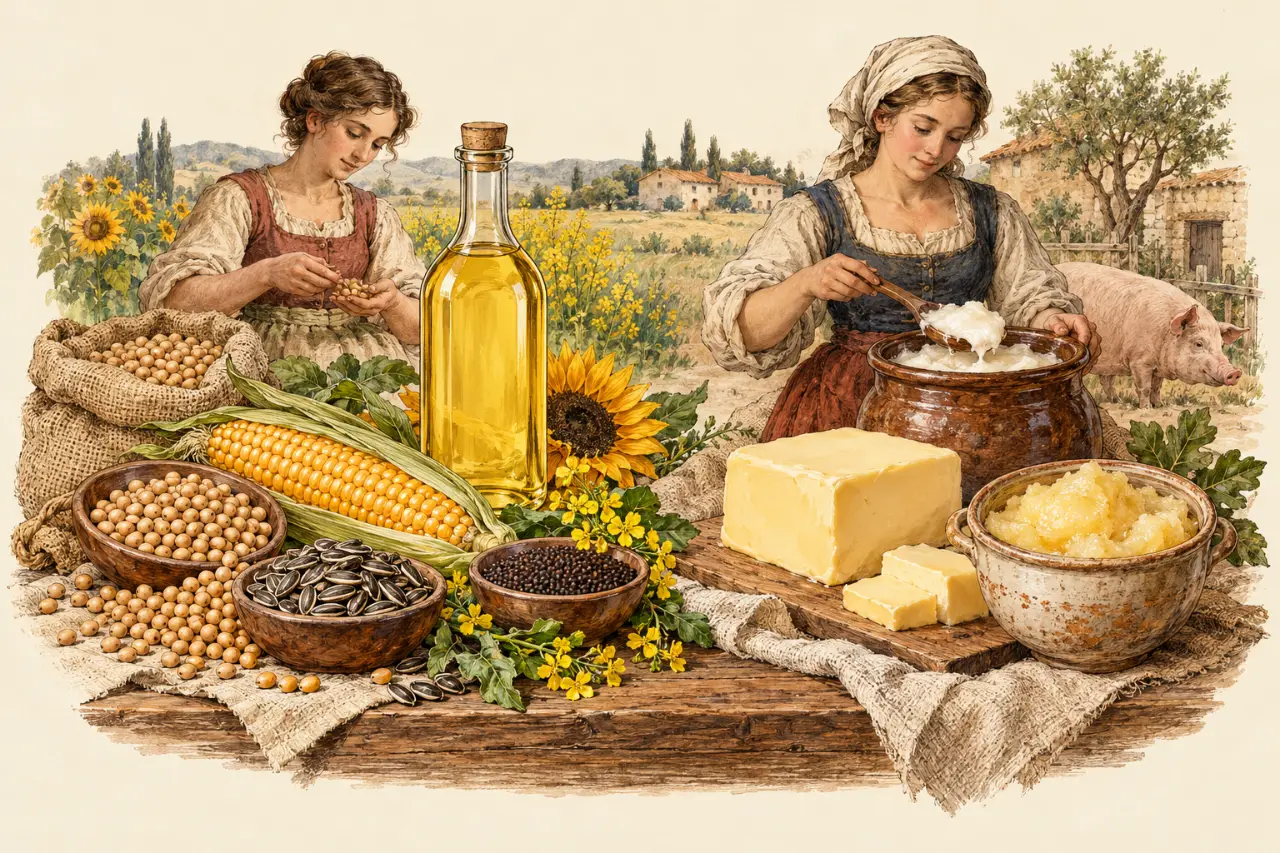
In two centuries, chronic diseases that were once rare have become part of the Western landscape: heart disease, hypertension, stroke, cancer, type 2 diabetes, metabolic syndrome, Alzheimer's, Parkinson's, autoimmune diseases and age-related macular degeneration. Nineteenth-century doctors barely knew these conditions. Today they affect even children.
Over the same period, consumption of processed foods exploded, and above all of industrial vegetable oils rich in omega-6, the polyunsaturated fats extracted from seeds. The "mother" omega-6 of this family is linoleic acid, an 18-carbon molecule.
Influential institutions such as Harvard, Tufts, the Mayo Clinic, the American Heart Association and the World Health Organization have recommended since at least the 1960s that people eat more of these oils, presented as "good for the heart." Americans followed the advice, and the result is not encouraging: the United States is the most obese of the wealthy OECD nations and perhaps the least healthy in the world, without ranking near the top on any health indicator. In the author's view, the rise in omega-6 consumption created an internal environment in the body that is pro-oxidant, pro-inflammatory, nutrient-poor and toxic.
This article is an adaptation of "The Omega-6 Apocalypse," by the American ophthalmologist Chris Knobbe, published in the Weston A. Price Foundation's magazine. Knobbe devotes his research to the effects of seed oils on health and is known for linking the Westernized diet to macular degeneration, a subject he also discusses in an interview published by the foundation.
Are vegetable oils bad for you? Poison, not food
Seed oils go by many names: vegetable oils, edible oils, omega-6 oils and, the most recent euphemism, "plant oils." The intention is always to sound healthy. According to the author, the most dangerous are those rich in polyunsaturated fat: soybean, corn, canola, cottonseed, rapeseed, grapeseed, sunflower, safflower and rice bran oils.
It says a lot that a seed oil refinery looks like an oil refinery. In broad strokes, the process goes like this:
- The seeds are crushed, heated and run through a hydraulic screw press.
- The oil extracted from this mass goes into a bath of hexane, a petroleum-derived solvent.
- Next come steam treatment and degumming.
- The oil is alkalinized with sodium hydroxide, or caustic soda.
- It is then chemically bleached, usually with calcium sulfate dihydrate.
- Since it still smells terrible, it goes through deodorization, a steam distillation at very high temperature and pressure.
After so much heating and so many mechanical and chemical treatments, the result is a highly oxidized oil: the long chains of fatty acids break into fragments bound to oxygen.
Bottled or in drums, the oil goes on to restaurants, where it is heated again for cooking and frying, or to processed-food factories. For people eating the standard American diet, a quarter to a third of their calories may come from these factories.
Hippocrates is said to have declared: "Let food be thy medicine, and medicine be thy food." Paracelsus, the father of toxicology, stated that everything a person needs for health and healing was given by God in nature, and that the challenge of science is to find it. And the dentist Weston Price wrote in Nutrition and Physical Degeneration: "Life in all its fullness is Mother Nature obeyed." Are we obeying nature when we consume industrial seed oils?
These oils are the industry's favorite fat: it is almost impossible to find a processed food made with butter, lard or beef tallow (rendered beef fat). The same goes for fast-food chains and even the finest restaurants, which cook with oils rich in polyunsaturated fats, in the United States almost always soybean or canola. In Brazil, the main player is soybean oil, which is why Nu&Cru maintains the map Keep an Eye on the Oil, showing which restaurants cook with vegetable oil and which use real fat. The author could not be more emphatic: these oils are chronic metabolic and biological poisons.
The Explosion of Chronic Disease
For decades, researchers have been warning about rising weight among Americans. Some blame the changes that followed the 1980 US dietary guidelines, which led people to eat more carbohydrates and less fat. When weight kept climbing, the pendulum swung the other way: many experts concluded that carbohydrates were the problem, and the low-carb craze began.
Knobbe thinks the ratio of macronutrients has little to do with it, and he believes Weston Price would agree. Price didn't even address the subject in his research, because it was obvious that this ratio varied widely among healthy peoples. What changed, and keeps changing, is the composition of the fats: animal fats have been steadily replaced by industrial seed oils.
A 2012 article on the changing profile of disease, published in the New England Journal of Medicine, shows the turning point. In 1900, the three leading causes of death (influenza and pneumonia, tuberculosis, and gastrointestinal infections) were all infectious, as were others on the top-ten list, such as diphtheria. Heart disease already ranked fourth, but, as the authors explain, it was "mainly infectious or valvular", a consequence of rheumatic fever, syphilis or endocarditis, not of atherosclerosis.
By 2010, almost all of the ten leading causes of death were chronic: coronary heart disease at the top, followed by cancer, chronic obstructive pulmonary disease, stroke, Alzheimer's, diabetes and kidney disease. Infectious diseases, which accounted for 60% to 65% of deaths in 1900, accounted for only 2.3% in 2010.
When Heart Attacks Were Rare
As far as the author knows, the scientific literature of the 19th century produced only eight articles on heart disease, because it was rare. In 1910, when Sir William Osler, one of the founders of Johns Hopkins hospital, reviewed 34 years of his own practice, he reported having seen about 200 cases of angina (chest pain) in the first decade of the century, but not a single heart attack. It was only in 1912 that the physician James Herrick published the first known American article on heart attack, documented with an autopsy.
Today, almost one in three deaths is due to coronary heart disease. The same pattern holds for other chronic diseases, as the table at the end of this article shows.
A Global Experiment With Food
Processed foods, which fill most of the supermarket shelves, are made with refined flour, sugar, seed oils and artificial trans fat (which also comes from seed oils). For the author, the rise of these four ingredients is a human experiment on a global scale, one that has gone hand in hand with the escalation of chronic disease:
- Sugar: consumption has been growing for centuries; between 1822 and 2012, it multiplied by 17.
- 1866: right after the Civil War, the United States launches cottonseed oil, "America's first vegetable oil".
- 1880s: roller mills replace stone mills and give rise to refined white flour, without the bran and germ of the wheat, a food poor in nutrients.
- 1899: the Hudnut company offers Americans the first corn oil, called Mazoil.
- 1911: Procter & Gamble launches Crisco, a fat made from cottonseed oil, and ushers in the era of trans fat. The foundation tells this story in The Rise and Fall of Crisco.
- After World War II: other seed oils arrive, and soybean oil production skyrockets.
In 2009, data from the United States Department of Agriculture (USDA) showed that these four items made up 63% of the American diet, almost two-thirds. Combining the USDA data with his own, the author estimates that the share is above 70%: 32% seed oils, 21% sugar, 17% refined wheat and 1% trans fat, for a total of 71%. That leaves very little room for real food.
Americans did not consume seed oils before 1866. By 2010, they were eating 80 grams per person per day, more than three tablespoons. At the start of the 20th century, 99% of added fats were still of animal origin: lard, butter and beef tallow (rendered beef fat). By 2005, 86% were industrial seed oils, which have practically pushed animal fats out of the kitchen.
Machine Oil That Became Food
At first, Americans turned up their noses at cottonseed oil. In 1866 it was known as an oil for machines and lamps, which, in the author's view, is exactly the use seed oils should have kept. Back then, the omega-6 in the diet came in very small amounts of linoleic acid, found in butter, in lard and in the tallow of animals raised on pasture, eating the natural diet of their species. With pigs and chickens fed on genetically modified corn and soy, the story is different, as we will see later.
From 1866 on, seed oils slipped into food through the back door: adulteration. Cottonseed oil was mixed into lard, butter and olive oil. By 1880, Europeans were complaining that 40% of what was sold as olive oil had been adulterated with cottonseed oil, and that year Italy suspended imports of American oils. Even today, many people consume seed oils without realizing it, so well hidden are they in foods.
How Much Omega-6 We Eat
The result was a surge in linoleic acid consumption in the United States:
- 1865: about 2 grams per day (1% of calories);
- 1909: almost 5 grams (2% of calories);
- 1999: 18 grams (7% of calories);
- 2008: 29 grams (11.8% of calories).
That is a 13-fold increase in about a century and a half.
All natural fats contain some linoleic acid, and it is essential. But the amount we need is small: the author considers 0.5% of calories to be enough, and studies suggest a maximum of 1% to 2%. Here it is worth recalling another line from Paracelsus: all things are poison, and only the dose makes a thing not a poison. Or, in the popular version, "the dose makes the poison". If in 1865 linoleic acid was one hundredth of calories and in 2008 it was more than one eighth, the 21st-century dose, in the author's opinion, turns it into a poison.
Omega-6 Builds Up in Body Fat
Omega-6 accumulates in adipose tissue. A 2015 systematic review that pooled 37 studies measuring linoleic acid in the body fat of Americans found a linear, statistically significant increase between 1959 and 2008: from 9.1% to 21.5%, a rise of 136% (Advances in Nutrition, 2015).
There is a mathematical relationship between the percentage of linoleic acid in the diet and in body fat: if it makes up 5% or 10% of the diet, it will end up at around 10% or 20%, or even more, in body fat. The half-life of linoleic acid in fat is 600 to 680 days, meaning it stays there for about two years. By the author's calculations, someone who spent years on a diet rich in omega-6 may take six years or more to bring the level back to where it should be.
Mitochondria Breaking Down
What links diseases as seemingly different as cancer, heart disease, stroke and obesity? For the author, it is the dysfunction of the mitochondria, the power plants of our cells, and it starts with an excess of omega-6.
When there is too much omega-6, the electron transport chain, which supports many metabolic processes, collapses. Omega-6 is attacked by the free radicals superoxide and hydroxyl and broken down into lipid hydroperoxides, which soon degrade into advanced lipoxidation end products. These are well-established inflammatory pathways. Taken together, argues Knobbe, oils rich in polyunsaturated fats are cytotoxic, genotoxic, mutagenic, carcinogenic, atherogenic, thrombogenic and obesogenic poisons, and this is how we arrive at the metabolic diseases and physical degeneration we see today.
The Vitamins Only Animal Fat Provides
Between the early 20th century and the 1920s, nutrition researcher Elmer McCollum carried out numerous animal studies, which probably influenced Weston Price. In one of them, two groups of similar rats were given identical diets after weaning, on the 26th day of life, with a single difference: the source of fat. One group received 5% cottonseed oil; the other, 1.5% butterfat.
- Cottonseed oil: the rats lived an average of 555 days, reached only 60% of normal size, and were weak, sick and frail.
- Butterfat: the rats lived about 1,020 days, almost twice as long, reached normal size (almost double the size of the other group) and were infinitely healthier.
The difference lies in what we now call the fat-soluble vitamins A, D and K2. In a 1918 book, McCollum could only speak of "unidentified substances or groups of substances," because vitamins had not yet been isolated (although the biochemist Casimir Funk had proposed the concept in 1912). Even so, he observed that there was something especially abundant in the fat of butter, in egg yolks and in organs such as liver and kidney, which did not exist in any fat or oil of plant origin. McCollum showed that vegetable oils, as the only source of fat, do not support growth or health: the animals on that diet got sick and died early.
What Weston Price Already Knew
Weston Price understood all of this even before he began his travels to study traditional diets. Among the "displacing foods of modern commerce," as he called them, were refined flour, sugars, canned foods, sweets and vegetable oils. Besides cavities, he found that these foods led to arthritis (even in young people), many types of cancer, greater susceptibility to diseases such as tuberculosis, and malformations of all kinds, even with normal parents.
Price showed that these effects could be explained by a lack of vitamins, minerals and other essential nutrients, as he details in the chapter on fat-soluble vitamins of his book. The ancestral diets he documented had ten times more fat-soluble vitamins, four times more water-soluble vitamins and up to ten times more minerals than the American diet of the time. And that was in the 1930s, well before the flood of processed foods.
On page 5 of Nutrition and Physical Degeneration, Price wrote that he went looking for control groups among the remnants of primitive peoples because he could not find them among modernized groups, and that "only the primitive groups were able to provide adequate normal controls." In other words: already by the late 1920s and early 1930s, he had concluded that there were no control groups in the United States. Americans were already eating so many processed foods that it was impossible to establish what he called "standards of excellence." To do that, he had to leave the country.
Statistics as a Magic Trick
In 2009, a British statistician published a paper titled "Modern Statistics: Myth and Magic," a personal exploration of the contradiction between the fascination of statistics and its poor public image. We need statistics, the author acknowledges, but many people have grown tired of analyses that use statistical tricks to reach doubtful conclusions.
One example is the well-known 2008 study of American nurses, carried out by researchers at Brigham and Women's Hospital in Boston, on adherence to the DASH diet and the risk of coronary heart disease and stroke in women (Archives of Internal Medicine, 2008). With no control group at all, the study was used to promote a diet that heavily restricts saturated fat and sodium, while recommending several daily servings of soft margarine, vegetable oil, mayonnaise and bottled salad dressing. According to the author, the scientific literature contains tens, if not hundreds, of thousands of studies with similar flaws. (At Nu&Cru, mayonnaise is made with butter.)
When Everyone Is Exposed
Part of the problem goes back to Ronald Fisher, considered the father of modern statistics, who in the 1950s argued forcefully, in several papers, that cigarettes did not cause lung cancer (perhaps with some bias, since he himself enjoyed smoking). In the early 1960s, 42% of American adults smoked, an average of 11 cigarettes a day. Counting smokers and those exposed to secondhand smoke, well over half the population was exposed. And so the question arises: how do you identify the cause of a problem if everyone in the study is exposed to the harmful agent?
This is how the author sees today's studies. Consumption of processed foods is universal: they account for more than 75% of the food sold in the world. Nearly 60% of what people eat in the United States (and 48% in Canada and 57% in the United Kingdom) is ultra-processed food based on sugar, refined flour, seed oils and trans fat. Why look for the cause of a disease in populations where everyone consumes the supposedly harmful agents and no one gets the supposedly protective ones, the vitamins and minerals? That is why Price left the United States to do his research. For Knobbe, studies done only on Western or Westernized populations just compare the sick with the sicker.
Peoples Who Live Without Seed Oil
Fortunately, even after Price's time, there were (and still are) populations with traditional diets, who do not eat processed foods full of sugar, refined flour, seed oils and trans fat, and who do not have heart disease. Among them are the Maasai of Kenya and Tanzania, the people of Tokelau in Polynesia, the peoples of Tukisenta and Kitava in Papua New Guinea, the Tsimane of Bolivia and the Aché of Paraguay.
The Maasai: Raw Milk, Meat and Blood
The Maasai diet consists almost entirely of raw milk, meat and blood, with very little fruit and vegetables. The researcher George Mann, who studied them in the 1960s and 1970s (Journal of Atherosclerosis Research, 1964), showed that of 3,000 daily calories, 66% came from animal fat, of which 40% to 60% is saturated, as explained in the foundation's article The Skinny on Fats. Omega-6 made up 1.7% of calories. The Maasai had no heart disease, and yet the American Heart Association still recommends limiting saturated fat to 5% or 6% of calories.
Tokelau: the power of coconut
In the South Pacific, Prior and colleagues studied the people of Tokelau in the late 1970s and early 1980s and found no heart disease, and practically no obesity or diabetes (American Journal of Clinical Nutrition, 1981). Photos from 1876 show a healthy-looking people.
Their diet, very different from the Maasai's, was made up of coconut, fish, tubers and fruit. Between 54% and 62% of their calories came from coconut, including coconut oil, which is 91% to 95% saturated fat. Overall, 53% of the diet was fat, and 48% of calories were saturated fat. If the Maasai have the richest diet in animal saturated fat ever recorded, the Tokelauans, in the author's assessment, have the richest in plant-based saturated fat. Omega-6 sat at around 1%, and total polyunsaturated fat (omega-6 and omega-3 together) at 2%. That's where all of us should be, says Knobbe.
Tukisenta: almost nothing but sweet potato
The people of Tukisenta, in Papua New Guinea, had a different profile. In 1973, the Australian researchers Sinnett and Whyte reported that sweet potato made up more than 90% of the diet, with occasional feasts of pork and chicken (Journal of Chronic Diseases, 1973). The macronutrient ratio leaned heavily toward carbohydrates (94.6%), with only 3% fat and 2.4% protein, but the telling figure is omega-6: 0.6%.
Among the 779 people over the age of 15, the population was lean, physically fit and well nourished, with no obesity, hypertension, diabetes, gout, ischemic heart disease or macular degeneration.
The lesson from Japan
Japan also once had exemplary health. It is home to Okinawa, whose residents were (or have been) the longest-lived people on the planet. In 1976, obesity among Japanese adults was about 1.1% (the country used a body mass index cutoff of 30 and, in recent decades, lowered it to 25, which changes the numbers a little). In the 1950s, according to the researchers Yerushalmy and Hilleboe, Japan's heart disease rate was among the lowest in the world.
In recent decades, the health of the Japanese has gotten worse:
- among men, overweight and obesity have been rising in every age group since 1980; in 2019, 32% of men and 22% of women aged 20 or older were overweight;
- average diastolic blood pressure went from 73.5 in 1958 to 82 in 1999, with more use of blood pressure medication, despite the drop in smoking;
- lung, liver, colon and breast cancers have been rising markedly since the 1950s;
- in Okinawa, metabolic syndrome affected 30.2% of men (and 10.3% of women) in 2003 and 2004, and half of the men aged 40 or older were obese (Journal of Atherosclerosis and Thrombosis, 2005);
- studies record alarming levels of type 2 diabetes in Japanese children, a disease that should never be a children's disease;
- in 2009, researchers described Japan as "one of the nations most affected by the worldwide diabetes epidemic," and the share of people with diabetes in the population has increased sevenfold since 1970.
What happened to the Japanese?
They westernized their diet. In 1970, Japan got its first fast-food restaurant, a KFC, and in 1971 McDonald's arrived. At the time, the chain's Japanese partner, Den Fujita, declared that the Japanese were short and had yellowish skin because they had eaten nothing but fish and rice for two thousand years. By 2007 there were almost 4,000 McDonald's in the country, and by 2012 more than 1,100 KFCs, plus the Japanese chain MOS Burger and others such as Subway and Krispy Kreme. The author bets that the fries at these chains are soaked in soybean oil, and certainly not in beef tallow. In Okinawa, there were 18 McDonald's and 10 KFCs in 2020. Between 2010 and 2020, fast-food sales in Japan rose 38%. The traditional cooking that was left behind is the subject of another article from the foundation, Inside Japan.
Curiously, average calorie intake fell, from about 2,800 calories a day in 1958 to 2,200 in 1999. The share of carbohydrates also dropped considerably, from 84% to 62%, and sugar consumption declined over the same period in which diabetes skyrocketed. Diabetes and obesity increased while calories and sugar went down.
It seems impossible, but it isn't. Numerous animal studies show that, on the same number of calories, the animals fed seed oils gain twice as much weight and become severely obese within weeks or months.
Little fat, lots of oil
Japan has the lowest fat consumption among developed countries, 20% of calories, and only 7% saturated fat. But between 1960 and 2004, consumption of seed oils grew 333%, and omega-6 grew 520%. In 1960, when the Japanese were extraordinarily healthy, they ate 9 grams of seed oil a day (about two teaspoons, a tolerable amount). In 2004 it was 39 grams, and they were sicker and heavier. By 1999, 76% of the calories from fat already came from seed oils.
The author also has data showing an 82-fold increase in macular degeneration in Japan, from 0.2% in the 1970s to 16.37% in 2013, something he can only attribute to seed oils and processed foods. In short: with fewer calories and fewer carbohydrates, but more than four times as much seed oil, came marked increases in overweight, obesity, four major types of cancer, hypertension, diabetes, metabolic syndrome and macular degeneration, along with a drop in longevity.
The elephant in the room: it's not the carbohydrates
The author argues that the proportion of macronutrients has little to do with the explosion of chronic disease. Among the healthy traditional peoples he cites, carbohydrates ranged from 17% of calories among the Maasai to 85% among the Okinawans of 1968 and almost 95% in Tukisenta. According to the FAO, the United Nations agency for food and agriculture, world carbohydrate consumption stayed practically stable between 1964 and 2007, at around 63% to 64% of calories, and the world of 1964 was far healthier.
Sugar doesn't explain everything either: in the United States, as in Japan, consumption has changed little since 1961, and American consumption has been falling since 2004. And fat ranged from 66% of calories among the Maasai to 3% in Tukisenta. Anyone who wants to argue that health depends on the proportion of macronutrients, whether in the low-carb version or the low-fat version, has to explain these numbers.
For Knobbe, there is no doubt: the elephant in the room, little discussed until a few years ago, is seed oils rich in omega-6. In traditional populations, omega-6 makes up between 0.6% and 1.7% of calories; in westernized diets, between 7% and 12%. And intake doesn't even need to rise much, because omega-6 accumulates in the body's fat, where it keeps causing damage.
The author's still-unpublished data for 1961 to 2018 show that, in the United States, vegetable oil consumption more than tripled (and keeps rising), while obesity followed the same pace, going from 13% of adults in 1961 to 42.4% in 2018. Since 1999 alone, severe obesity went from 4.7% to 9.2%, nearly double. Worldwide, obesity affected one in twenty people in 1975 and today affects almost one in seven, three times as many.
In 1865, seed oil consumption was zero. In 1961, the world average reached almost 16 grams per person per day, and by 2014 it exceeded 65 grams. To the author, this is a nearly infinite increase in oil consumption, accompanied by a nearly infinite increase in chronic disease.
How to Reduce Omega-6 in Your Diet
Knobbe began to wake up to the dangers of seed oils and omega-6 in 2011. He had suffered from arthritis since he was 33 and, at 50, made a few small changes to his diet. He was struck by how much better he felt in just ten days. He started reading and eventually came across Price's book and the Weston A. Price Foundation.
As an ophthalmologist, once he understood that processed foods and oil-laden Western diets were behind chronic disease, it clicked: macular degeneration could have the same origin. Many people think he came to the subject starting from the eye disease, but it was the other way around: he first understood the big picture, then looked at macular degeneration. The disease is complex and, beyond a certain stage, seems irreversible. Even so, he has collected many accounts of people who halted the progression of their macular degeneration after adopting an ancestral diet.
How do you get omega-6 down to about 1% of calories? The author's recommendations:
- Prepare almost all your meals at home and be extremely careful when eating out.
- Eliminate seed oils: don't add them to your food, don't cook with them and don't eat processed foods.
- Be wary of restaurant food, because most restaurants (especially in the United States) cook with soybean and canola oil.
- Eat nuts and seeds in extreme moderation, because they and their oils are very rich in omega-6. The author reports having seen poor results in people who tried to remove a good part of the fat from nuts.
What Is the Best Fat for Cooking?
There is a collective obsession with oils, and the author is constantly asked: which oil should I use for cooking? He doesn't understand why people don't simply go back to butter, ghee or other traditional fats, such as lard and beef tallow (rendered beef fat) from healthy animals, which he considers fantastic, safe fats for cooking. For those who tolerate butter, his recommendation is to cook everything in butter. If you want to make your own fat, you'll find the step-by-step in how to make lard and tallow at home.
For those recovering from an excess of omega-6, foods that are naturally rich in vitamin E help, especially meat and organ meats, starting with liver.
And what about the other oils? The author's assessment:
- Coconut oil: it can be a safe, healthy cooking fat for those who don't use butter, lard or tallow. As far as the author knows, it is not being adulterated.
- Olive oil and avocado oil: they are heavily adulterated. There is no way to verify whether a "cold-pressed extra virgin" olive oil is authentic, or what its linoleic acid content is, which can vary from batch to batch. The author does not consume olive oil. (The variation in omega-6 among olive oils is the subject of Sally Fallon Morell's refrigerator test.)
- Palm oil: not recommended, as it has about 10% linoleic acid and is extracted with heat.
- Palm kernel oil: cold-extracted and with about 2% linoleic acid, it is acceptable.
Omega-6 in meat and eggs: what the animal eats matters
Many seed oils are more than 50% linoleic acid, against less than 3% in animal fats, as long as the animals eat the traditional diet of their species.
Cattle are a special case. As ruminants, with a multi-compartment stomach, they hydrogenate polyunsaturated fats in the digestive system, turning them into monounsaturated and saturated fats, which keeps the linoleic acid in their fat low. So in 100% grass-fed cattle, linoleic acid sits between 2% and 3.4%, and in feedlot cattle fed corn and soy it is only slightly higher, at 2.4% to 3.9% (the foundation published an analysis of the fatty acids in grass-fed and grain-fed beef tallow). Even so, there are plenty of other reasons to prefer 100% grass-fed beef from well-cared-for animals.
With chicken, the difference is much bigger: about 2.5% linoleic acid in the meat of pasture-raised birds and 18% or more in feedlot-style birds fed corn and soy. And this carries over into the eggs. A Michigan farm, Angel Acres Farm, sent the author these linoleic acid figures per egg:
- free-range hens fed peas, barley, alfalfa, beef tallow, fresh grass, worms and insects: 176 mg;
- pastured hens fed non-GMO corn and soy: 465 mg;
- cage-free hens fed GMO corn and soy: 585 mg;
- ordinary supermarket eggs, from industrial egg farms: 734 mg.
An egg from an industrial farm, then, has more than four times the linoleic acid of an "ancestral" egg. The author recommends a maximum of 4 grams of linoleic acid per day: four ancestral eggs provide only 17.5% of that limit, against 73% in four industrial-farm eggs. One option is to keep backyard hens; another is to buy eggs from people who raise free-roaming birds, using the map of producers.
The same goes for pigs: about 2% linoleic acid in the meat of pasture-raised animals, against 20% in feedlot animals fed corn and soy, a subject that comes up again in Is bacon bad for you?. And the comparison between burgers speaks for itself: about 2.6% linoleic acid in a beef burger and 15.7% in a plant-based burger. For the author, that alone is reason enough to turn down fake meat and stick with the real burger.
New York, 1911: a portrait without obesity
The author likes to show one of the first films recorded in the United States: the streets of New York in 1911. Those people knew nothing about nutrition, vitamins, saturated fat or omega-6, and they took no supplements, yet you can't see a single overweight person. And this was before refrigerators spread through people's homes.
The diet had a lot of meat and foods that could be stored, such as plenty of potatoes and plenty of bread, about twice as much bread as people eat today. But it had only about 1 gram of omega-6 oils per day, probably half of it from olive oil. More than a hundred years later, 86% of added fats are industrial seed oils, and almost 43% of Americans are overweight or obese.
In 1911, people ate what was available, and they do the same today: they eat the vegetable oils pushed by food corporations and by the "diet dictocrats," as the foundation calls the nutrition authorities. For the author, the people who fill the oncology and cardiology wards, often young people, are victims of a dangerous food supply. Seed oils are leaving a trail of destruction, and it is time to condemn them as chronic metabolic and biological poisons.
Box: The Rise of Chronic Disease
- Cancer: in 1900, 64 out of every 100,000 Americans died of cancer; by 2001, it was 196 out of every 100,000. It is estimated that one in three Americans will be diagnosed with cancer in their lifetime.
- Diabetes: rare in the 19th century, diabetes of all types rose steadily throughout the 20th century and increased 30-fold between 1935 and 2020, from 0.37% to 11.3% of the population, not counting prediabetics. Since 1961, the increase in the United States has been tenfold, from 1.05% to 10.5%.
- Obesity: among male prisoners in the 19th century, according to researcher Scott Alan Carson of the University of Texas, obesity was 1.2%. In 1960, it reached 13% in the United States, an 11-fold increase, at a time when the country still saw itself as lean and healthy. In 2018, it was 42.4%, a 35-fold increase.
- Metabolic syndrome: this is the combination of high blood pressure, "high" cholesterol, insulin resistance, high blood sugar and abdominal fat. The physicians Eskil Kylin, from Sweden, and Gregorio Marañón, from Spain, began describing it in the early 1920s, and new descriptions appeared in the late 1940s. Between the 1980s and 2012, its prevalence rose 35%, from about 25% to 34%. In 2016, it was estimated that only 12.2% of Americans, one in eight, were "metabolically healthy," meaning they met five criteria for metabolic health.
- Age-related macular degeneration: this is one of the leading causes of irreversible vision loss and blindness after age 65. Between the mid-1850s and 1930, it was an extraordinary rarity, with at most about 50 documented cases. In 2020, there were nearly 200 million cases worldwide, with a projection of nearly 300 million by 2040 (Lancet Global Health, 2014).
- Osteoarthritis: it doubled over the course of the 20th century.
- Alzheimer's: the first known case was published by Alois Alzheimer in 1907. Twenty years later, there were only 13 reported cases. Today, the World Health Organization estimates 55 million people living with dementia worldwide and nearly 10 million new cases every year (one every three seconds), of which Alzheimer's accounts for 60% to 70%.
Read Also
On Nu&Cru
- Is Lard Bad for You? The Unfairly Blamed Fat
- Is Butter Bad for You? Why It Is the Better Choice
- How to Render Lard and Beef Tallow at Home
- Ancestral Eating: The End of Diets
- Watch the Oil: A Map of Restaurants That Cook With Real Fat
- Recipes that call for real fat: bananas fried in animal fat, kabocha squash (abóbora cabotiá) fried in animal fat and eggs with bacon
- 181 Receitas Ancestrais (181 Ancestral Recipes), the Nu&Cru recipe book
On the Weston A. Price Foundation (in English)
- The Oiling of America
- Precious Yet Perilous
- The Big Fat Surprise: Toxic Heated Oils
- The Great Con-ola
- The Skinny on Fats
References
- Bethell CD, Kogan MD, Strickland B et al. A national and state profile of leading health problems and health care quality for US children. Academic Pediatrics, 2011;11(3 Suppl.):S22-S33.
- United States Department of Agriculture. Dietary Guidelines for Americans, 1980.
- Jones DS, Podolsky SH, Greene JA. The burden of disease and the changing task of medicine. New England Journal of Medicine, 2012;366:2333-2338.
- Roberts CS. Herrick and heart disease. In: Walker HK et al. (eds.), Clinical Methods, 3rd edition. Boston: Butterworths, 1990.
- Lehnardt K. 66 sweet facts about sugar. Fact Retriever, October 3, 2016.
- Jennings B. Dr. Otto's amazing oil. Pennsylvania State University, 2021.
- Kirsch H. Stone-milled vs. roller-milled flour: what's the difference? TastingTable, November 17, 2022.
- McCormick M. Hudnut corn oil pioneer. Terre Haute Tribune Star, January 28, 1996.
- Walker C. The hidden history of why vegetable oil is in your kitchen will shock you. UMZU, March 31, 2020.
- Ramsey D, Graham T. How vegetable oils replaced animal fats in the American diet. The Atlantic, April 26, 2012.
- Shurtleff W, Aoyagi A. History of Soybean Crushing: Soy Oil and Soybean Meal (980-2016). Lafayette: Soyinfo Center, 2016.
- Brown DE. It's linoleic acid intake that matters. Response to "Nutrition matters". BMJ, 2014;349:g7255.
- The dose makes the poison. Chemical Safety Facts.
- Guyenet SJ, Carlson SE. Increase in adipose tissue linoleic acid of US adults in the last half century. Advances in Nutrition, 2015;6(6):660-664.
- Hand DJ. Modern statistics: the myth and the magic. Journal of the Royal Statistical Society, Series A, 2009;172(2):287-306.
- Fung TT, Chiuve SE, McCullough ML et al. Adherence to a DASH-style diet and risk of coronary heart disease and stroke in women. Archives of Internal Medicine, 2008;168(7):713-720.
- DASH diet: healthy eating to lower your blood pressure. Mayo Clinic, June 25, 2021.
- Mann GV, Shaffer RD, Anderson RS et al. Cardiovascular disease in the Masai. Journal of Atherosclerosis Research, 1964;4:289-312.
- Fallon S, Enig MG. The skinny on fats. Weston A. Price Foundation, January 1, 2000.
- Prior IA, Davidson F, Salmond CE et al. Cholesterol, coconuts, and diet on Polynesian atolls: a natural experiment: the Pukapuka and Tokelau island studies. American Journal of Clinical Nutrition, 1981;34(8):1552-1561.
- Sinnett PF, Whyte HM. Epidemiological studies in a total highland population, Tukisenta, New Guinea. Journal of Chronic Diseases, 1973;26(5):265-290.
- Yerushalmy J, Hilleboe HE. Fat in the diet and mortality from heart disease; a methodologic note. New York State Journal of Medicine, 1957;57(14):2343-2354.
- Phillips M. How Aflac built an empire on Japan's unspeakable nightmare. Quartz, October 8, 2013.
- Tanaka H, Uera F, Tsukuma H et al. Distinctive change in male liver cancer incidence rate between the 1970s and 1990s in Japan. Japanese Journal of Clinical Oncology, 2007;37(3):193-196.
- Minami Y, Nishino Y, Tsubono Y et al. Increase of colon and rectal cancer incidence rates in Japan: trends in incidence rates in Miyagi Prefecture, 1959-1997. Journal of Epidemiology, 2006;16(6):240-248.
- Yako-Suketomo H, Katanoda K. Time trends in breast cancer mortality between 1950 and 2008 in Japan, USA and Europe based on the WHO mortality database. Japanese Journal of Clinical Oncology, 2011;41(10):1240.
- Tanaka H, Shimabukuro T, Shimabukuro M. High prevalence of metabolic syndrome among men in Okinawa. Journal of Atherosclerosis and Thrombosis, 2005;12(5):284-288.
- Urakami T, Miyata M, Yoshida K et al. Changes in annual incidence of school children with type 2 diabetes in the Tokyo Metropolitan Area during 1975-2015. Pediatric Diabetes, 2018;19(8):1385-1392.
- Neville SE, Boye KS, Montgomery WS et al. Diabetes in Japan: a review of disease burden and approaches to treatment. Diabetes/Metabolism Research and Reviews, 2009;25(8):705-716.
- Dinh ML. The top 8 fast food chains in Japan. Japan Today, September 17, 2013.
- Angel Acres Farm. About.
- Shiryaev D. A Trip Through New York City in 1911. YouTube.
- Centers for Disease Control and Prevention. An Update on Cancer Deaths in the United States. Atlanta: CDC, 2022.
- Centers for Disease Control and Prevention. By the numbers: diabetes in America. Reviewed October 25, 2022.
- Carson SA. Racial differences in body mass indices of men imprisoned in 19th century Texas. Economics and Human Biology, 2009;7(1):121-127.
- Hales CM, Carroll MD, Fryar CD et al. Prevalence of obesity and severe obesity among adults: United States, 2017-2018. NCHS Data Brief, no. 360. Hyattsville: National Center for Health Statistics, 2020.
- Sarafidis PA, Nilsson PM. The metabolic syndrome: a glance at its history. Journal of Hypertension, 2006;24(4):621-626.
- Swarup S, Goyal A, Grigorova Y et al. Metabolic syndrome. Treasure Island: StatPearls Publishing, 2023.
- Araújo J, Cai J, Stevens J. Prevalence of optimal metabolic health in American adults: National Health and Nutrition Examination Survey 2009-2016. Metabolic Syndrome and Related Disorders, 2019;17(1):46-52.
- Knobbe CA. Was age-related macular degeneration rare in the 19th century because we didn't live as long? Cure AMD Foundation, n.d.
- Wong WL, Su X, Li X et al. Global prevalence of age-related macular degeneration and disease burden projection for 2020 and 2040: a systematic review and meta-analysis. Lancet Global Health, 2014;2(2):e106-e116.
- Wallace IJ, Worthington S, Felson DT et al. Knee osteoarthritis has doubled in prevalence since the mid-20th century. Proceedings of the National Academy of Sciences, 2017;114(35):9332-9336.
- Drouin E, Drouin G. The first report of Alzheimer's disease. Lancet Neurology, 2017;16(9):687.
- World Health Organization. Dementia. March 15, 2023.
This article is an adaptation of "The Omega-6 Apocalypse" by Chris Knobbe, published in Wise Traditions in Food, Farming and the Healing Arts, the magazine of the Weston A. Price Foundation, in summer 2023. Read the original in English.
As informações têm caráter educativo e não substituem avaliação individual de profissional de saúde habilitado.