Blogfats · recipes · Weston A. Price
Is Lard Bad for You? Why This Traditional Fat Deserves a Second Look
For decades, lard was treated as a villain. Yet it is mostly monounsaturated, rich in vitamin D and simply irreplaceable in pie crust.
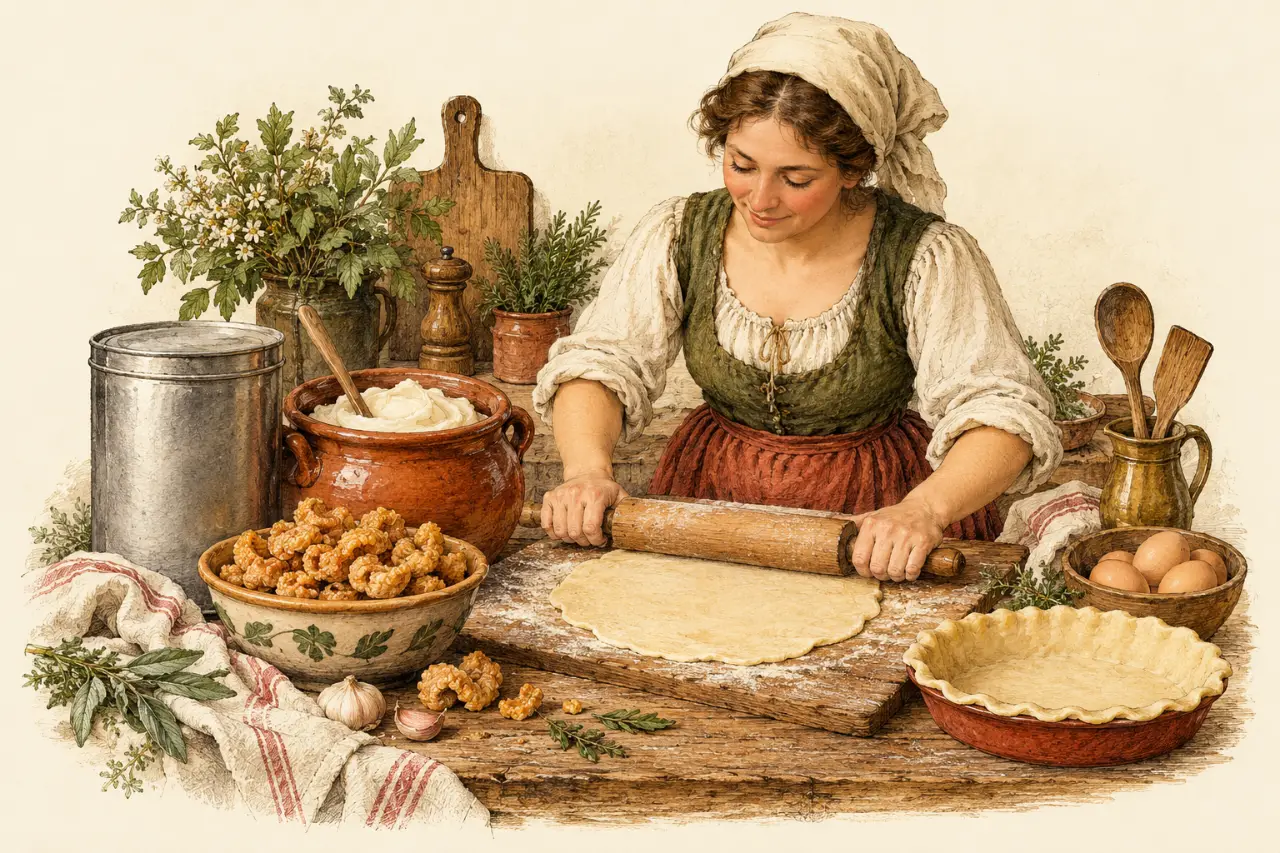
Few foods have seen their reputation change as radically as lard. For centuries, it was the everyday fat in much of the world's kitchens, from Hungarian grandmothers to the cooks of Oaxaca, and in the lard tins of Brazilian kitchens. In just a few decades, it became a byword for heavy, dangerous food.
The Weston A. Price Foundation argues exactly the opposite: lard is a traditional, nutritious fat and, in many preparations, simply irreplaceable. This article, adapted from a text by Linda Joyce Forristal published in the foundation's magazine, shows why.
A Strudel Lesson in Budapest
On a visit to Budapest, Linda Forristal watched a special demonstration of how to make traditional apple strudel. At the Owl's Nest restaurant, owned by the celebrated Hungarian restaurateur George Lang, two young cooks stretched a soft dough made of flour and lard until it was so thin you could read a newspaper through it. After spreading the filling, they rolled the dough into a cylinder as long as the table. A few quick cuts turned the roll into smaller portions, which fit in the baking pan and went into the oven.
That was where she learned a lesson she would repeat for years: there is no substitute for lard in traditional Hungarian pastries and in many other refined dishes.
"I Grew Up on Dishes Made Almost Entirely with Lard"
George Lang explained that in the Hungary of his childhood, lard meant something completely different from what it means in the West. While French cuisine taught the world that the three most important things in a kitchen are "butter, butter and butter," he grew up eating dishes prepared almost exclusively with pork lard.
Lard was everywhere: it was spread on a good slice of bread with paprika, used to seal jars of pickles and preserved vegetables (the same logic as our carne de lata, pork preserved in its own fat), and went into the best puff pastries and pâtés.
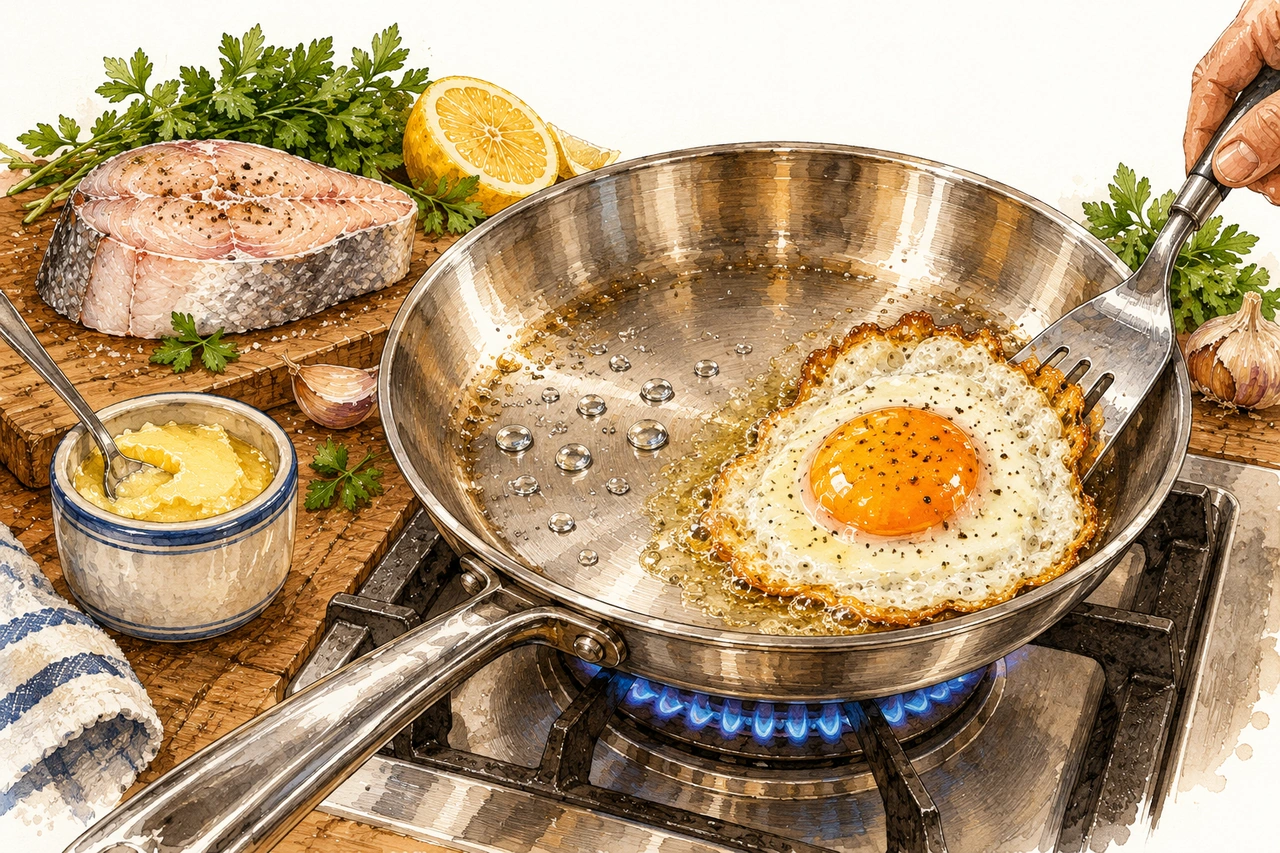
At 78 and in excellent health, Lang found it regrettable that lard had come to be seen as harmful. For him, some things, even the most unexpected ones, simply taste better when made with lard. "Scrambled eggs fried in lard are fabulous," he would say. It's worth trying with our eggs with bacon.
Lard with Cracklings: The German Appetizer
In Germany, a curious and very common appetizer is Griebenschmalz: lard mixed with Grieben, the crispy little bits left over when lard is rendered, close relatives of our torresmo (Brazilian fried pork cracklings), the star of our torresmo bread. The result has the consistency of crunchy peanut butter.
This humble appetizer is usually served at room temperature, in small ceramic pots, to spread on rye bread before dinner, along with a glass of wine. Germans say it also helps "hold" the alcohol. This farmhouse recipe has made its way into some of the country's best restaurants, such as those at the Four Seasons hotel in Hamburg. Anyone who has never tried it may turn up their nose, but they usually give in to the flavor at the first bite.
The Boycotted Restaurant in Oaxaca
If Germans rediscovered lard (or perhaps never really gave it up), other cultures are still fighting with it. A report in The New York Times told the story of a woman who opened a restaurant in Oaxaca, Mexico, and then complained that locals were boycotting the place. The reason: she had swapped lard for canola oil in every dish.
The author sides with the locals. And the foundation explains why. The risks of heated vegetable oils are the subject of another article of hers, The Big Fat Surprise: Toxic Heated Oils, and the reason Nu&Cru maintains the map De olho no óleo ("Keep an eye on the oil"), listing restaurants that cook with real fat.
Is Lard a Saturated Fat? Not Exactly
Lard is usually described as a saturated fat, but strictly speaking, it should be classified as a monounsaturated fat. According to biochemist Mary Enig, author of the book Know Your Fats and co-author of the article The Skinny on Fats, the composition of lard is approximately:
- 50% monounsaturated fat, the same type of fat that predominates in olive oil;
- 40% saturated fat;
- 10% polyunsaturated fat.
In addition, lard is one of the richest food sources of vitamin D.
According to the foundation, lard is making a comeback after years of being smeared by large food companies interested in selling their industrial substitutes, the hydrogenated vegetable fats, which the foundation's magazine calls "plastic substitutes." The story of that switch is told in the article "The Rise and Fall of Crisco," about the American brand of vegetable shortening that helped push lard out of kitchens. To separate myth from fact, the foundation also published Good Fats, Bad Fats.
How to Find Good Lard
Linda Forristal says she has turned the search for good sources of lard into a sport. The reason is that most of the lard sold in supermarkets contains preservatives such as BHT, added to extend shelf life.
The way to go, she says, is to look for farmers who sell the lard they don't use themselves. Some butchers also sell lard without additives or can order it for you. If you prefer to make it at home, you'll find step-by-step instructions in the foundation's article Rendering Animal Fats, Made Easy.
In Brazil, the logic is the same: it's worth reading the label, which should list only "gordura suína" (pork fat), and getting to know who raises the pigs. The Nu&Cru producers map helps you find farmers near you.
The best fat for pie crust
After years of experimenting with other fats, including hydrogenated vegetable shortening (in her "ill-informed youth," as she puts it) and butter (in her "French phase," and the foundation has plenty to say about the benefits of butter too), the author came back to lard. The reason: it is the fat that makes the most tender and most reliably flaky pie crust, the ideal partner for autumn fruit pies.
In her view, there is no substitute for lard in pie crust, not even butter, which doesn't give the dough the same elasticity or the same flaky layers. That is exactly what she saw in Hungary.
The explanation lies in chemistry, according to food scientist Harold McGee, author of On Food and Cooking. Like other molecules, fats form crystals just below their melting point. Lard forms crystals so large that they give the dough a slightly grainy texture, and that is what produces the flaky layers.
Recipe: lard pie crust
Feel free to vary the flour, but keep in mind that low-gluten flours, such as spelt, don't make a good pie crust, and that the type of flour you choose determines how much water you need.
Ingredients (for two 25 cm crusts)
- 2½ cups (about 310 g) unbleached all-purpose flour, fine whole wheat flour, or a mix of the two
- 1 teaspoon sea salt
- ½ cup (about 100 g) lard
- about ½ cup (120 ml) ice-cold water
Instructions
- Place the flour in a medium bowl, add the salt and mix.
- Add the lard and, using a pastry cutter or a fork, cut it into pea-sized pieces, until the mixture looks like coarse crumbs.
- Add the ice-cold water one tablespoon at a time, gently working it in with your hands until the dough comes together.
- Divide into two equal parts and shape each one into a flat disc.
- Wrap in parchment paper and refrigerate for 30 minutes before rolling out.
For the filling, try our pumpkin pecan pie or our lime pie.
Further reading
On Nu&Cru
- How to render lard and beef tallow at home
- Is butter bad for you? Why it's the better choice
- Omega-6: the danger of vegetable oils
- Is bacon bad for you? How to choose the real thing
- Liver: the most nutritious food there is
- Bone broth: benefits and how to make it
- Weston A. Price: what traditional peoples can teach us about eating
- De olho no óleo: the map of restaurants that cook with real fat
- Recipes that call for real fat: abóbora cabotiá fried in animal fat (kabocha squash), bananas fried in animal fat, bacon, carne de lata (traditional meat preserved in lard) and pão de torresmo (pork cracklings bread)
- 181 Receitas Ancestrais, Nu&Cru's recipe book
- Producer map to buy lard and pork directly from the people who raise the animals
On the Weston A. Price Foundation website (in English)
- The Skinny on Fats
- Rendering Animal Fats, Made Easy
- Taking the Fear Out of Eating Fat
- The Omega-6 Apocalypse
- Princípios Atemporais de Dietas Tradicionais Saudáveis (in Portuguese)
References
- Black, Kent. In Oaxaca, a Cook Creates a Stir. The New York Times, August 14, 2002.
- Forristal, Linda Joyce. The Rise and Fall of Crisco. Wise Traditions, Summer 2001.
- Lang, George. The Cuisine of Hungary. New York: Bonanza Books, 1990.
- McGee, Harold. On Food and Cooking: The Science and Lore of the Kitchen. New York: Charles Scribner's Sons, 1984.
- Enig, Mary G. Know Your Fats. Silver Spring: Bethesda Press, 2000.
This article is an adaptation of "Put Lard Back in Your Larder" by Linda Joyce Forristal, published in Wise Traditions in Food, Farming and the Healing Arts, the magazine of the Weston A. Price Foundation, in Fall 2002. Read the original in English.
As informações têm caráter educativo e não substituem avaliação individual de profissional de saúde habilitado.