Blogfamily routine · broths · kitchen organization
How to Meal Prep for the Week: Five Base Recipes and Safe Storage Times
How to make bone broth, beans, slow-cooked beef, roasted vegetables and a sauce on the weekend, then combine them through Friday, with fridge and freezer limits from Brazil's Ministry of Health.
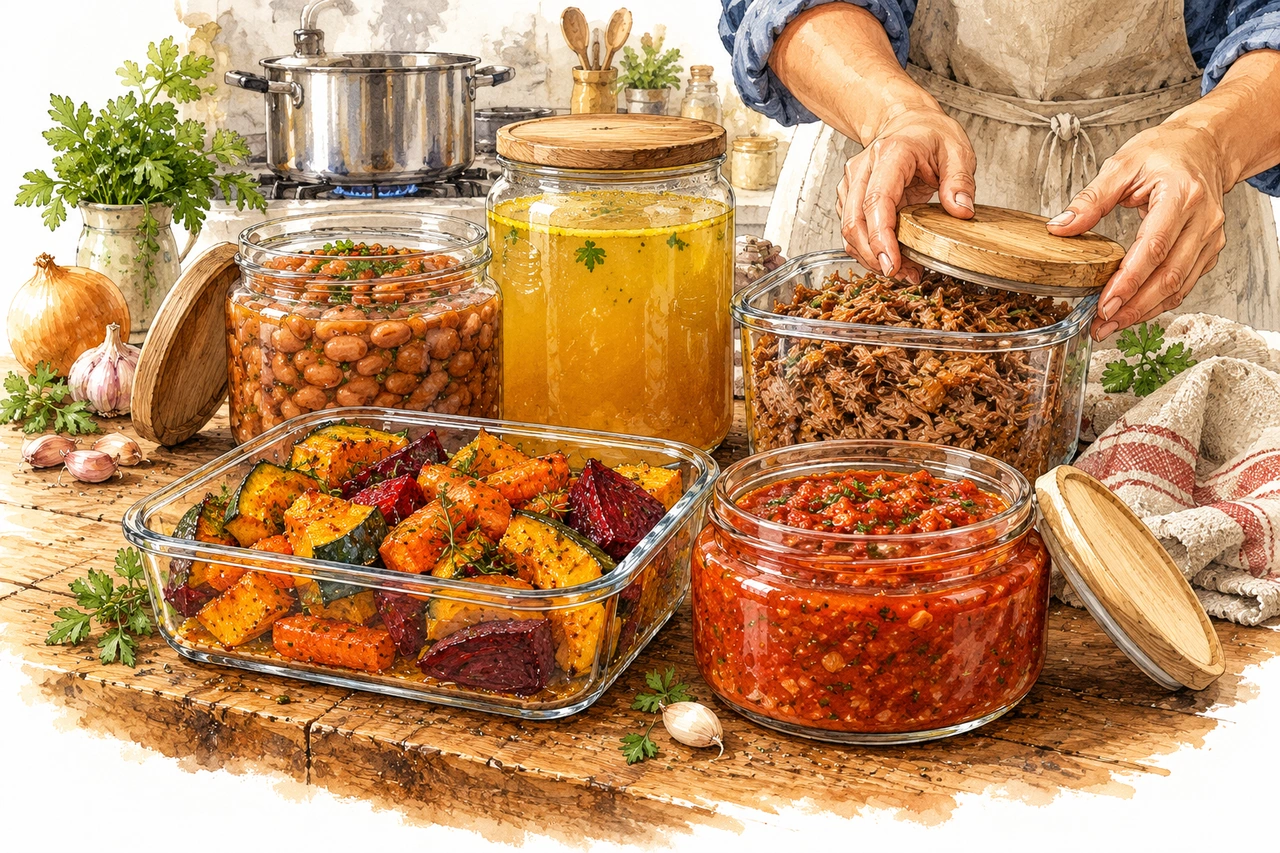
Cooking for the week doesn't have to mean ten identical containers of rice, chicken and broccoli that nobody can stand by Thursday. The alternative is base cooking: on the weekend you prepare components that aren't dishes yet, such as a broth, a pot of beans, a slow-cooked meat, a tray of roasted vegetables and a sauce. During the week you combine these bases in different ways, in 15 or 20 minutes per meal. This is how home kitchens worked for generations: Sunday's pot fed Monday, and the roast's bones became Tuesday's soup.
For this to work, two rules are non-negotiable. The first is storage time: the Ministry of Health recommends up to 3 days in the fridge for cooked meats and ready-made home-cooked food, and up to 30 days in the freezer (p. 62). The second is cooling: cooked food should not stay out of the fridge for more than 2 hours, according to the World Health Organization.
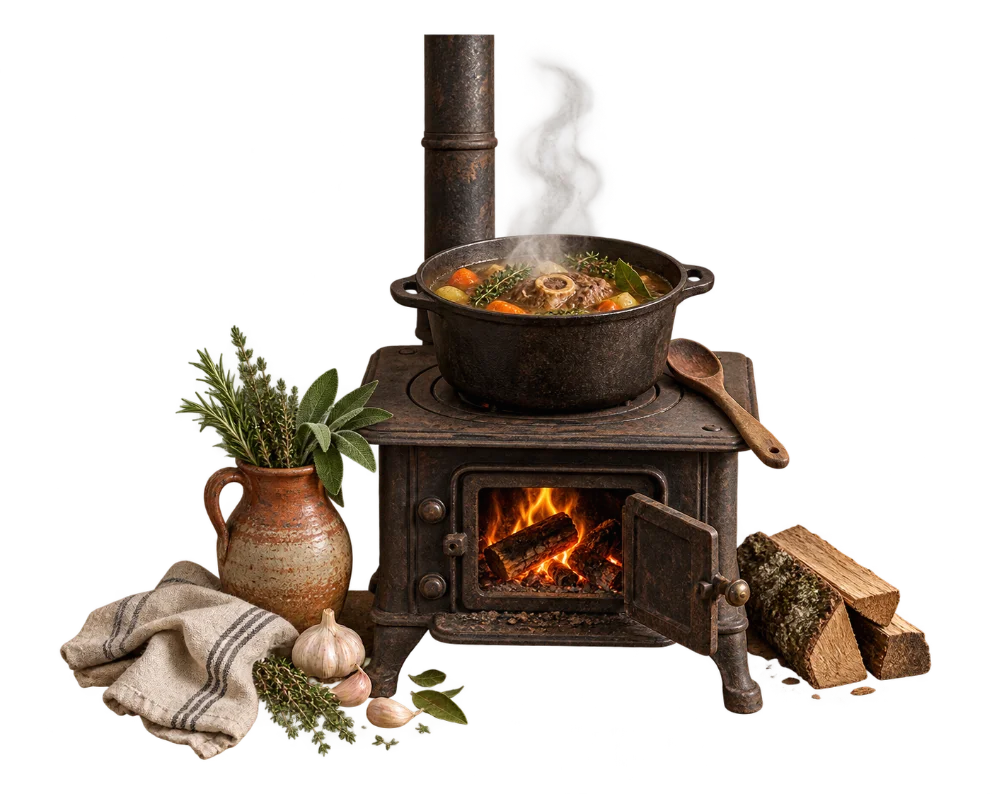
Why bases, and not ready-made meal boxes
A ready-made meal box solves the first half of the week and gets tiresome in the second. It also freezes the entire dish, with rice that dries out, vegetables that go soft and sauce that blends into everything. A base keeps better because each component goes in its own container, and it combines better because the same beans become the beans of the day, a soup and tutu (a Brazilian bean mash thickened with manioc flour).
The Guia Alimentar para a População Brasileira (Dietary Guidelines for the Brazilian Population) makes the same recommendation for people short on time: foods that take a long time to cook, such as beans, can be cooked in larger quantities on a single day, frozen and used throughout the week. The guide counts planning your shopping and deciding in advance what you will eat during the week among cooking skills (p. 115). The Ministry's guide for children points in the same direction: cook a larger quantity than a single meal calls for, store it properly, and keep partly prepared foods in the fridge, such as chopped garlic, peeled onion, cut pumpkin and washed leaves (p. 187).
The five bases
1. A broth
Bone broth made with beef bones or chicken broth is the hardest-working base: it cooks the rice, the beans and the soup, becomes a pan sauce and reheats leftovers without drying them out. It goes on the heat first because it takes the longest. The step-by-step, from the bones to the fat that rises to the top, is in bone broth: how to make, use and store it, and the book 181 Receitas Ancestrais has recipes for bone broth, chicken broth and meat-and-bone broth.
Store it in single-meal containers. Keep one portion in the fridge for the first three days and put the rest in the freezer the same day. The layer of fat that hardens on top of the cold broth can be lifted off and used for sautéing; see how to strain and store it in how to reuse cooking fat.
2. Plain cooked beans
Cook a big pot of beans (or chickpeas, or lentils) with just water and a bay leaf, after soaking. The Dietary Guide for Children Under 2 Years Old describes this approach: soak for 8 to 12 hours, preferably in the fridge, discard the soaking water, cook, and set aside portions to freeze before seasoning (p. 174). Unseasoned, the base works for anything: on the day, you sauté garlic and onion in fat and add a portion of beans; on Thursday, it becomes tutu (a Brazilian dish of mashed beans thickened with manioc flour) or a blended soup made with broth.
3. A slow-cooked meat
Cuts that need time, such as chuck, shank, ribs or shoulder, cooked slowly in a pot with fat, onion and their own broth, give you meat that shreds with a fork. This is the principle behind the book's carne de panela (pot roast). The same goes for a boiled, shredded chicken. Whole on Sunday, shredded on Tuesday, a filling on Wednesday: the same pot changes its look three times.
A useful rule for raw meat: the Ministry of Health recommends only 1 day in the fridge for raw meat that is already seasoned (p. 62 of the short version). Season the day before whatever is going on the stove the next day, not what is meant for the whole week.
4. One tray of vegetables and one of washed greens
Make use of the hot oven from the meat to roast pumpkin, carrot, beetroot, sweet potato and onion in large pieces, with fat and salt. Roasted vegetables usually keep their texture better in the fridge than vegetables boiled in water, and they work as a warm salad, a purée, a filling or a soup. Greens that are washed, very well dried and stored in a container with paper towel make the salad for the first few days.
5. A sauce and a ferment
A homemade tomato sauce turns shredded meat, eggs and leftover rice into another dish. A ready ferment, such as sauerkraut, goes raw on the side of any dish and adds the tang that the week's food sometimes calls for. Ferments have their own timing and their own care (clean jar, the right amount of salt, vegetables kept submerged, signs that it should be thrown out), explained in lacto-fermentation. Follow the storage guidance given in each recipe.
If you want the step-by-step for these bases, 181 Receitas Ancestrais includes bone broths, chicken, beef, meat-and-bone, fish and mocotó (beef cow-heel) broths, tomato sauce, sauerkraut, kimchi, yogurt and kefir, with recipes that point to one another: the broth on one page comes back as an ingredient in others. The book does not have a chapter on weekly prep; the organizing plan is the one in this text.
The Sunday session, in the right order
The order saves time, because each base goes on the heat at a moment when it doesn't get in the way of the next one.
- The day before: beans soaking in the fridge; bones and meats thawing in the fridge, never in the sink.
- First hour: bones on the stove for the broth, which simmers slowly while you do the rest. Beef broth takes 8 to 12 hours on low heat and is ready at the end of the day; chicken broth takes 6 to 8. Beans in the pressure cooker.
- Second hour: meat seared in fat and set to cook slowly. Oven on for the vegetables.
- Third hour: tomato sauce. Wash and dry the greens. Shred the chicken, if you made one.
- At the end: cool, portion, label, and decide what goes in the fridge and what goes in the freezer.
The real time varies with your home, your stove and how many bases you choose. In the first week, make three: broth, beans and one meat. That is already enough to change your week.
Cool It Down Quickly: The Step Most Often Skipped
A common mistake in base cooking is leaving the stockpot on the stove until the next morning. The WHO advises not leaving cooked food at room temperature for more than 2 hours, and cooling leftovers quickly by spreading them in shallow containers, cutting pieces of meat into smaller portions and stirring soup now and then while it cools. Microbes multiply fast between 5 °C and 60 °C, explains the Anvisa booklet (p. 12).
In practice: as soon as you turn off the heat, divide the broth and meats into smaller, shallow containers and put them in the fridge without waiting for them to cool, as the Dietary Guidelines for Brazilian Children Under 2 Years Old (p. 187) recommend. A whole large pot placed in the fridge takes a long time to cool in the middle, and that lukewarm time is exactly what the rule is meant to avoid.
How Long Each Thing Lasts
Storage times for homemade food vary from one table to another. The Anvisa booklet for restaurants and professional kitchens, for example, allows 5 days for prepared food kept at 5 °C or below (p. 38), in kitchens that are required to monitor the temperature of their equipment. Here we use the Ministry of Health's times, the most conservative among the official sources we consulted, because a home fridge is opened and closed all day long and almost never has a thermometer. The table is in the Dietary Guidelines for Brazilian Children Under 2 Years Old (p. 169) and in its short version (p. 62), and it applies to food for the whole family:
- Fridge: raw meat, 3 days; cooked meat and ready-made homemade food, 3 days; cooked fish, 1 day; seasoned raw meat, 1 day.
- Freezer compartment of a single-door fridge: ready-made homemade food, 10 days.
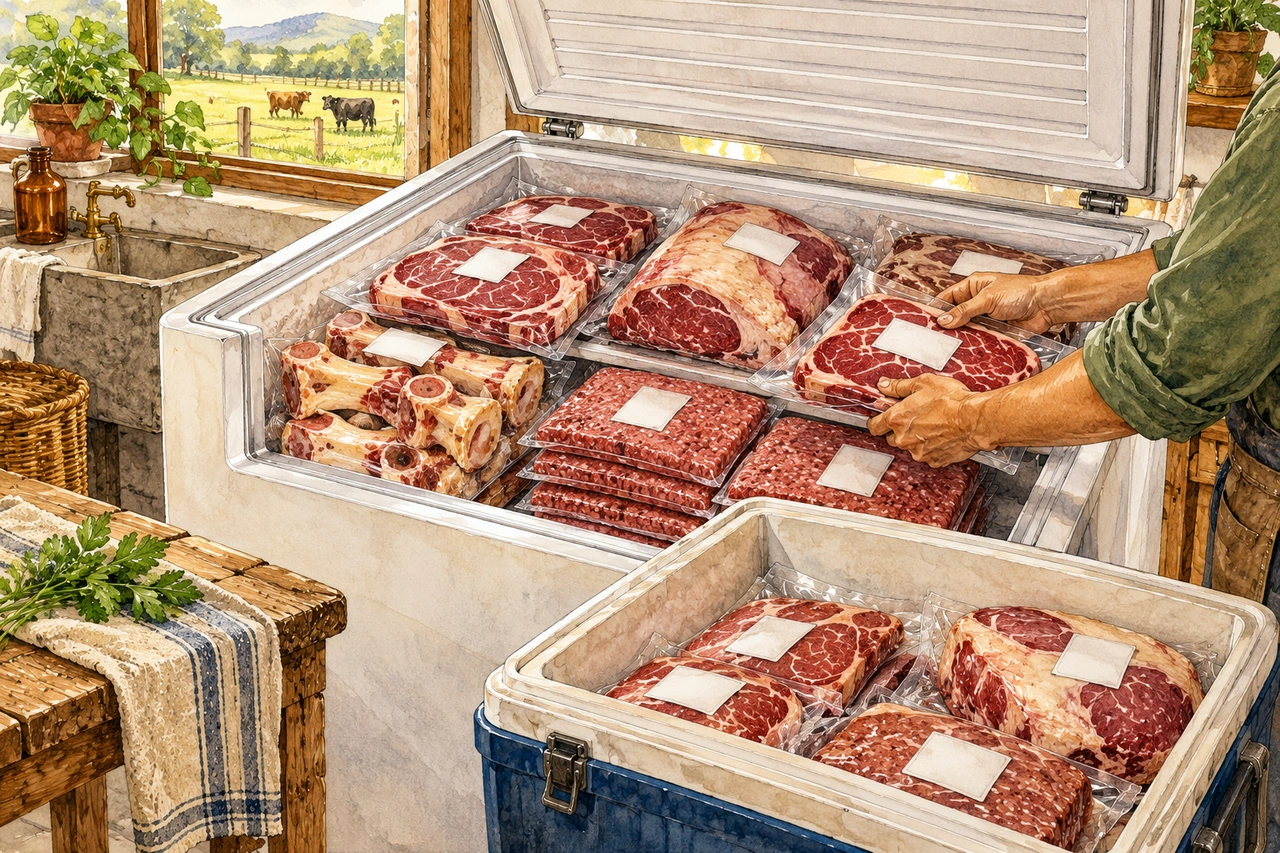
- Freezer (the separate compartment of double-door fridges, which reaches much lower temperatures): ready-made homemade food and raw meat, 30 days.
The WHO adds two rules for leftovers: do not keep them in the fridge for more than 3 days, and do not reheat them more than once. So portion food into meal-sized containers and heat only what you are going to eat.
Label each container with its name and the date it was prepared, as Anvisa asks (p. 34). Masking tape and a pen will do.
Thawing and Reheating
Thaw in the fridge overnight, or take the frozen portion straight to the stove. The microwave works too, as long as the food is heated right afterward. Never in the sink or on the counter: Anvisa and the WHO advise against thawing at room temperature. Thaw only what you are going to eat: the Ministry of Health advises not returning to the freezer what has already thawed, with one useful exception, raw meat that has been thawed, cooked and then frozen again as a finished dish (p. 186). When reheating, bring the food to a full boil, and stir food heated in the microwave, which heats unevenly.
In practice, this calls for a habit: in the evening, when you put away the dinner dishes, move from the freezer to the fridge the containers that will be tomorrow's lunch or dinner.
A Map of the Week
An example of how the bases you prepare on Sunday fit together, keeping within the 3 days in the fridge. Swap things around as you like.
- Monday: rice cooked in broth, beans sautéed fresh, pot-braised beef, roasted vegetables.
- Tuesday: soup: broth, beans, chopped roasted vegetables and shredded beef, with a drizzle of olive oil and the sauerkraut on the side.
- Wednesday: a crepe or filled omelet with the shredded beef and the tomato sauce, plus a green salad. This is the last day in the fridge for Sunday's beef and vegetables.
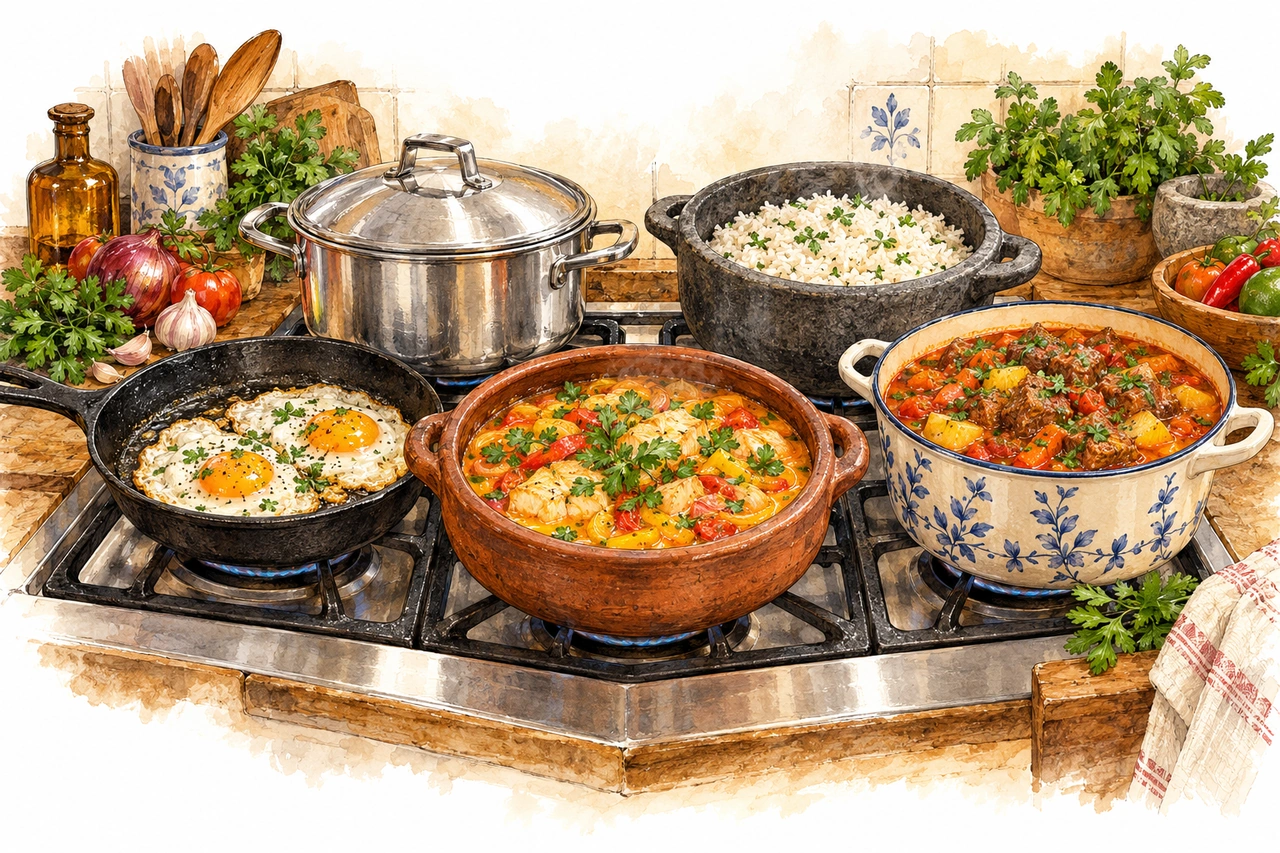
- Thursday: containers from the freezer, thawed since Wednesday night: the beans become tutu (a Brazilian bean mash thickened with cassava flour), topped with a fried egg and served with freshly sautéed collard greens; the broth becomes the evening soup.
- Friday: poached eggs in bone broth, with the bread that's left over. Or whatever the family likes: Friday is also a day to eat out or order pizza, no guilt.
Midweek, a short refresh of 30 to 40 minutes on Wednesday night keeps the fridge stocked: a fresh batch of rice, a pot of chicken or ground beef, steamed vegetables.
What About the Baby?
The same base pot can feed a baby who already eats family food, with their portion set aside before the salt and strong seasonings go in. A broth made without salt and beans cooked without seasoning are exactly what makes this possible. Storage times, portions and thawing for baby food call for their own precautions, explained in how to prepare and freeze baby food. The bases also stock the lunchbox of anyone heading off to school.
Start With Next Sunday
Pick three bases: a broth, a pot of beans and a slow-cooked meat. Soak the beans on Saturday, buy containers that fit one meal each, and get some masking tape for labels. On Monday, dinner comes together in about 20 minutes. To cook these bases with step-by-step instructions and see how one recipe feeds the next, check out 181 Receitas Ancestrais (181 Ancestral Recipes). If your household's challenge is fitting this into your routine, your schedule and your budget, the Nu&Cru family consultation covers weekly meal prep with nutritionists Laura Valentim and Dalyla Peçanha, starting from what your family already eats. And if budget is your main question, see how to eat real food on a budget.
Sources Consulted
- Ministério da Saúde (Brazilian Ministry of Health). Guia Alimentar para Crianças Brasileiras Menores de 2 Anos (Dietary Guide for Brazilian Children Under 2), 2019, and short version, 2021.
- Ministério da Saúde (Brazilian Ministry of Health). Guia Alimentar para a População Brasileira (Dietary Guidelines for the Brazilian Population), 2nd edition, 2014.
- World Health Organization. Five Keys to Safer Food: manual, 2006.
- Anvisa (Brazilian Health Regulatory Agency). Cartilha sobre Boas Práticas para Serviços de Alimentação (Booklet on Good Practices for Food Services).
As informações têm caráter educativo e não substituem avaliação individual de profissional de saúde habilitado.