Blogbabies and children · family routine · recipes
Healthy School Lunchbox: What to Pack, What Needs Ice and What to Leave at Home
How to pack a real food lunchbox: what travels without ice, what needs to stay cold, what stays at home, and one Sunday prep session that covers the whole school week.
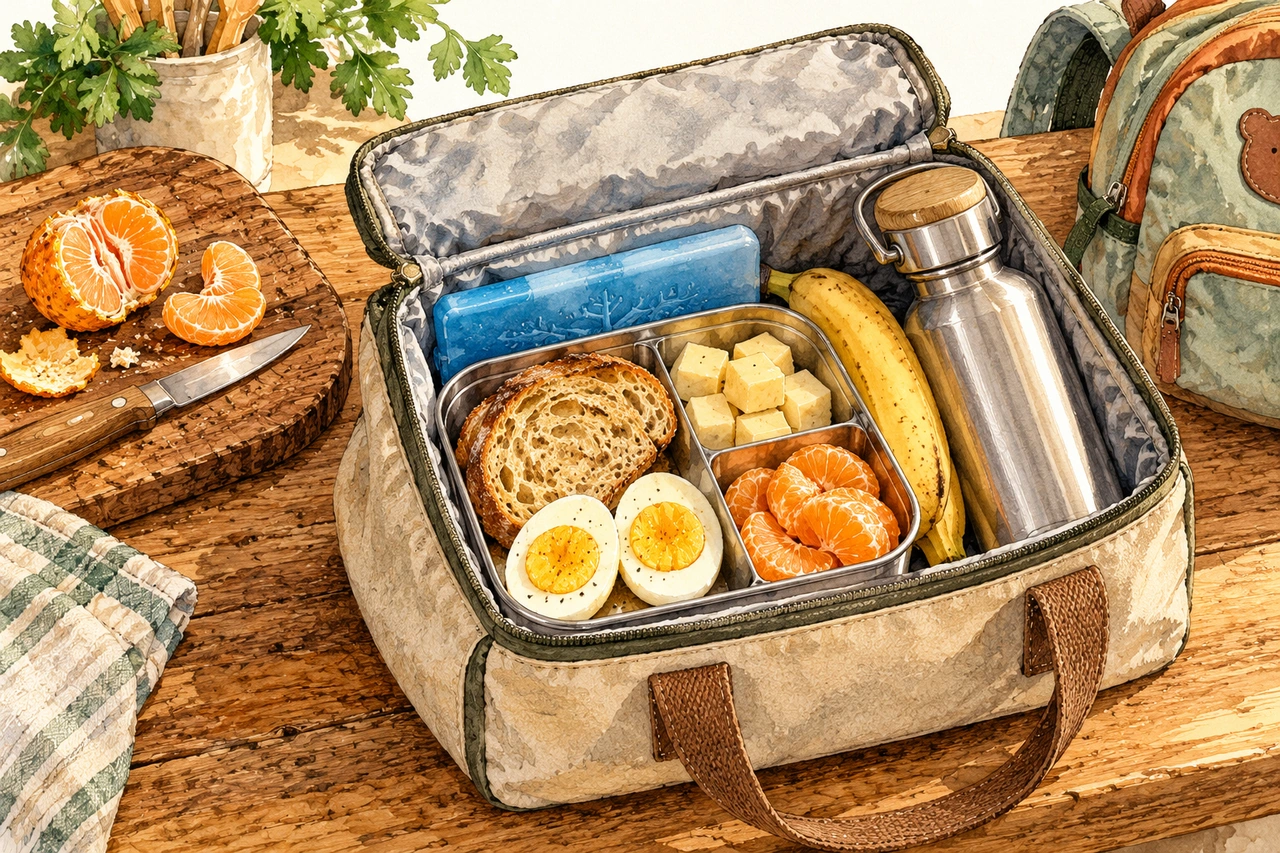
A lunchbox with real food fits into four items: a base that keeps them going (bread, plain cake, cassava, tapioca), a protein (egg, chicken, meat, cheese, yogurt), a piece of fruit and water. The clock decides the rest. A lunchbox closed at 6:30 a.m. and opened at the 9:30 a.m. break has spent three hours out of the fridge, and the World Health Organization advises not leaving cooked food at room temperature for more than 2 hours. That's why every perishable item goes right next to a source of cold, and anything that can't last even then stays home.
This guide sorts foods by how long they last without refrigeration, shows how to put the week together with a short prep session on Sunday, and explains what changes with the child's age. Educational content; it does not replace an individual assessment by a health professional.
Why time matters more than the recipe
The microbes that cause illness multiply between 5 °C and 60 °C, known as the danger zone. The Anvisa good practices booklet explains that, in ideal conditions, a single bacterium can become 130,000 in six hours, and that microbes prefer summer temperatures or the temperature of our own body (p. 12). A backpack in a schoolyard in February is exactly that.
The WHO's Five Keys to Safer Food sum up the rule for home: don't leave cooked food at room temperature for more than 2 hours, refrigerate perishable food quickly, preferably below 5 °C, and keep food that will be served hot above 60 °C. Anvisa adds that, when transport takes a long time, prepared food should travel in an insulated cooler (p. 36).
In the lunchbox, this becomes three questions: how many hours pass between closing the lunchbox and eating? Does the school have a fridge? How old is the child who will eat it?
What lasts through the morning without ice
Anvisa separates perishable foods, which have enough moisture for microbes to multiply, from dry foods, such as cookies and flour, which keep at room temperature (p. 12). For a morning or an afternoon, these fall on the dry side:
- whole fruit with the peel: banana, apple, tangerine (mexerica), pear, guava;
- bread and dry homemade cookies;
- plain baked cake, with no filling or creamy topping, such as the carrot cake from the book 181 Receitas Ancestrais, sweetened with melado (sugarcane molasses) and therefore meant for children over 2 years old; the chocolate sauce in the recipe contains cream, so in the lunchbox the cake goes without it;
- paçoca (a crumbly peanut candy) and dried fruit, such as the paçoca and the dried persimmon from the book;
- homemade popcorn, for children from 2 years old;
- water.
These are good items to round out the lunchbox, but on their own they make a snack that is almost all carbohydrate. Protein usually shows up on the next list.
What always goes with ice
The same Anvisa booklet lists meat, milk, yogurt, ham and cheese as perishable foods (p. 12). In a lunchbox, the list includes:
- hard-boiled eggs;
- shredded chicken or beef, meatballs, meat patties;
- pão de frango ("chicken bread"), which is made of chicken, eggs and cheese, like the pão de frango from the book;
- yogurt, coalhada (a thick, soured milk) and cheeses, including aged ones;
- cold cuts and processed meats;
- cut fruit, which loses the protection of its peel;
- pâtés, hummus, homemade mayonnaise and any kind of spread;
- dinner leftovers that are packed cold.
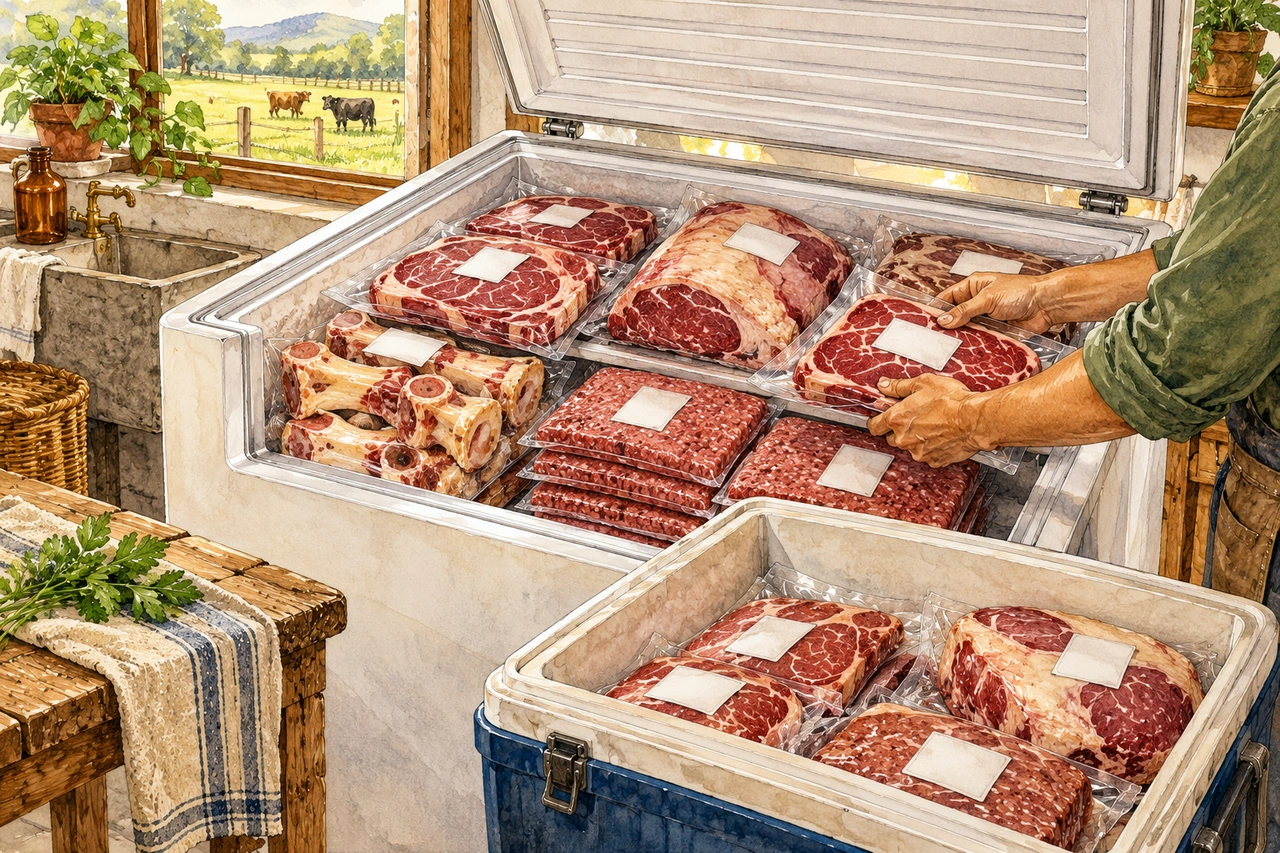
These items travel with a reusable ice pack pressed against them, in a closed insulated lunchbox. A small water bottle frozen the night before works as a second source of cold and turns into cold water by snack time. Ice does not turn the lunchbox into a refrigerator: it shortens the time the food spends in the danger zone. If the school has a refrigerator for lunchboxes, use it. If the snack only comes out of the backpack after lunch, prefer the items from the previous list.
Hot food in a thermos
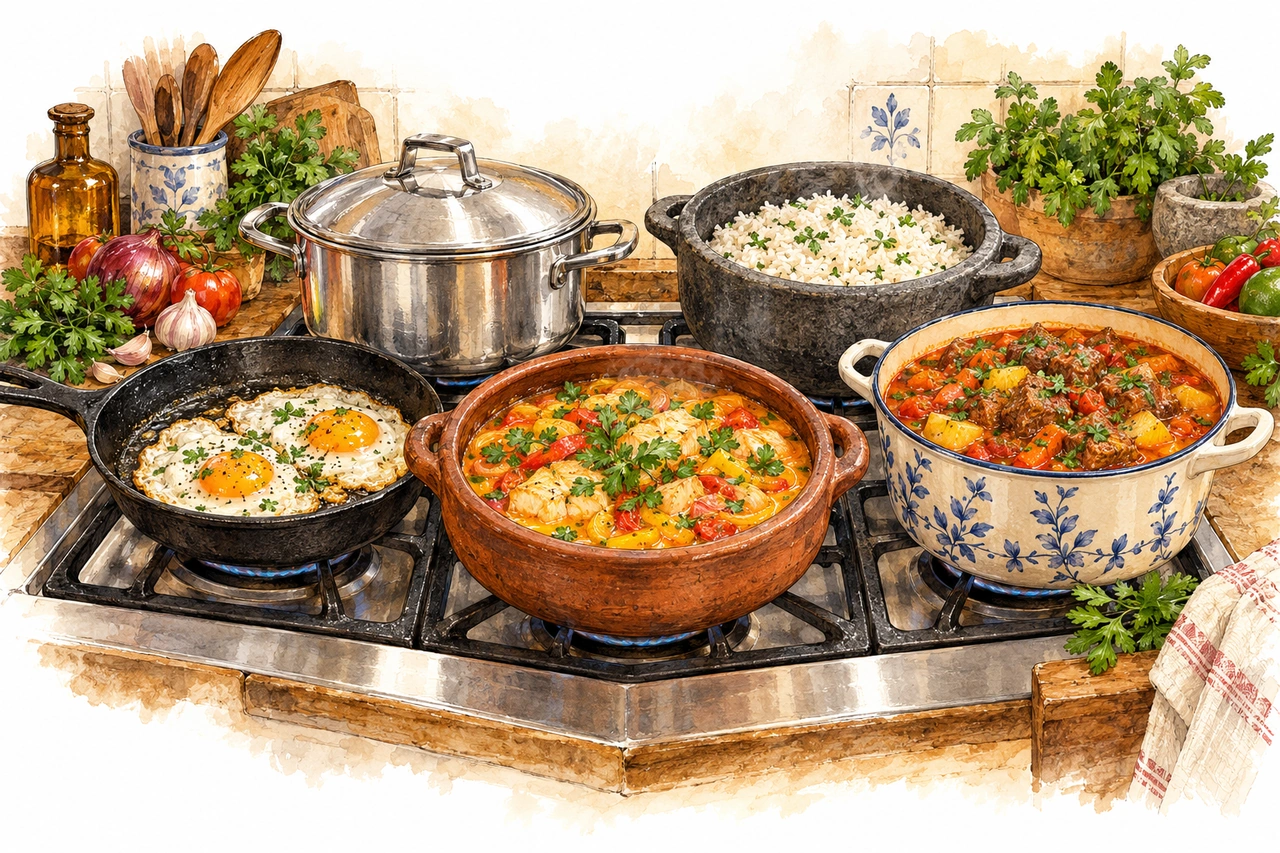
Soup, broth with pasta, beans with meat and rice all do well in a stainless steel thermos bottle or insulated container. Heat the food until it is boiling all the way through, as the WHO advises for any reheating. Before filling the container, warm it with boiling water for a few minutes and then pour the water out. The goal is for the food to reach lunchtime still hot, above 60 °C. Food that has been lukewarm for hours is the worst-case scenario.
What stays at home
- Raw milk. The WHO advises choosing foods processed for safety, such as pasteurized milk. For children, and even more so outside the refrigerator, raw milk is not an option.
- Kombucha and homemade fermented drinks. Fermentation produces alcohol, and Brazil's 2019 regulation classifies kombucha above 0.5% as alcoholic (Normative Instruction 41 of the Ministry of Agriculture). At home, that level can't be controlled. The bottle can also burst from the gas.
- Honey, sugar and sweets before age 2. Honey can carry the bacteria that cause botulism, which is dangerous mainly before age 1, and it is also sugar. The Brazilian dietary guide for children under 2 recommends offering neither honey nor sugar before age 2 (p. 104). This includes the sweetened cakes and bars in the book, which are for older children.
- Juice. For babies under 1 year, the Ministry's guide recommends not offering even juice made only from fruit; between ages 1 and 3, it is not necessary (p. 85). Whole fruit and water do the job better.
- Whole nuts and peanuts for small children. Because of their hard texture, they can cause choking and suffocation; ground or finely chopped, they can be offered (p. 88). Grapes and acerola (a small, tart Brazilian cherry) go seedless and cut into pieces (p. 84).
At daycare and preschool, also follow the school's rules, since it often provides the meals and limits what comes from home.
How to put it together: one base, one protein, one fruit, water
Think of four drawers, and swap what goes in each one through the week. Your child recognizes the format, and you don't have to reinvent the lunchbox every day.
- Base: sourdough bread (natural fermentation), pão de queijo (Brazilian cheese bread) baked at home, tapioca (cassava-starch flatbread), boiled cassava or sweet potato, plain cake, savory pancake.
- Protein (with ice): boiled egg, shredded chicken, meatball, cheese, plain yogurt, pão de frango (chicken bread).
- Fruit: whole if possible; cut up, with ice.
- Drink: water. For older children, an unsweetened iced tea once in a while.
A few combinations that come out of the same kitchen:
- Monday: sourdough bread with shredded chicken and butter, tangerine, water.
- Tuesday: two boiled eggs, boiled cassava sticks, banana, water.
- Wednesday: pão de frango, carrot sticks (cooked and soft, for the little ones), apple, water.
- Thursday: insulated food jar with bean soup, meat and vegetables in broth, a piece of fruit, water.
- Friday: plain yogurt, carrot cake, pear, water. The cake, being sweetened, is for children over 2 years old.
The plain yogurt is one of the three recipes the book leaves fully open on the site, if you want to start making it at home.
Sunday prep
The week's lunchbox gets easy when Sunday leaves a few things ready. One cooking session, which can take an hour or a whole morning, yields:
- a pot of cooked, shredded chicken, which covers Monday's sandwich and Wednesday's lunch;
- half a dozen boiled eggs, stored in their shells, for the first days of the week (boiled egg doesn't freeze well);
- a baking tray of pão de frango or little cakes, portioned out;
- vegetables washed and cut into sticks, in a closed container;
- a simple cake for the older children's week.
Store everything in the fridge in closed containers labeled with the date. The Guia Alimentar para Crianças Brasileiras Menores de 2 Anos (Dietary Guide for Brazilian Children Under 2) recommends up to 3 days in the fridge for cooked meat and ready-made homemade food, and up to 30 days in the freezer (p. 169). So whatever is for Thursday and Friday goes into the freezer on Sunday and moves down to the fridge the night before. This logic of preparing components that mix and match, instead of ten identical meal boxes, is explained in base cooking for the week.
If you want bases and snacks with step-by-step instructions, 181 Receitas Ancestrais has recipes the book itself describes as good for snacks, such as pão de frango, yogurt and chicken pie, carrot cake, orange cake, nut bars and paçoca (a Brazilian ground-peanut sweet), along with broths, yogurt and sourdough breads. The book has no lunchbox section and is not a book for babies: the recipes are for the family table, and the sweetened ones are for after age 2.
Sweets in the lunchbox: no guilt, no battle
A piece of homemade cake, a paçoca or a nut bar with honey and toasted coconut now and then fits in an older child's lunchbox. The point is not to ban sweets, but to keep them from taking the place of real food. When sweets become a bargaining chip, the fight starts at home, as we explain in picky eating in children. The bar contains honey and nuts, so it is for older children who already chew well.
Homemade lunches also have to coexist with the school party and the classmate's snack. A child who likes what they bring trades less, and that is built by letting them choose the fruit of the week and help pack the lunchbox the night before.
What to do with what comes back
Whatever comes back untouched in the lunchbox has spent the morning out of the fridge. Whole fruit and dry items can be kept. Anything perishable, such as eggs, chicken, yogurt, cheese and leftovers, goes in the trash, even if it looks fine. If this happens every week, the portion is too big or the snack time doesn't match what was packed: adjust the portion, not the ice.
Wash the lunchbox and containers every day and leave them open to dry. The reusable ice pack goes back in the freezer the same night.
To get started this week
On your next trip to the market, buy a reusable ice pack if you don't have one yet, and set aside an hour on Sunday to cook the chicken, the eggs and a base. Pack Monday's lunchbox on Sunday night, with the protein right next to the ice. If your household's snack and meal routine needs a broader conversation, the Nu&Cru family consultation works with nutritionists Laura Valentim and Dalyla Peçanha on topics such as breakfast, snacks and busy days, according to your family's ages and budget.
Sources consulted
- World Health Organization. Five Keys to Safer Food: manual. 2006 (Portuguese version available on the page).
- Anvisa. Booklet on Good Practices for Food Services (RDC 216/2004) (in Portuguese).
- Ministry of Health. Dietary Guidelines for Brazilian Children Under 2 Years of Age. Brasília, 2019.
- Legisweb. Mapa defines quality and identity standards for kombucha (on Normative Instruction No. 41/2019).
Part of this text was based on an article by Jen Allbritton published by the Weston A. Price Foundation.
As informações têm caráter educativo e não substituem avaliação individual de profissional de saúde habilitado.