Blogmeats and organ meats · fats · recipes · Weston A. Price
Is Bacon Bad for You? How to Choose Real, Traditionally Cured Bacon
Most of bacon's fat is monounsaturated, and "nitrite-free" bacon can actually contain more nitrite. Learn how traditional curing works and how to choose a good bacon.
"While you're in my house, you'll do what I do and believe what I believe. So, Bart, put butter on your bacon." That line from Homer Simpson opens an article by researcher Kaayla T. Daniel, PhD, published in the journal of the Weston A. Price Foundation, which takes on a very common question: is bacon bad for you?
In 2012, physician Neal Barnard, president of the Physicians Committee for Responsible Medicine (which the author ironically renames the "Irresponsible" Medicine committee), tried to gather an army of vegans to protest a bacon festival in Iowa. He got six volunteers. Why so few? According to the author, because of a fear of bacon. Not the fear of dying from it, which Barnard tried to spread with anti-meat speeches and billboards with skulls, but the fear of giving in to temptation. The smell and taste of bacon are so seductive that many vegetarians call it "the gateway meat", the one that opens the door to all the others.
The Harvard Study and the "Food Police"
And what about the health risks? All that fat, the cholesterol, the sodium? And the nitrites? It's not only vegans who condemn bacon. That same year, the Harvard School of Public Health announced with great fanfare that a small daily portion of red meat would raise the risk of death by 13%, and that a little bacon, sausage, hot dog or other processed red meat every day would raise that risk by 20%.
To the author, this was pseudoscience at its finest: an observational study based on notoriously flawed food frequency questionnaires, in which the researchers drew unjustified conclusions from mere associations. Much ado about nothing. A careful reading of the data, as Gary Taubes, Zoë Harcombe and Denise Minger pointed out at the time, suggests a relative risk of 1.2 at most, which means an increase of only 0.2 times. And that was among people who ate supermarket meat from industrial farms, smoked, were sedentary, and ate their red meat wrapped in white bread.
Even so, many people figure that if it comes from Harvard, it must be right. Red meat, bacon and other fatty delights have long had a reputation for being both delicious and dangerous. The debate over bacon has dragged on for years, and most non-vegan bloggers have settled on a middle ground: bacon is "not so bad" if used only to add flavor and crunch to "healthy" foods, such as salads and vegetables. Comedian Jim Gaffigan joked about this idea on Conan O'Brien's show, calling bacon bits "the fairy dust of the food world" and comparing the search for them in a salad to "panning for gold."
Sometimes the "food police" even allow a few slices, as long as they are an occasional treat and not a daily habit. But the permission comes with conditions: choose lean bacon and fry it until it is firm, never soft. Behind this lies a puritanical attitude toward fat: the goal is to render out the soft parts and then drain the fat off or blot it dry on paper.
And what if bacon is actually good for you? What if it contributes to good health and is not a mortal sin at the table? What if we can eat as much as we like? The author, who signs as the Naughty Nutritionist, is ready to defend these ideas.
Is bacon fat healthy?
Bacon's greatest asset is its fat. And, to many people's surprise, that fat is mostly monounsaturated. According to the figures from biochemist Mary Enig, bacon fat contains:
- 50% monounsaturated fat, mainly oleic acid, the same fat that gives olive oil its reputation, plus about 3% palmitoleic acid, a monounsaturated fat with valuable antimicrobial properties;
- 40% saturated fat, the part that frightens anyone with a fear of fat, but which makes bacon fat stable and not very prone to going rancid in storage and in cooking;
- 10% polyunsaturated fat, a valuable but unstable form, which is why the stability provided by the saturated fat matters.
These numbers, the author explains, were calculated by Enig for lard, but they should be very close to those of bacon fat, and they vary with the pig's diet and way of life. They are the same ones that appear in our article on lard.
Pork fat also contains a previously unknown form of phosphatidylcholine with antioxidant activity greater than that of vitamin E, which may help explain why lard and bacon fat resist the rancidity caused by free radicals so well. And when it comes from pigs that spend most of the year outdoors in the open air and sun, bacon fat provides vitamin D. Industrially raised pigs, on the other hand, confined and fed rations of soy, casein, cornmeal and other grains, tend to have low levels of this vitamin.
How much vitamin D is in bacon?
The amount is the big question. Most food composition tables list 100 to 250 IU of vitamin D per 100 grams, and the higher numbers come from Italy, where even commercially raised pigs are more likely to see daylight.
But much higher values have been recorded, especially in pasture-raised pigs. According to Mary Enig, laboratories of the United States Department of Agriculture (USDA) reached 2,800 IU per 100 grams in the 1980s, a figure that was never officially released. According to Enig's source inside the USDA, the agency preferred to hide the information because it wanted the public to believe that vitamin D should come from fortified milk and other products of big industry. It is not known whether the 2,800 IU was a valid figure, the result of sophisticated analyses that are still not common, or a typo for 280 IU. The USDA tables of that era did not even include vitamin D.
The vitamin A mystery
Another unanswered question is vitamin A. The USDA tables, both the official ones and the unpublished 1980 data Enig found, show zero vitamin A in bacon fat and lard. However, a 1948 study showed that vitamin A deficiency in rats could be corrected with lard: the animals recovered when the fat replaced the sugar in their feed. Even more curious, they did better than rats given the same diet plus vitamin A palmitate, a synthetic form. Any fat seemed to help, but the effect was strongest with lard.
That would make no sense if lard had no vitamin A. But a series of studies from the early 1950s identified in it a "vitamin A substitute factor", present even when vitamin A itself could not be detected.
What about cholesterol?
As you might expect, the good fat in bacon comes with cholesterol, another "forbidden" item for the food police and one more reason for its dangerous reputation. According to the author, the evidence that cholesterol causes or worsens heart disease is inconsistent, contradictory, misinterpreted and scarce, a topic the foundation explores in more depth in Myths & Truths About Cholesterol.
What contributes to heart disease, she says, is oxidized cholesterol, found in the powdered milk and powdered eggs used in processed, packaged and fast foods, including in low-fat and skim milk. Besides, as biochemistry textbooks make clear, cholesterol is the "mother of all hormones," including the reproductive hormones and those linked to mood. Perhaps that is why bacon has a reputation as a feel-good food.
Is bacon bad for your heart?
Still, "everyone knows" bacon is bad for you, and Barnard wants us to believe it is a risk factor for heart disease. The author argues the opposite: bacon may actually be good for your heart. And not only because it makes people happy, although that counts.
Monounsaturated fat, the main fat in bacon, is widely praised for reducing inflammation and lowering blood pressure, and palmitoleic acid, which is antimicrobial, would help keep plaque out of the arteries. Triglycerides also tend to improve, because bacon fat is especially good at keeping you full and keeping blood sugar steady. That is why, according to the author, bacon can be useful for people with diabetes and prediabetes, and for anyone struggling with sugar cravings and carbohydrate addiction.
Selling bacon as a ticket to weight loss may sound like an exaggeration, but eggs and bacon make a breakfast that is rich in fat and protein and low in carbohydrates, like our eggs with bacon. Besides starting the day in a good mood, this combination may reduce hunger and speed up metabolism.
For many people, the salty yet slightly sweet flavor of bacon is a pleasure that eases the feeling of deprivation. It helps in the transition away from high-carbohydrate diets and, by stabilizing blood sugar, it prevents mood swings, reduces anxiety, improves focus and strengthens the ability to cope with stress.
Bacon is high in salt. Is that a problem?
People who aren't worried about the fat and cholesterol in bacon are usually worried about the salt. Cutting sodium is the food police's latest goal, despite weak evidence that salt contributes to high blood pressure and heart disease. In fact, Americans today eat about half the salt they ate before refrigeration, when meat and fish were preserved by salting and curing (like our charque – Brazilian salt-cured, dried beef) and vegetables were fermented or pickled.
Animals seek out salt licks, Paleolithic peoples ate and drank blood and other salty parts of animals, and biochemists remind us that we need sodium and chloride for blood, sweat, tears, mucus and semen. Good textbooks make all of this clear, yet US government guidelines recommend drastic cuts in salt.
For the author, low-salt diets increase the risk of heart disease, hypertension, cognitive decline, osteoporosis, insulin resistance and erectile dysfunction, as the foundation explains in Salt and our Health and The Salt of the Earth. Given today's epidemic of chronic disease, it is rubbing salt in the wound, and a very poor reason to avoid bacon.
The Fear of Nitrite
For members of the Weston A. Price Foundation, the big concern is not fear of fat, cholesterol or salt, but fear of nitrites, which have been linked to cancer and many other ailments. Studies like the Harvard one show up in the headlines so often that almost every well-informed, health-conscious consumer thinks they should avoid processed meats or pick "uncured" bacon advertised as "nitrite-free," like the brands sold in natural food stores in the United States.
The question is: is that kind of bacon any healthier?
Is Nitrite-Free Bacon Healthier?
The short answer is no. Researcher Nathan S. Bryan, PhD, of the McGovern Medical School at The University of Texas Health Science Center at Houston, doesn't mince words: "This idea of 'nitrite-free' or 'organically cured' meats is a deception of the public."
Traditionally, bacon was cured with sodium nitrite salts added directly to the meat. Today, most "nitrite-free" brands use celery salt, which according to the author is about 50% nitrate, plus a starter culture of bacteria. The bacteria turn the natural nitrate in the celery into nitrite, and it is that nitrite that cures the meat.
In other words, the label says "nitrite-free," but the method generates, from the celery salt, more nitrite than would ever be added as curing salt. "Nitrite-free" bacon can contain twice as much nitrite as bacon cured directly with sodium nitrite. "Some convert 40%, others 90%, so the amount of residual nitrite is highly variable," says Bryan. But his biggest concern is not the nitrite itself, but the possibility of bacterial contamination: "I think it's probably less healthy than conventionally cured meats, because of the bacterial load and the unknown efficiency of the conversion done by the bacteria."
The Preservatives That Replace Nitrite
Nitrites have always been used to preserve foods safely, such as cured meats and fish and some cheeses. Hygiene and refrigeration have reduced that need, but nitrite is still useful for its antioxidant and antimicrobial action and for enhancing flavor and color.
The modern alternatives, such as biological acidulants, parabens and sorbates, have been approved by the FDA, the American agency that regulates food, and are generally considered safe. But acidulants such as sodium and potassium bisulfites have been linked to respiratory problems, such as lung irritation and coughing, and parabens are major endocrine disruptors, capable of harming the fertility and sex lives of both men and women. As for sorbates, the mainstream press only warns about contact dermatitis, but older studies have suggested mutagenic reactions between sorbates and nitrite.
Biochemist Galen D. Knight, PhD, is concerned enough to exclude them from his own diet: "Sorbates and parasorbates are essentially polyunsaturated fats that can form epoxides and enols, which are carcinogenic. They shouldn't be in our food if we want to stay healthy."
How Traditional Bacon Is Cured
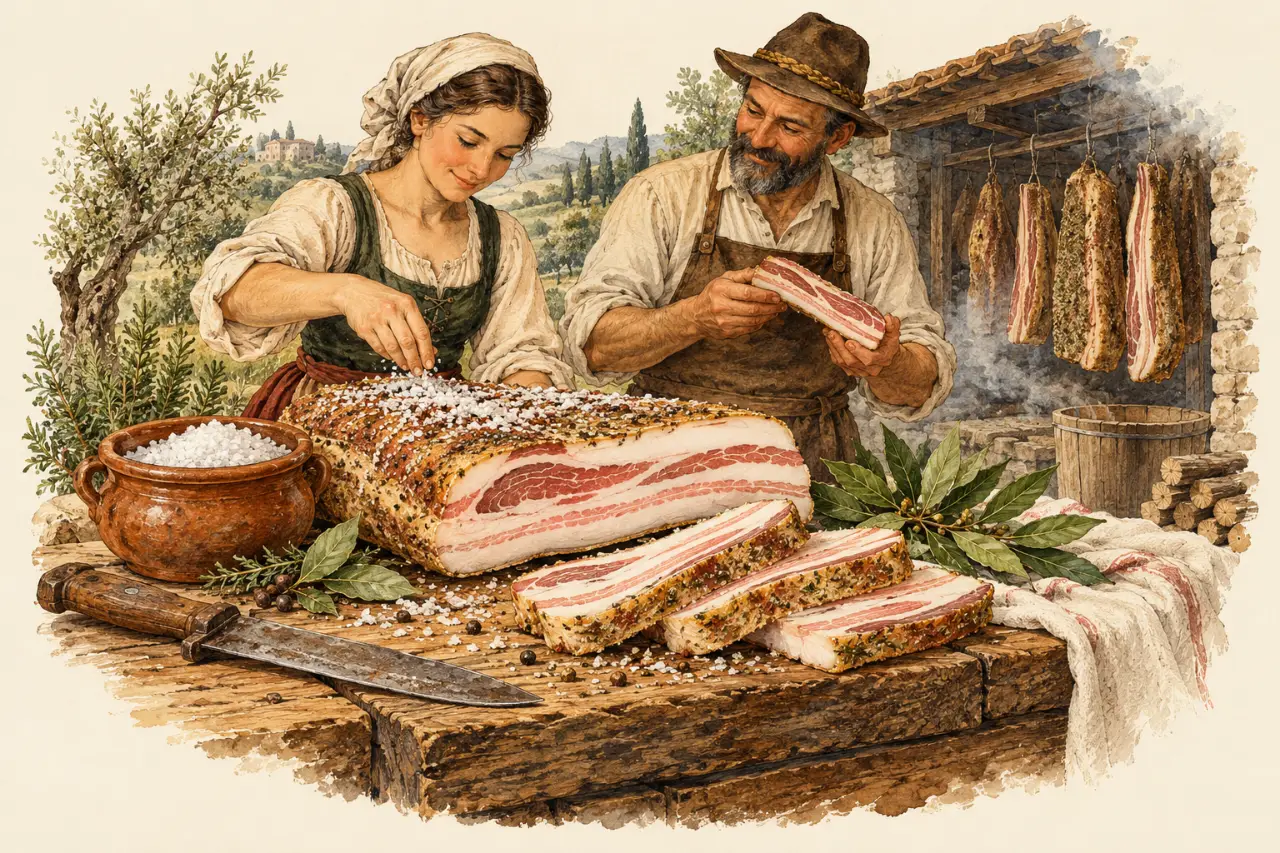
What if our ancestors were right after all? What if the new, "improved," supposedly healthy versions are nothing of the sort? The traditional way of making bacon is dry curing: the pork belly is rubbed by hand with a mixture of herbs, sugars, salt and curing salts containing sodium nitrite. The vitamin C in the mixture helps form nitrosyl-heme, the pigment that gives cured meats their reddish color and, as we will see below, helps make sure the nitrite turns into healthy nitric oxide rather than carcinogenic nitrosamines.
Traditional producers let the bacon cure for anywhere from a day to a month and then smoke it slowly, for one to three days, over apple, hickory or other woods. The long cure intensifies the flavor and makes the meat shrink during preparation, so the bacon doesn't shrivel or spatter in the pan.
The flavor varies a lot from one producer to another, depending on the curing ingredients, the smoking method and the time given to each step. The pig's age, sex and breed, how much time it spends outdoors, and its pasture and feed all influence the final flavor of the bacon, as well as its possible benefits or risks to health.
The Dirty Secret of Supermarket Bacon
Supermarket bacon may also contain sodium nitrite, but not in the traditional way. Manufacturers opt for fast, cheap methods: lower-quality, factory-farmed pork is injected and plumped up with a curing brine that includes sodium erythorbate and sodium nitrite, along with "liquid smoke," spices and flavorings loaded with monosodium glutamate (an additive the foundation criticizes in the article on bone broth).
After "curing" for a few hours, the meat gets another bath of liquid smoke and is heated until it takes on a taste reminiscent of smoking. It is then quickly chilled, pressed by machine into a uniform shape, sliced and packaged. This bacon looks big in the package, but it shrinks, shrivels and spatters in the pan.
Liquid smoke, widely used by big industry, is made by burning wood chips or sawdust, condensing the smoke into solids or liquids and dissolving it in water. The European Food Safety Authority began investigating its safety as a flavoring in light of evidence of genotoxicity and cytotoxicity, and one study even suggested that it is more carcinogenic than the condensate of cigarette smoke.
Nitrite and Nitrosamines: Where the Fear Comes From
Doubts about the safety of nitrite arose in the 1960s, when studies found carcinogenic nitrosamines in bacon and other cured meats. In the early 1970s, researchers at the Massachusetts Institute of Technology (MIT) pointed to nitrite itself as a carcinogen. The study, which fed laboratory rats nitrite directly, made headlines, but later research did not confirm its conclusion.
The USDA's concern then shifted to the formation of nitrosamines from nitrite combining with amines in the meat. Regulators were left with the task of weighing this possible cancer risk against nitrite's traditional, proven role in protecting against botulism and other food poisoning.
Since then, commercial bacon has been studied exhaustively and its nitrosamine levels have been monitored. Nitrosamines have been found in many cured meats, but they show up most regularly in fried bacon. The research, however, is inconsistent, contradictory and confusing.
Most scientists blamed frying, although some data suggest nitrosamines may form during the laboratory analysis itself whenever residual nitrite is present. Wood smoke was also blamed, but the culprit may actually be liquid smoke. In 1973, Agriculture Canada found nitrosamines already formed in the ready-made seasoning mixes used by the big bacon processors and by many smaller producers. After the USDA confirmed the finding, those mixes were banned. The agency also began requiring sodium erythorbate or ascorbates in bacon processing, because research consistently showed that these substances lowered nitrosamine levels.
The weight of industrial processing
Part of the problem, obviously, comes from industrial processing. The USDA may have banned certain spice blends in the 1970s, but pre-formed nitrosamines may well be present in the new generation of artificial and "natural" flavorings and liquid smoke. References to "meat emulsions" and to high-pressure, high-temperature methods, which are known to produce nitrosamines and are routinely used in making commercial bacon, are also a concern.
Choosing dry-cured bacon, the "country-style" bacon made by small producers, would seem the safer option. But in some cases, it can produce even higher levels of N-nitrosopyrrolidine (NPYR) after frying than injected bacon. The problem is that methods vary widely, with different choices and concentrations of spices, sodium nitrite and, sometimes, sodium nitrate. The USDA now recommends that manufacturers not add sodium nitrate, because it is unnecessary and its conversion to nitrite is variable and hard to predict.
What the pig eats changes the bacon
From a foundational point of view, the most interesting and useful findings concern the effect of fat composition on the formation of nitrosamines. After all, industrially raised pigs eat feed made with soy, corn and other lower-quality oils, while pasture-raised pigs usually get a more nutritious mix, often soy-free and, in the best conditions, based on whey.
In 1984, researchers found that bacon from pigs fed a ration enriched with corn oil had significantly higher levels of the nitrosamines N-nitrosopyrrolidine and N-nitrosodimethylamine than bacon from the control group pigs. Bacon from pigs given coconut fat, on the other hand, had significantly lower levels of N-nitrosopyrrolidine, with no difference in N-nitrosodimethylamine.
Since the control group ate the standard commercial corn-and-soy feed with added vitamins and minerals, we can only imagine what would be found in the bacon of well-nourished, pasture-raised pigs. Either way, one of the researchers' conclusions says a lot: the levels of N-nitrosopyrrolidine in bacon tracked the degree of unsaturation of the animal's fat, which means that the more unsaturated the fat, the more nitrosamines. Other research confirms the link between nitrosamine formation and the fat profile of the feed and the meat (the effect of vegetable oils on the body is covered in the article on omega-6), and nitrosamines show up more in the fat than in the lean part.
How to choose good bacon
The lesson is clear: choose bacon from pasture-raised pigs. That said, finding a genuine artisanal bacon, cured the traditional way, is very hard. Knowing who raises the animals is the first step, and the Nu&Cru producers map helps with that search.
Many artisanal producers make bacon with salt only, without nitrite, relying on salt, good hygiene and refrigeration to prevent contamination, the same principle behind our homemade bacon recipe. In the author's view, most "no nitrate or nitrite added" products made this way are honest, unlike the new "uncured" bacons made with celery salt, and obviously much healthier than the injected, puffed-up supermarket products or the bacon imitations made from turkey or soy.
On the other hand, there is probably nothing wrong with good old-fashioned bacon cured with a precise amount of sodium nitrite curing salt. If the idea still worries you, consider this: ascorbic acid (vitamin C) is routinely added to cured meats along with nitrite precisely to favor the formation of beneficial nitric oxide and to inhibit nitrosation reactions in the stomach, which can produce carcinogenic nitrosamines. Adding alpha-tocopherol, vitamin E, also seems to further prevent the formation of nitrosamines. And old-fashioned processing, with plenty of time for curing and smoking, increases the conversion of nitrite to nitric oxide.
Nitric oxide: the Nobel Prize molecule
In 1998, Robert F. Furchgott, Louis J. Ignarro and Ferid Murad received the Nobel Prize in Physiology or Medicine for discovering nitric oxide (NO) as a signaling molecule in the cardiovascular system. The discovery that such a simple molecule carries messages from one cell to another revolutionized conventional scientific thinking.
In preventing heart disease, the nitric oxide made by the cells of the blood vessels tells the tissues of the arteries to relax. This lowers blood pressure, widens narrowed vessels, clears dangerous clots and reduces plaque formation. Interestingly, NO lowers triglycerides but not cholesterol, and researchers report that it seems to protect even people with high cholesterol. In the foundation's view, not lowering cholesterol is a point in its favor, since cholesterol has many benefits and nobody needs protection from high cholesterol.
By optimizing circulation, nitric oxide affects the whole body. More blood flow means better oxygen delivery and more energy, a brain that works better and sharper attention, and also a better sex life: NO is the key to many well-known drugs for erectile dysfunction. It also helps the immune system fight infections and the nervous system keep communication between neurons running well.
These benefits are summarized in the book The Nitric Oxide (NO) Solution, by Nathan S. Bryan and Janet Zand. The book has no citations, but a quick PubMed search, at the time the article was written, showed Bryan as a participant in at least 88 scientific papers, many of them demonstrating the benefits described above.
Nitrite: from villain to ally?
The message is that nitric oxide is essential for a long, healthy life full of vitality. The problem is that few people today produce enough NO for optimal health, and its deficiency has already been identified in many chronic diseases. NO supplements exist, and they may even help people on plant-based diets that are low in fat and cholesterol, but they may be unnecessary for those who return to traditional foods. According to the author, bacon, sausages and other meats cured the traditional way with sodium nitrite may be exactly what is missing to increase the body's production of nitric oxide.
Another major source of NO is beets, one more reason why so many followers of the foundation do so well with beet kvass, a fermented drink (the Ancestral Guide to Introducing Solid Foods has a recipe). Foods rich in the amino acids citrulline and arginine are often recommended to boost NO production, but most people are not young or healthy enough to make that conversion. Perhaps the most direct route, from nitrite to nitric oxide, is the best one.
Nitrates, nitrites and the nitrogen cycle
But aren't nitrates and nitrites dangerous? Yes and no. Nitrates are natural products of the nitrogen cycle and are found in water, plants and animals. About 80% of the nitrates in our diet come from vegetables, and nitrites are naturally present in saliva, in the gut and, in fact, in all mammalian tissues. You can't advocate a plant-based diet and be against nitrates.
Nitrite levels rise naturally in the body to improve oxygenation in people who live at high altitudes, populations often considered among the healthiest in the world. In short, according to the author, nitrites are not a problem as long as the diet is rich enough in antioxidants to help convert them into nitric oxide and to prevent the nitrosation reactions that turn them into carcinogenic nitrosamines.
Of course, it is important to avoid ready-made sources of nitrosamines, such as soy protein isolates (found in many protein powders), nonfat dry milk and other products that go through acid washes, flame drying or high-temperature spray drying. There is also exposure to nitrosamines in some types of beer, in cigarettes, in baby bottle nipples and in the rubber used in orthodontic appliances. In other words, nitrosamines don't come only from cured meats. And the nitrosamine content of cured meats has dropped considerably in recent decades.
As for the environmental damage caused by nitrates, it comes from the land-use abuses of industrial livestock farming, the subject of the article Grass-Fed Beef: Why It Costs More.
So, is bacon bad for you?
Why do so many experts condemn bacon and other cured meats because of nitrite? For the same reason fat and cholesterol still have a bad reputation: poor studies and even worse publicity, and the 2012 Harvard study is a great example. According to Bryan, the studies taken together show only a "weak association," with "inconclusive" evidence. As he and his colleagues wrote in a scientific review, "this paradigm needs to be revisited in light of the indisputable benefits of diets rich in nitrite and nitrate."
So what is the final word on America's favorite meat? For the author, you can enjoy bacon without guilt, as long as you buy it carefully. Science is catching up with what our ancestors probably already knew, while the press is still lagging behind. In the kitchen, good bacon ranges from breakfast, as in this sourdough bread with eggs and bacon, to bacon jam.
Sidebar: bacon and your blood
In 2011, the Weston A. Price Foundation published a study by researcher Beverly Rubik, PhD, on pork. Using a dark-field microscope, Rubik observed the blood of healthy volunteers before and after they ate pork prepared in different ways.
A plain cooked pork chop made normal blood clump together in a pathological way. But when the chop was marinated in vinegar before cooking, there was no change at all. The same was true of prosciutto, the salt-cured, aged raw ham, similar to our ham.
The good news: bacon had no adverse effect, neither clumping nor any other pathological change in the blood. Like so many other foods, pork seems to need proper preparation to be truly healthy and digestible. Marinating in vinegar or lemon juice, or curing in salt, seems to eliminate the allergen or toxin that causes the blood to clump after eating pork that has been neither marinated nor cured. This may perhaps explain the ban on eating pork in some parts of the world.
Sidebar: the salt pork that stops bleeding
The passion for bacon has already inspired lollipops, ice creams, chocolates, doughnuts, air fresheners, mints and even bacon-flavored personal lubricants, as well as bacon-print adhesive bandages and a game in which "Mr. Bacon" defeats "Monsieur Tofu."
And what else can bacon do? "White bacon," or toucinho (salted pork fatback, a long-familiar ingredient in Brazilian cooking), can stop nosebleeds. An article published in the Annals of Otology, Rhinology and Laryngology reported that strips of cured, salted pork, shaped into a plug and placed in the nasal cavities, stopped the life-threatening bleeding of a 4-year-old girl with Glanzmann's thrombasthenia, a rare genetic disease that causes chronic nosebleeds.
Likewise, in 1976 the Archives of Otolaryngology published a letter from physician Jan J. Weisberg describing the treatment with salt pork of a patient whose nosebleeds were caused by Rendu-Osler-Weber disease, a hereditary condition in which blood vessels form abnormally.
It seems the remedy is traditional, though almost forgotten. In 1953, Dr. Henry Beinfield of Brooklyn, New York, wrote about the treatment of nosebleeds: "Salt pork placed in the nose and left there for about five days has been used, but the method is rather old-fashioned." In 1940, Dr. A. J. Cone reported that at St. Louis Children's Hospital it was not unusual for a child to ask for salt pork to be put in his nose at the first sign of bleeding, and that wedges of salt pork had saved a great deal of time and energy in controlling nosebleeds in cases of leukemia, hemophilia, hypertension, measles, typhoid fever and the third stage of labor.
Why have we never heard of this? Probably because doctors turn up their noses at the practice, worried about bacteria and parasites. Or maybe it is just the fear that something that smells so delicious must be dangerous.
Related reading
On Nu&Cru
- Is Lard Bad for You? The Unfairly Blamed Fat
- Grass-Fed Beef: Why It Costs More
- How to Render Lard and Beef Tallow at Home
- Omega-6: The Danger of Vegetable Oils
- Recipes with bacon and homemade charcuterie: bacon, eggs with bacon, bacon jam, natural sourdough bread with eggs and bacon, ham, linguiça (Brazilian pork sausage) and pork salami
- Producers map for buying pork from people who raise their animals outdoors
On the Weston A. Price Foundation (in English)
- How Does Pork Prepared in Various Ways Affect the Blood
- The Salt of the Earth
- Myths & Truths About Cholesterol
- The Skinny on Fats
- Mitos do vegetarianismo (in Portuguese)
References
- Neuman, Jeannette. Vegetarian Doctors Go Whole Hog to Burn Bacon in Iowa. The Wall Street Journal, February 18, 2012.
- Harvard School of Public Health. Red Meat Consumption Linked to Increased Risk of Total, Cardiovascular, and Cancer Mortality. Press release, 2012.
- Pan A, Sun Q, Bernstein AM et al. Red meat consumption and mortality: results from 2 prospective cohort studies. Archives of Internal Medicine, 2012; 172(7): 555-563.
- Taubes, Gary. Science, pseudoscience, nutritional epidemiology, and meat. March 14, 2012.
- Harcombe, Zoë. Red meat & mortality & the usual bad science. March 13, 2012.
- Minger, Denise. Will eating red meat kill you? Mark's Daily Apple, March 14, 2012.
- Enig, Mary G. Know Your Fats: The Complete Primer for Understanding the Nutrition of Fats, Oils and Cholesterol. Silver Spring: Bethesda Press, 2000, p. 135. Enig's figures refer to lard, not to bacon fat, but the proportions should be very close; they also vary with the animal's diet and way of life.
- Koga T, Terao J. Antioxidant Activity of a Novel Phosphatidyl Derivative of Vitamin E in Lard and Its Model System. Journal of Agricultural and Food Chemistry, 1994; 42(6): 1291-1294. The study is about lard, but it probably applies to bacon fat as well.
- Yetley EA. Assessing the vitamin D status of the US population. American Journal of Clinical Nutrition, 2008; 88(2): 558S-564S. On the USDA tables, Sylvia Onusic, PhD, notes that the agency only published vitamin D data for foods in 1991, in a provisional table that did not include lard or bacon fat, and that even the 2007 version of the database had vitamin D information for only 594 of its 7,519 foods.
- Istituto Europeo di Oncologia. Banca Dati di Composizione degli Alimenti per Studi Epidemiologici in Italia (BDA). 2008.
- Enig, Mary G. Fax to Sally Fallon: USDA Data on Vitamin A, Vitamin D and Cholesterol. February 1997.
- Mayer J, Krehl WA. The relation of diet composition and vitamin C to vitamin A deficiency. Journal of Nutrition, 1948; 35: 523.
- Kaunitz H, Slanetz CA. A possible new factor distilled from lard. Federation Proceedings, 1950; 9: 335.
- Kaunitz H, Slanetz CA. An unknown factor with vitamin A activity distilled from lard. Journal of Nutrition, 1950; 42: 375.
- Kaunitz H, Slanetz CA. Relation of vitamin A and "lard factor" to disease caused by rancid lard. Proceedings of the Society for Experimental Biology and Medicine, 1950; 75: 322.
- Herb SF, Riemenschneider RW, Kaunitz H, Slanetz CA. Nature of the "vitamin A-like factor" in lard. Journal of Nutrition, 1953; 51(3): 393.
- Lowe JS, Morton RA. Studies in vitamin A: the vitamin A-replacing effect of lard. Biochemical Journal, 1953; 55: 681-686.
- The cholesterol debate is covered in detail on the Weston A. Price Foundation website, on Chris Masterjohn's website (cholesterol-and-health.com) and in Gary Taubes's book Good Calories, Bad Calories (Knopf, 2007).
- Satin, Morton. Salt and our health. Weston A. Price Foundation.
- Fallon Morell, Sally. The salt of the earth. Weston A. Price Foundation.
- Bryan, Nathan S., quoted in material on nitrites and nitrates published by the Feedstuffs FoodLink service.
- Skovgaard N. Microbiological aspects and technological need: technological needs for nitrates and nitrites. Food Additives and Contaminants, 1992; 9(5): 391-397.
- Pierson MD, Smoot LA. Nitrite, nitrite alternatives, and the control of Clostridium botulinum in cured meats. Critical Reviews in Food Science and Nutrition, 1982; 17(2): 141-187.
- Jouve JL, Calier V, Rozier J. Antimicrobial effects of nitrates in meat products (in French). Annales de la Nutrition et de l'Alimentation, 1980; 34(5-6): 807-826.
- Christiansen LN, Johnston RW et al. Effect of nitrite and nitrate on toxin production by Clostridium botulinum and on nitrosamine formation in perishable canned comminuted cured meat. Applied Microbiology, 1973; 25(3): 357-362.
- Hustad GO, Cerveny JG et al. Effect of sodium nitrite and sodium nitrate on botulinal toxin production and nitrosamine formation in wieners. Applied Microbiology, 1973; 26(1): 22-26.
- Fiddler W, Pensabene JW. Supercritical fluid extraction of volatile N-nitrosamines in fried bacon and its drippings: method comparison. Journal of AOAC International, 1996; 79(4): 895-901.
- Livestrong. Potassium bisulphate as a food preservative.
- Livestrong. Paraben effects.
- Livestrong. Why is sorbic acid added to foods?
- Namiki M, Udaka S et al. Formation of mutagens by sorbic acid-nitrite reaction: effects of reaction conditions on biological activities. Mutation Research, 1980; 73(1): 21-28.
- Namiki M, Osawa T et al. Chemical aspects of mutagen formation by sorbic acid-sodium nitrite reaction. Journal of Agricultural and Food Chemistry, 1981; 29(2): 407-411.
- Knight, Galen D. Email correspondence, April 4 and July 9, 2012.
- EFSA. Flavourings: EFSA's risk assessment of smoke flavouring primary product FF-B. Press release of June 21, 2007.
- Guillén MD, Sopelana P, Partearroyo MA. Polycyclic aromatic hydrocarbons in liquid smoke flavorings obtained from different types of wood. Effect of storage in polyethylene flasks on their concentrations. Journal of Agricultural and Food Chemistry, 2000; 48(10): 5083-5087.
- Gomaa EA, Gray JI et al. Polycyclic aromatic hydrocarbons in smoked food products and commercial liquid smoke flavourings. Food Additives and Contaminants, 1993; 10(5): 503-521.
- Putnam KP, Bombick DW et al. Comparison of the cytotoxic and mutagenic potential of liquid smoke food flavourings, cigarette smoke condensate and wood smoke condensate. Food and Chemical Toxicology, 1999; 37(11): 1113-1118.
- McCutcheon JW. Nitrosamines in bacon: a case study of balancing risks. Public Health Reports, 1984; 99(4): 360-364.
- Havery DC, Fazio T, Howard JW. Survey of cured meat products for volatile N-nitrosamines: comparison of two analytical methods. IARC Scientific Publications, 1978; (19): 41-52.
- Gray JI, Skrypec DJ et al. Further factors influencing N-nitrosamine formation in bacon. IARC Scientific Publications, 1984; (57): 301-309.
- Gough TA, Walters CL. Volatile nitrosamines in fried bacon. IARC Scientific Publications, 1976; (14): 195-203.
- Lee JS, Libbey LM et al. N-Nitroso-3-hydroxypyrrolidine in fried bacon and fried out fat. IARC Scientific Publications, 1978; (19): 325-332.
- Osterdahl BG. Effect of water on nitrosamine formation in fried bacon. Food Additives and Contaminants, 1988; 5(1): 33-37.
- Canas BJ, Havery DC et al. Current trends in levels of volatile N-nitrosamines in fried bacon and fried-out bacon fat. Journal of the Association of Official Analytical Chemists, 1986; 69(6): 1020-1021.
- Kimoto WI, Pensabene JW, Fiddler W. Isolation and identification of N-nitrosothiazolidine in fried bacon. Journal of Agricultural and Food Chemistry, 1982; 30: 757-760.
- Ikins WG, Gray JI et al. Contribution of wood smoke to in vivo formation of N-nitrosothiazolidine-4-carboxylic acid: initial studies. Food and Chemical Toxicology, 1988; 26(1): 15-21.
- Sen NP. Recent studies in Canada on the occurrence and formation of N-nitroso compounds in foods and food contact materials. IARC Scientific Publications, 1991; (105): 232-234.
- Fiddler W, Pensabene JW et al. Investigations on N-nitrosopyrrolidine in dry-cured bacon. Journal of the Association of Official Analytical Chemists, 1989; 72(1): 19-22.
- Mottram DS, Patterson RLS et al. The preferential formation of volatile N-nitrosamines in the fat of fried bacon. Journal of the Science of Food and Agriculture, 1977; 28: 1025-1029.
- Goutefongea R, Cassens RG, Woolford G. Distribution of sodium nitrite in adipose tissue during curing. Journal of Food Science, 1977; 42: 1637-1641.
- Walters CL, Hart RJ, Perse S. The possible role of lipid pseudonitrosites in nitrosamine formation in fried bacon. Zeitschrift für Lebensmittel-Untersuchung und -Forschung, 1979; 168: 177-180.
- Mergens WJ, Kamm JJ et al. Alpha-tocopherol: uses in preventing nitrosamine formation. IARC Scientific Publications, 1978; (19): 199-212.
- Fiddler W, Pensabene JW et al. Inhibition of formation of volatile nitrosamines in fried bacon by the use of cure-solubilized alpha-tocopherol. Journal of Agricultural and Food Chemistry, 1978; 26(3): 653-656.
- Walters CL, Edwards MW et al. The effect of antioxidants on the production of volatile nitrosamines during the frying of bacon. Zeitschrift für Lebensmittel-Untersuchung und -Forschung, 1976; 162(4): 377-385.
- Nobel Foundation. The Nobel Prize in Physiology or Medicine 1998.
- Bryan, Nathan S.; Zand, Janet; Gottlieb, Bill. The Nitric Oxide (NO) Solution. Austin: Neogenesis, 2010.
- Hord NG, Tang Y, Bryan NS. Food sources of nitrates and nitrites: the physiologic context for potential health benefits. American Journal of Clinical Nutrition, 2009; 90(1): 1-10.
- Daniel, Kaayla T. The Whole Soy Story: The Dark Side of America's Favorite Health Food. Washington: New Trends, 2005, pp. 122-126.
- Hotchkiss JH. Sources of N-nitrosamine contamination in foods. Advances in Experimental Medicine and Biology, 1984; 177: 287-298.
- Lijinsky W. N-Nitroso compounds in the diet. Mutation Research, 1999; 443(1-2): 129-138.
- Webb KS, Gough TA. Human exposure to preformed environmental N-nitroso compounds in the UK. Oncology, 1980; 37(4): 195-198.
References for the sidebars
- Rubik, Beverly. How Does Pork Prepared in Various Ways Affect the Blood? Wise Traditions, Fall 2011.
- Abrahams, Marc. Pork, the surprise remedy for a nosebleed. The Guardian, January 23, 2012.
- Humphreys I, Saraiya S et al. Nasal packing with strips of cured pork as treatment for uncontrollable epistaxis in a patient with Glanzmann thrombasthenia. Annals of Otology, Rhinology and Laryngology, 2011; 120(11): 732-736.
- Weisberg JJ. Letter: Rendu-Osler-Weber disease: is embolization beneficial? Archives of Otolaryngology, 1976; 102(6): 385.
- Beinfield HH. General principles in treatment of nasal hemorrhage: emphasis on management of postnasal hemorrhage. Archives of Otolaryngology, 1953; 57(1): 51-59.
- Cone AJ. Use of salt pork in cases of hemorrhage. Archives of Otolaryngology, 1940; 32(5): 941-946.
This article is an adaptation of "Save Your Bacon" by Kaayla T. Daniel, published in Wise Traditions in Food, Farming and the Healing Arts, the magazine of the Weston A. Price Foundation, in Fall 2012. Read the original.
As informações têm caráter educativo e não substituem avaliação individual de profissional de saúde habilitado.