Blogfats · tallow · traditional cooking
Beef Tallow: What It Is, What It's Good For, and How to Cook With It
Beef tallow is beef fat that has been rendered and strained. Learn where it comes from, how it differs from industrial tallow, and how to use it for frying, searing, roasting, and sautéing every day.
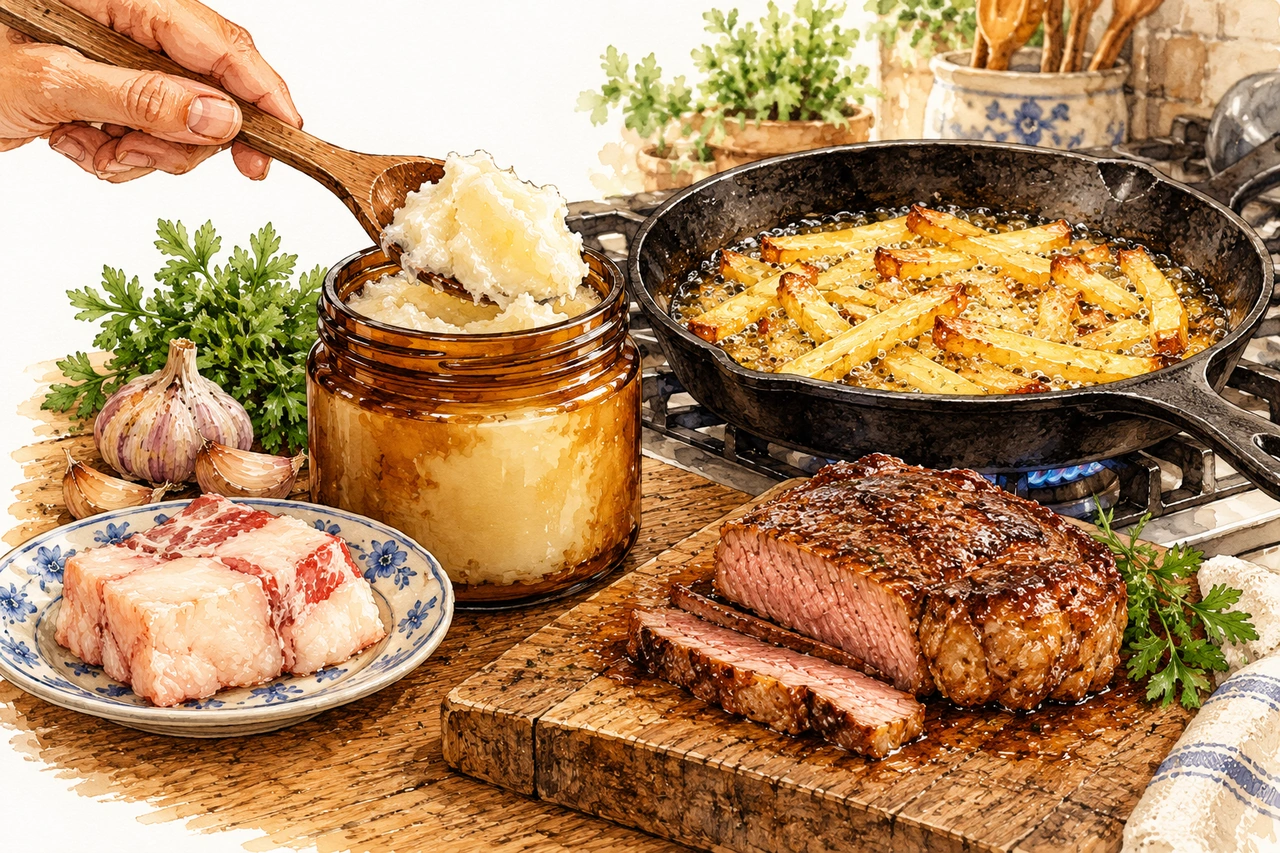
Beef tallow is cooking fat from cattle: beef fat rendered slowly and strained, pale yellow when liquid and white and firm when cold. In the pan, it does what oil does: it fries, sears, roasts, and sautés. What changes is the mild beefy flavor, the solid texture at room temperature, and the way it behaves under heat, which comes from its composition. About half of the fat in tallow is saturated, nearly all of the other half is monounsaturated, and only about 4% is polyunsaturated, according to the USDA FoodData Central table.
What beef tallow is, in one definition
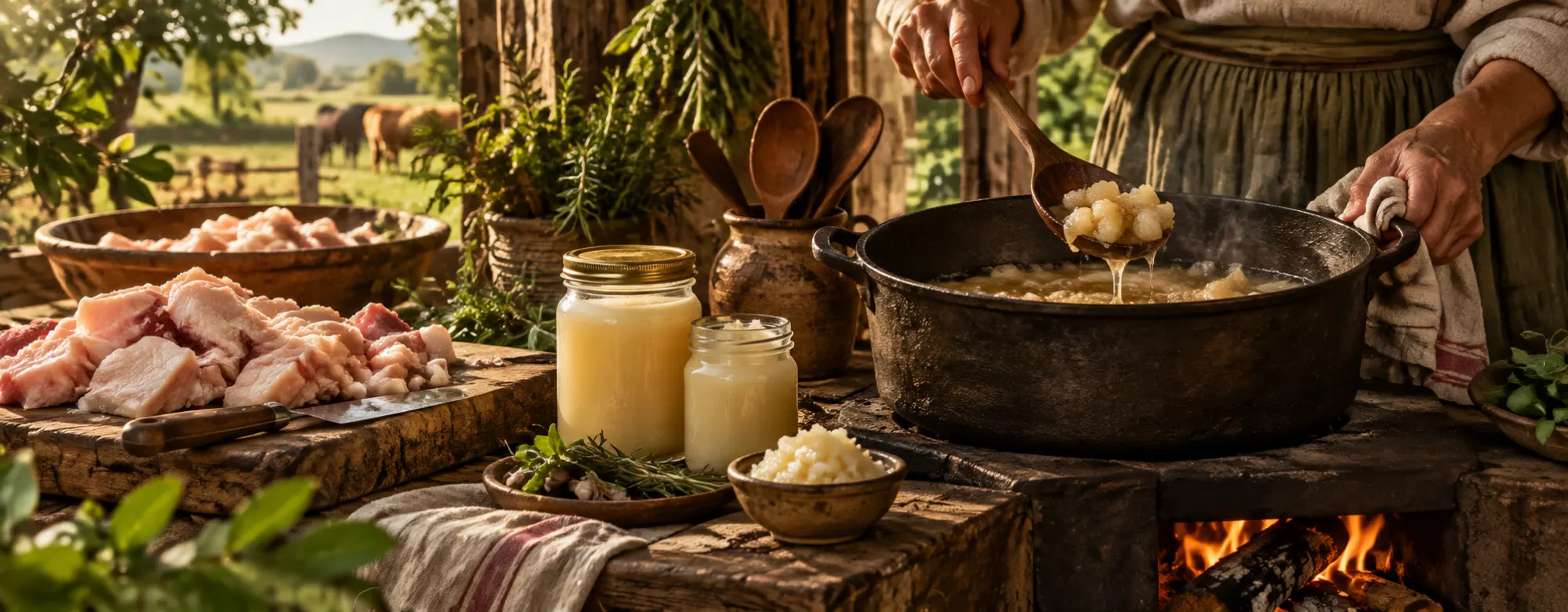
Tallow is the fat of ruminants, such as cattle and sheep, separated from the tissue by heat. The raw fat is chopped and heated slowly until the liquid part comes away from the fibers and the water; then it is strained. What stays in the sieve are the cracklings, and what passes through is the tallow. An extension publication from the University of Nebraska describes the same process: the fatty tissue is cleaned and heated slowly to separate the fat from the protein and the water (Curry and Yates, The Big Fat Comparison, 2026).
"Beef" just tells you the fat comes from cattle. In Brazil, the English name arrived with tallow's return to home kitchens, and it helps set cooking fat apart from the other meanings of "sebo," the Portuguese word for tallow. But it is the same fat that, for generations, sat in a tin next to the stove.
Kidney fat or back fat
Not all beef fat makes the same tallow.
- Kidney fat. This is the firm mass that surrounds the kidneys and loin, known in English as suet. It melts between 45 and 50 °C (Wikipedia, Suet entry) and gives the hardest, mildest-tasting tallow.
- Back fat and trimmings. This sits under the hide and between the cuts, comes in thinner strips, and often has meat attached. It makes a softer tallow with more beefy flavor, and it calls for careful straining.
If you buy it ready-made, you rarely know which of the two was used. It's worth asking the producer, and the guide on how to choose animal fat by origin and label shows what to look for.
Kitchen tallow and industrial tallow are not the same thing
Anyone searching for "sebo bovino" (beef tallow) in Portuguese finds almost nothing but market news. In February 2025, beef tallow made up about 6% of the raw materials for Brazilian biodiesel, behind soybean oil (at least 75%) and other fatty materials (13%), according to ANP data cited by Forbes Agro. That is usually tallow from rendering plants, which collect leftovers from slaughterhouses, butcher shops, and meatpackers and turn them into tallow and meat and bone meal for soap, animal feed, and the chemical industry (Wikipedia, Graxaria entry).
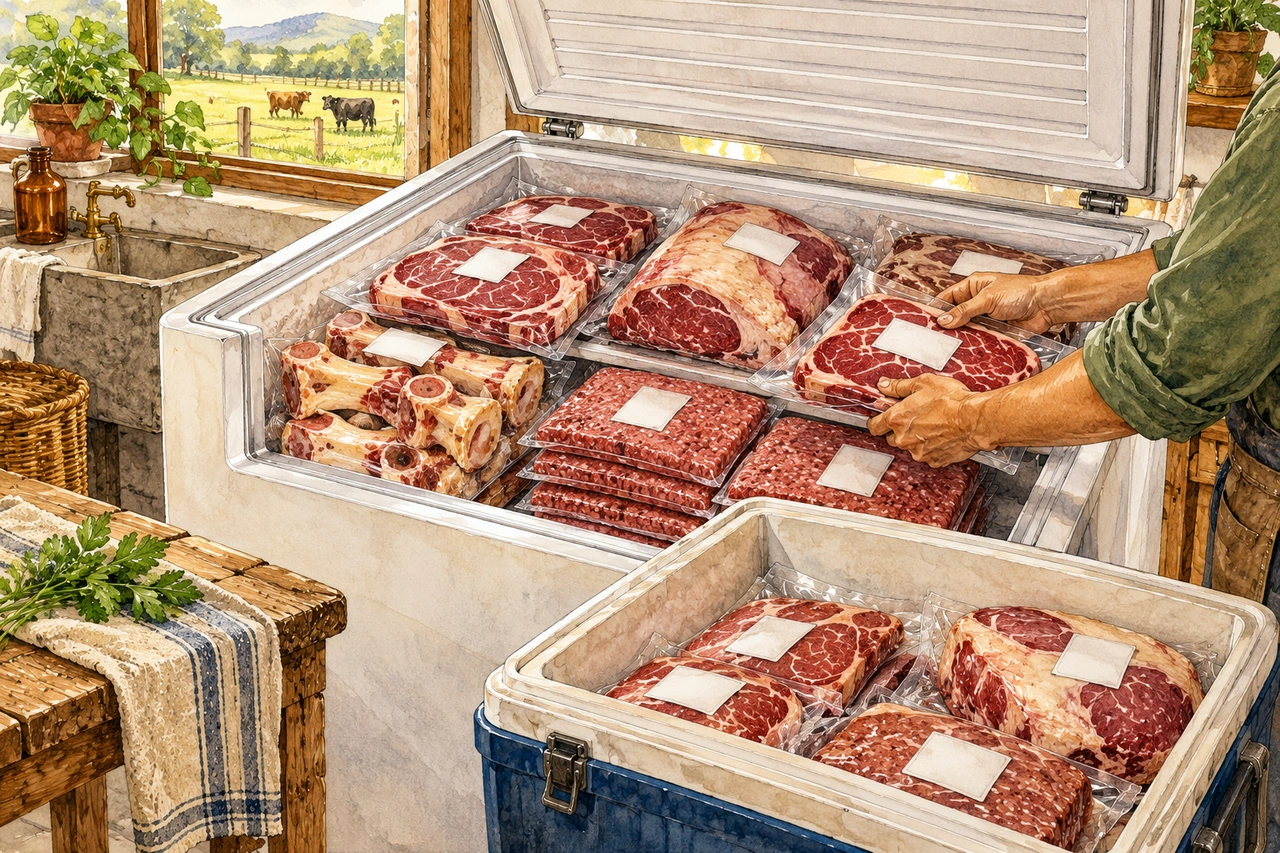
Tallow for eating is something else. It comes from selected fat, from animals slaughtered under inspection, rendered to become food and stored as food. The useful question when you buy isn't "is it tallow?" but "what fat was this, from what animal, and what else is in the jar?".
Nu&Cru Beef Tallow is the second kind: beef fat from 100% grass-fed cattle, a single ingredient, made by hand in small batches and packed in glass. The current batch is sold out. On the page you can see the composition and reserve the next one through WhatsApp.
How tallow behaves in the pan
Three traits explain almost everything that happens when you cook with tallow.
Flavor. It is mild and beefy, stronger when the tallow came from trimmings or when the cracklings browned a lot during rendering. The Nebraska extension sums it up as "mildly beefy" (Curry and Yates, 2026). With potatoes, cassava, meat, and eggs, it adds something. In a delicate cake, it stands out too much.
Texture. It is solid at room temperature and melts in seconds in a hot pan. Because kidney fat only melts above body temperature, food fried in tallow is best served hot: once cold, it can leave a film in the mouth.
Heat. The smoke point is the temperature at which a fat starts giving off visible smoke, a sign that it is breaking down. The same Nebraska publication lists tallow at around 204 °C (400 °F) and butter at around 149 °C (300 °F). The number isn't fixed. In a study of virgin olive oils, free fatty acid content was the main factor lowering the smoke point (Díez-Betriu and colleagues, 2025), and every round of frying produces more of these acids in any fat (Bazina and He, 2018). Homemade tallow that was poorly strained, or that has already been used a few times, smokes sooner.
In practice, you don't fry anywhere near that limit. The rule from Anvisa, Brazil's health regulatory agency, for restaurants and snack bars says frying oils and fats should be heated to no more than 180 °C and replaced when smoke, heavy foaming, or a change in smell and flavor appears (RDC 216/2004, item 4.8.11). It is a good yardstick for the home kitchen, too. What counts in tallow's favor is its stability, which comes from its low polyunsaturated fat content. A bulletin from the Adolfo Lutz Institute notes that repeated heating mainly alters polyunsaturated oils, such as soybean oil (Tavares and colleagues, Bol Inst Adolfo Lutz, 2012).
How to use beef tallow every day
The general rule is simple: wherever a recipe calls for cooking oil, tallow goes in at the same amount. What changes from one dish to the next is how much you use and how hot the heat is.
For deep-frying
Potatoes, cassava, polenta, plantains, breaded fish. Melt enough tallow to cover the food in a deep, heavy pot, and heat it to 170 to 180 °C. Without a thermometer, dip the handle of a wooden spoon: when fine bubbles rise around it gently, it's ready. Fry in small batches so the temperature doesn't crash, and drain on a rack or paper.
Two recipes from the house cookbook use exactly this technique: the bananas fried in fat and the kabocha squash fried in fat. After frying, the tallow can be strained and used again; the step-by-step is in how to reuse cooking fat.
For searing meat and burgers
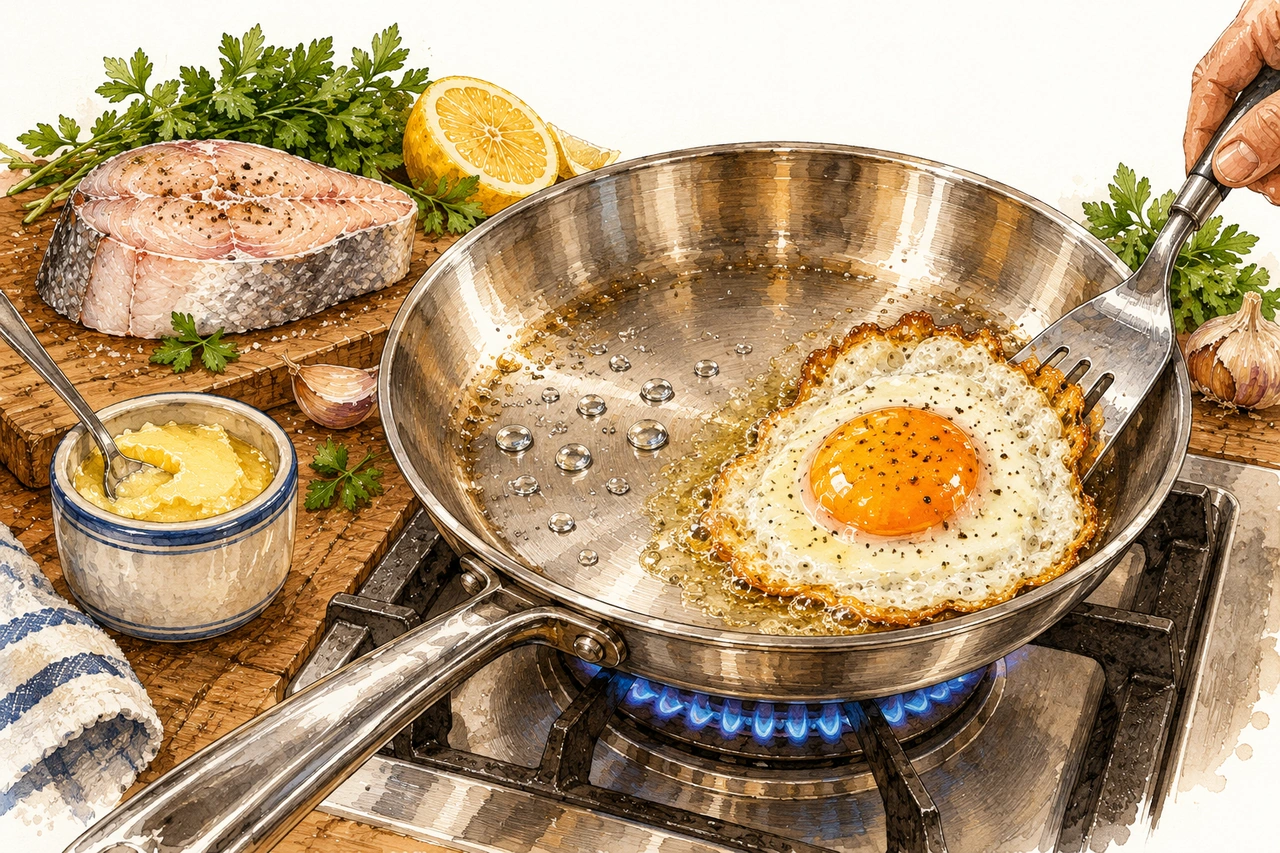
Here you want little fat and a very hot pan. A tablespoon of tallow in a well-preheated cast-iron or stainless steel skillet gives you a crust without a cloud of smoke. If the meat sticks to stainless steel, it's almost always because the pan wasn't preheated enough or you rushed to flip; the piece on how to cook in a stainless steel pan without sticking explains the timing. The burger and the roasted beef ribs in the cookbook call for animal fat, with tallow among the options.
For eggs, rice, beans, and sautéed dishes
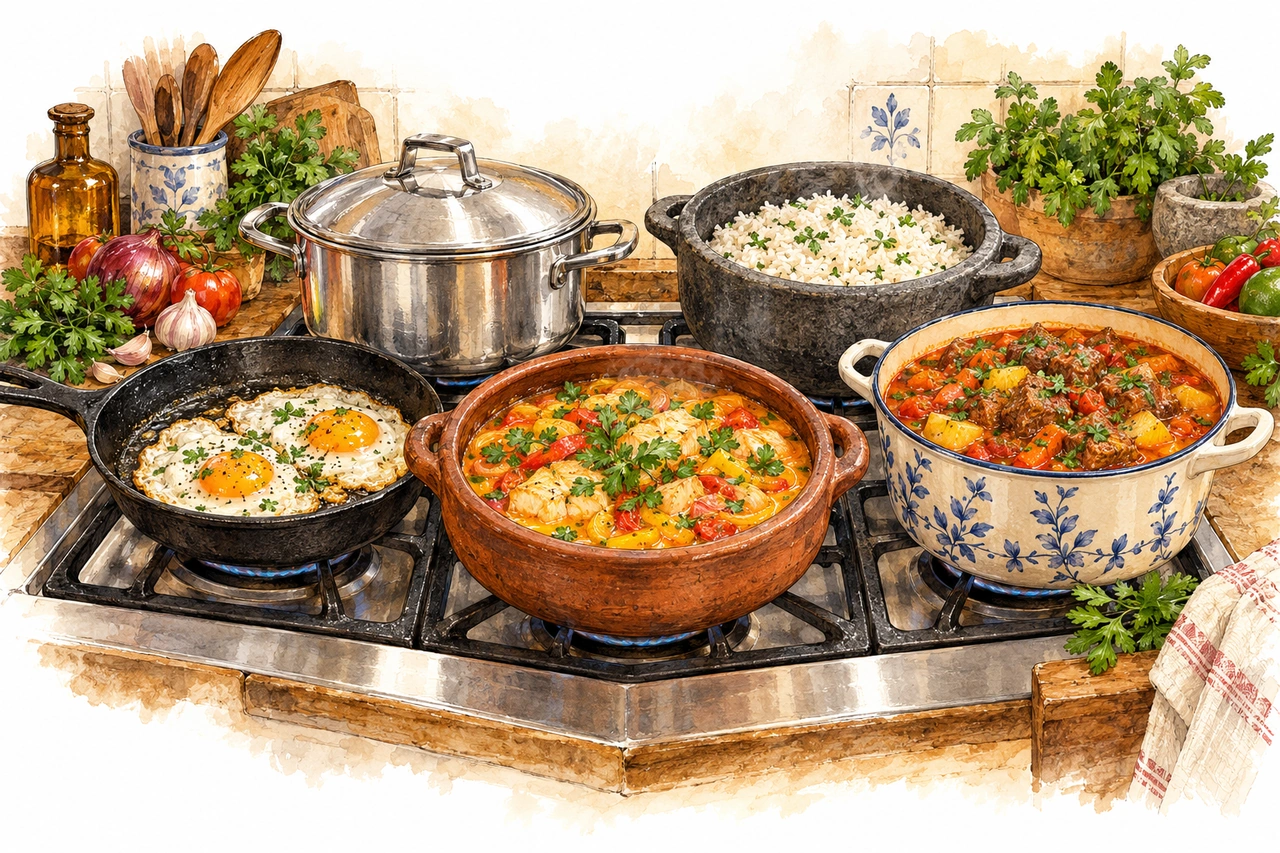
This is the everyday use. A teaspoon of tallow fries an egg with a crispy edge over medium heat. In rice and beans, tallow takes the place of oil for browning garlic and onion, in the same amount. The Dietary Guidelines for the Brazilian Population treats oils and fats exactly this way: culinary ingredients for cooking rice and beans, sautéing vegetables and meats, and frying eggs, used in small amounts (pp. 33-34).
For roasting vegetables and meats
Melt the tallow and brush it on or toss it with the vegetables before they go in the oven: potatoes, squash, carrots, beets, and onions brown nicely at 200 °C. For oven-roasted meats, brush the piece before roasting and baste it with the drippings from the pan.
For doughs and sweets
In savory pie dough or baked pastries, tallow works, with a more noticeable flavor. For sweets, butter and lard are usually better choices. The dish-by-dish comparison is in lard, tallow, or butter: which to use for each dish.
How to store tallow
Well-made tallow contains very little water, usually less than 0.5%, and is almost entirely saturated and monounsaturated fat. That is why, according to the Nebraska extension, tallow in a tightly closed container stays stable for months at room temperature and for more than a year in the fridge or freezer (Curry and Yates, 2026). Those times apply to clean fat. Homemade tallow, which may contain traces of water or cracklings, goes in the fridge. Store-bought products follow what the label says.
A few rules apply to any jar:
- lid tightly closed, away from light and the stove;
- a clean, dry spoon, every time;
- rancid smell, bitter taste, or mold on the surface: throw it out.
What about health? What we know about saturated fat
Nu&Cru cooks with animal fat instead of refined oil. It is a choice about cooking, origin, and tradition: for generations, tallow and lard were the household fat, and seed oils only spread through kitchens in the last century, as the Nebraska extension records. On health, official sources don't say the same thing as tallow enthusiasts, and it's worth knowing both positions.
- Brazilian Ministry of Health. The Dietary Guidelines put lard, butter, and oils in the same category and call for small amounts, because excessive saturated fat intake raises the risk of heart disease (pp. 34-35).
- World Health Organization. The 2023 guideline keeps saturated fat at no more than 10% of daily calories and suggests replacing it with polyunsaturated fats, plant-based monounsaturated fats, or carbohydrates from foods with fiber.
- Cochrane review. In trials lasting at least two years, cutting saturated fat reduced combined cardiovascular events by about 17%, with no clear effect on total mortality (Hooper and colleagues, 2020).
- U.S. guidelines, 2025-2030. They call for prioritizing oils with essential fatty acids, such as olive oil, and mention butter and beef tallow as other options. They keep the 10% limit for saturated fat and say there isn't enough high-quality research to know which fats best support long-term health (Dietary Guidelines for Americans 2025-2030, p. 3). Walter Willett, a Harvard epidemiologist, disputes this line: in his view, the evidence shows that seed oils improve cholesterol and don't increase inflammation (Harvard Health, 2026).
What can honestly be said: tallow is a stable, flavorful, single-ingredient cooking fat. None of the sources above show that swapping oil for tallow improves health, and the guidelines still call for moderation in saturated fat. Both guides, the Brazilian and the American, push for a different change: eating fewer ultra-processed foods and cooking more with real food. If you have medical advice to cut back on saturated fat, follow that advice.
Make it at home or buy it ready-made
Both options work.
- Make it at home. Ask the butcher or a rancher for kidney fat or back fat and render it over low heat or in the oven. The method, how to handle hot fat safely, and how to store it are in how to render lard and tallow at home. The producer map helps you find people raising cattle near you.
- Buy it ready-made. Read the label: ideally a single ingredient, with no vegetable fat mixed in and with the origin stated.
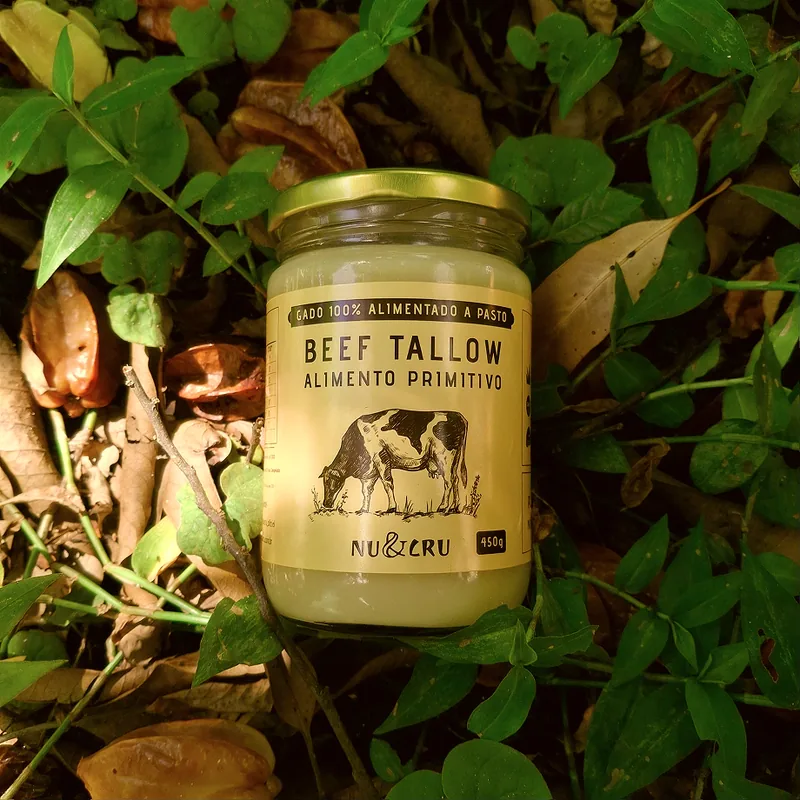
For those who'd rather not render it at home. Nu&Cru Beef Tallow comes in 150 g and 450 g glass jars, with beef fat from 100% grass-fed cattle as the only ingredient. The current batch has sold out: see the composition and reserve the next batch on the page.
The first test
Pick a dish you make this week that currently uses oil, ideally roasted potatoes or a fried egg, and make it with tallow. It's the quickest test of flavor and heat. If you like it, deep-frying is the next step.
For things to cook with it, 181 Receitas Ancestrais (181 Ancestral Recipes) includes about 48 recipes that call for tallow, butter, or lard as the fat, from breakfast to one-pot dishes and fried foods, along with broths, ferments, and the step-by-step for each technique. The full index is open at Nu&Cru recipes.
As informações têm caráter educativo e não substituem avaliação individual de profissional de saúde habilitado.