Blogsoap · home · tradition
Ash Soap (Sabão de Cinzas): What It Is, How It's Made and Whether It Contains Lye
Ash soap combines animal fat with the alkaline water leached from wood ashes. Learn how saponification works, how it differs from lye soap, and how it's used around the house and on the body.
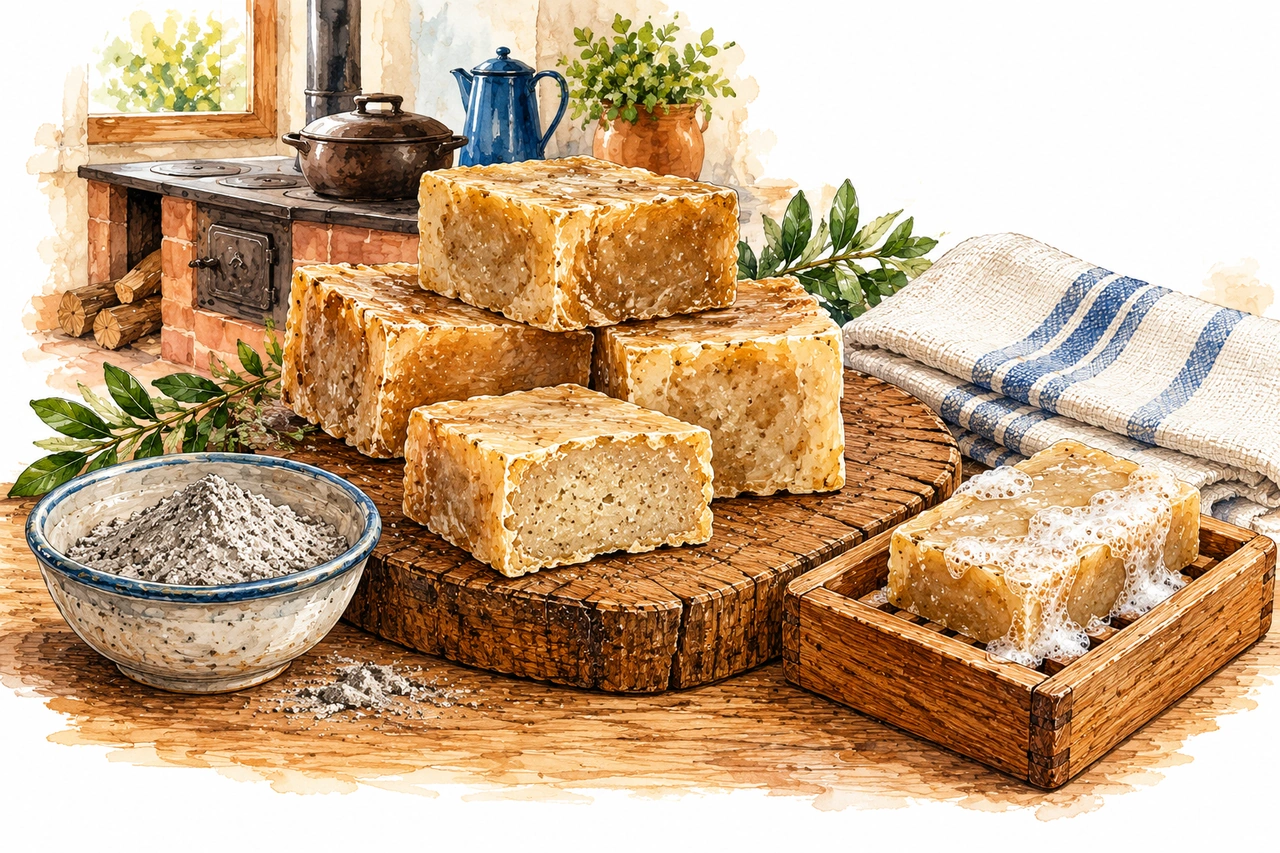
Ash soap (sabão de cinzas) is soap made with animal fat and the water that drains through wood ashes, called decoada (wood-ash lye water). This water is alkaline and rich in potassium carbonate. It reacts with the fat in a process called saponification, which turns the fat into soap and glycerin. It is the same reaction as in any soap. What changes is where the alkali comes from: the ash, instead of ready-made caustic soda (sodium hydroxide). The result cleans clothes, dishes and the house, and it can be used on the body with some care, because every true soap is alkaline.
The recipe for the decoada is not given here, for the reason explained at the end: concentrated alkali burns, whether it comes from ash or from a tub of caustic soda. If you would like to know a finished soap, you can find the Nu&Cru ash soap, made with beef fat from grass-fed cattle. The current batch is sold out, and you can reserve the next one on WhatsApp.
A soap with many names
In the countryside of Minas Gerais, people who make ash soap call it sabão de bola (ball soap), sabão de dicuada, sabão preto (black soap) or pão de sabão (soap loaf). The chemists Paulo César Pinheiro and Marcelo Giordan followed women who keep this craft alive and described the process in a study published in 2010 in the journal Investigações em Ensino de Ciências. It describes the same two ingredients as always, wood ash and animal fat, along with knowledge passed from mother to daughter, with tests, proportions and precautions that chemistry can explain today.
A note on vocabulary avoids confusion. Lixívia, in the old sense, is the alkaline water that drains from ashes, the same decoada. In Portugal and on some labels, the word also names bleach (água sanitária). They are different things, so do not mistake one for the other.
The chemistry of soap, without mystery
Fat plus alkali
Every fat, from tallow to olive oil, is made of triglycerides: a glycerol molecule bound to three fatty acids. When fat meets an alkaline solution and heat, that bond breaks. The glycerol is released as glycerin, and the fatty acids join the sodium or potassium of the alkali, forming salts. These salts are the soap. An undergraduate research project from the Instituto Mauá de Tecnologia summarizes it like this: the reaction of oil with an aqueous alkali solution results in glycerol and a mixture of alkaline salts of fatty acids.
The soap makers of Minas Gerais say that "the dicuada cuts the fat." It is an accurate description of what happens.
Why does soap clean? Each soap molecule has a head that mixes with water and a long tail that mixes with fat. During washing, the tails surround the greasy dirt and the heads carry it away with the water.
Where the alkali in the ash comes from
The ash does not go straight into the pot. It is sifted and packed into a basket lined with banana leaves, or into a bucket with holes and a cloth, and hot water is added little by little, the way you would make filtered coffee. What drips out the bottom is the decoada, a reddish-brown liquid. According to the study by Pinheiro and Giordan, what matters in it is the potassium carbonate (potash) dissolved from the ashes. The color comes from iron and does not indicate the strength of the decoada: a pale decoada can be stronger than a dark one.
The choice of wood also matters. The soap makers mention coffee straw, bean straw and the stalk of assa-peixe (a shrub common in Brazilian scrubland) as good sources of ash. What changes from one plant to another is the amount of potash the ash delivers. The ash keeps the plant's mineral salts, not the properties the herb had before it was burned.
Ash or Lye: What Changes
Caustic soda is sodium hydroxide. The ash lye (decoada) brings potassium. That swap of metal changes the consistency of the soap: sodium hydroxide makes a hard soap, and potassium alkali makes a soft one, as the Instituto Mauá study records. The fat matters too: tallow, which is firm at room temperature, gives the soap body, and the women who make it shape it into balls while it is still warm or cut it into bars once it has cooled.
Among the soap makers themselves, caustic soda is a matter of debate. Some mix soda and decoada, as their mothers did, because "with soda it goes faster." Others use only the decoada and believe that soda is bad for the skin. Chemistry puts the argument somewhere else: what makes a finished soap harsh is, above all, the alkali left over without having reacted, whether it comes from soda or from ash. A poorly made ash soap can irritate more than a well-made soda soap.
That is why "no lye" does not mean "no chemistry." The decoada is an alkaline solution, and ash soap comes from a chemical reaction, like any soap.
The Trace Point
The heart of the craft is proportion. Too little decoada leaves fat left over, and the soap turns oily and does not lather. Too much leaves free alkali, and the soap turns harsh. The soap makers of Minas Gerais work the mixture over a wood fire for one to two weeks, with breaks, and they test it: they put a little in a glass of water and shake it, because a generous, lasting lather shows the soap is close to the point; or they drip a little onto still water to see whether a film of fat forms, a sign of too much fat. With no scale and no table, they do the reaction control that a chemist would do in the lab.
When the proportion is right and the reaction completes, the alkali is used up: a well-made soap, finished and cured, has no free alkali. What remains is soap, glycerin, a little water and whatever else the recipe included. The glycerin can be separated out or left in the soap, and the Instituto Mauá study notes that it holds moisture and leaves the skin softer.
All Soap Is Alkaline, and That Is Not a Flaw
Here is the part that confuses people most. Even when it is well made, with no alkali left over, soap dissolved in water is alkaline, because it is a salt of a weak acid (the fatty acid) with a strong base. A 2014 Indian study measured the pH of bath soaps sold in stores, and most came out between 9 and 10. The surface of the skin is acidic: a study of 330 people estimated the natural pH of skin at around 4.7, below 5.
That difference explains two things. Soap cleans grease well, from the pan and from the skin. And on sensitive skin, alkalinity matters: a 2002 study of people with sensitive skin found a relationship between the pH of cleansing products and the irritation they caused. It is not a flaw of ash soap. It is the nature of all soap.
Uses Around the House
In the Minas Gerais tradition, ash soap is used to wash clothes, tidy the kitchen and wash hair, as Dona Rosa, one of the soap makers interviewed in the study, told it. For cleaning the house, the uses remain the same:
- Laundry: rub the wet bar directly on the collar, the cuff or the grease stain before washing.
- Dishes and dish towels: soap up the sponge or the cloth on the bar. The grease comes off well.
- Surfaces: a little soap dissolved in warm water cleans the sink, the stove and tiles.
For the hands of anyone who washes a lot, gloves help: soap that removes grease from a pan well removes it from the skin too.
Uses on the body, with limits
In the shower, ash soap does what every soap does: it cleans and removes oiliness. For people with normal skin, it works like any bar of soap. A few precautions apply to it and to any alkaline soap:
- Dry skin: use a little, and only where you need it, such as the armpits, groin and feet. The Brazilian Society of Dermatology (SBD) advises against over-soaping in winter. The article dry skin in winter walks through a complete routine, and tallow balm is an option for moisturizing after the shower.
- Atopic dermatitis: the SBD recommends choosing milder, synthetic soaps that respect the skin's natural pH. In this case, ash soap is not the right choice.
- Face: use very little lather, rinse well and keep it away from the eyes. If your skin feels tight or stings, stop.
- Hair: some people use it, like the soap makers in Minas Gerais. Like any soap, it strips oil strongly. If your hair turns rough, alternate with another product.
- Babies and small children: no. Under Anvisa's rules (Brazil's health regulatory agency), baby soap is a grade 2 product, with its own requirements, and a baby's skin calls for a product made for it.
Tradition also attributes to ash soap uses for burns and for animal illnesses. We note it as history, not as a recommendation: burns and wounds call for running water, proper cleaning and medical care, not soap.
The label of Nu&Cru's Sabão de Cinzas (Ash Soap) carries the usual instructions: for external use, do not ingest and, in case of irritation, sensitivity or allergic reaction, stop using it.
Soap, "sabonete" and coconut soap
Soap is the product of saponification: salts of fatty acids, made from any fat with any strong alkali.
Coconut soap (sabão de coco) is soap made with coconut oil, usually with lye. The chemistry is the same as ash soap; what changes are the fat and the alkali.
Sabonete, in Anvisa's terms, is a body-cleansing product, a cosmetic. Under RDC 752/2022, an ordinary facial or body sabonete is grade 1, while antiseptic, baby and intimate ones are grade 2. Many drugstore sabonetes aren't even soap: they are synthetic detergents (syndets), formulated with a pH closer to that of the skin.
How to store it
- Let it dry between uses. A soap dish that drains the water makes the bar last much longer. A bar sitting in a puddle goes soft and falls apart.
- Keep your stock wrapped, in a dry place. The soap makers in Minas Gerais store their soap in paper, cardboard, corn husks or banana leaves, and the habit has good reason behind it.
- At the kitchen sink, cut the bar into smaller pieces and use one at a time.
Why we don't teach how to make the lye solution at home
Concentrated alkali is corrosive, whether it comes from ash or from a tub of lye. Potassium hydroxide, for example, causes burns to the skin and eyes, according to the chemical hazards guide of the American occupational health institute, which says to wash with water immediately in case of contact. The strength of the lye solution (decoada) also varies with the ash, how compacted it is and the water, and the soap makers get the right point from experience, without measuring. A blog recipe can't pass that on safely.
If you want to learn, learn from someone who does it, side by side, with gloves, protective goggles and children kept away from the fire. The fat part, rendering and purifying the tallow, can be done at home, with the precautions described in the article how to make lard and tallow at home.
The Nu&Cru Ash Soap
Nu&Cru's Ash Soap (Sabão de Cinzas) is made using the traditional method, with fat from grass-fed cattle and ash water. The label describes the process as turning ash water and fat into soap. The fat is beef tallow, the same kind used in our Beef Tallow and in the tallow balm, but here it serves a different purpose: body, face, hair and home, within the limits described above. Like every soap, it comes from a reaction with an alkali.
This batch is sold out. On the Ash Soap page you can get to know the soap and join the reservation list for the next batch via WhatsApp. If you are looking for other Brazilian hygiene and cleaning brands chosen for their ingredients, the Nu&Cru curated selection, which leaves out synthetic fragrance and any label that doesn't say what the product is made of, has a waiting list.
As informações têm caráter educativo e não substituem avaliação individual de profissional de saúde habilitado.